Monday morning, we woke up and had to be downstairs by 9:40. I think we made it out by 9:50, so, close enough.
We said goodbye to Hadar and met our guide, Shmaya. We had been set up with him through Scott Feltman at One Israel Fund because today we were spending the day in Judea and Samaria.
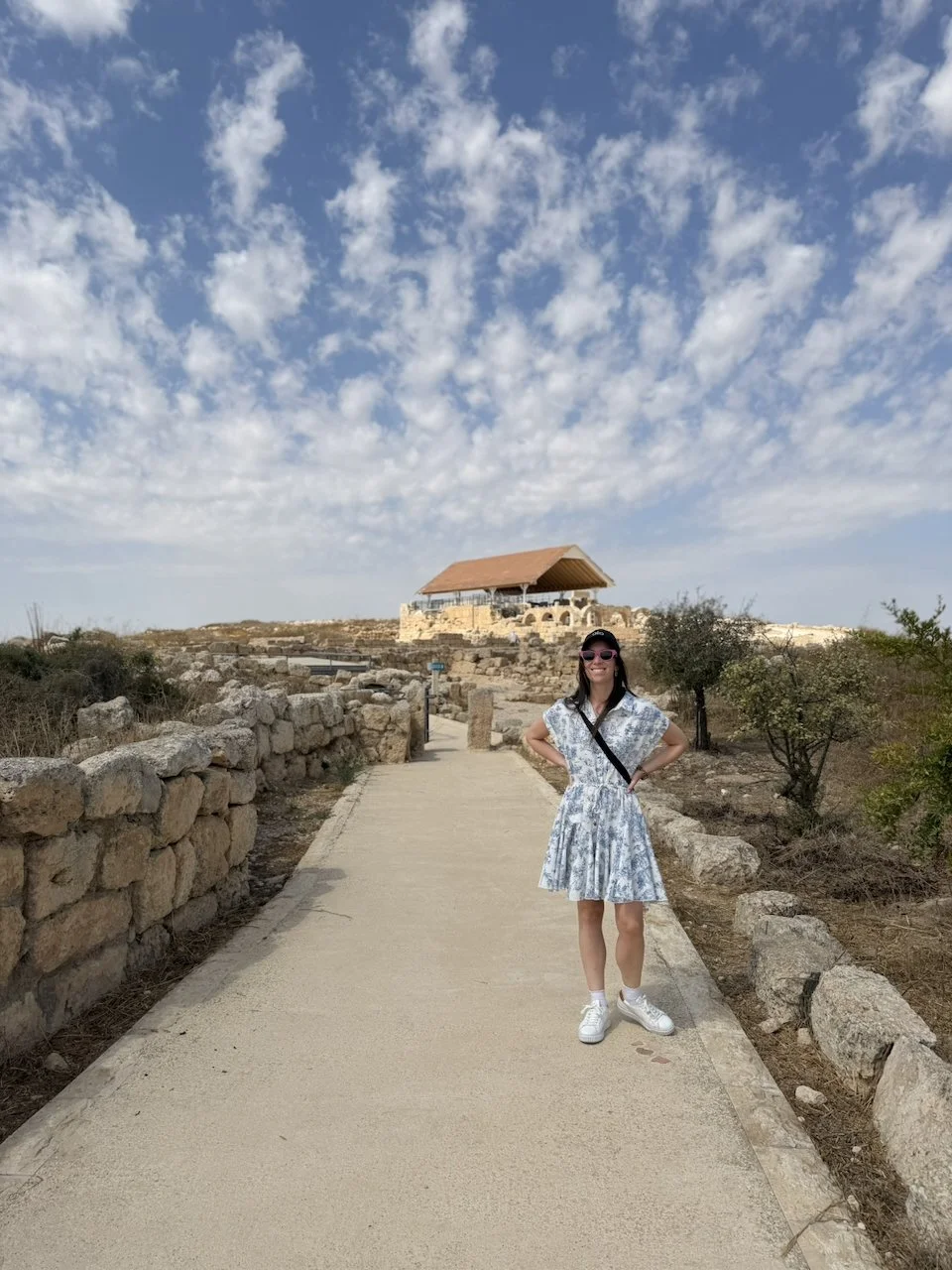
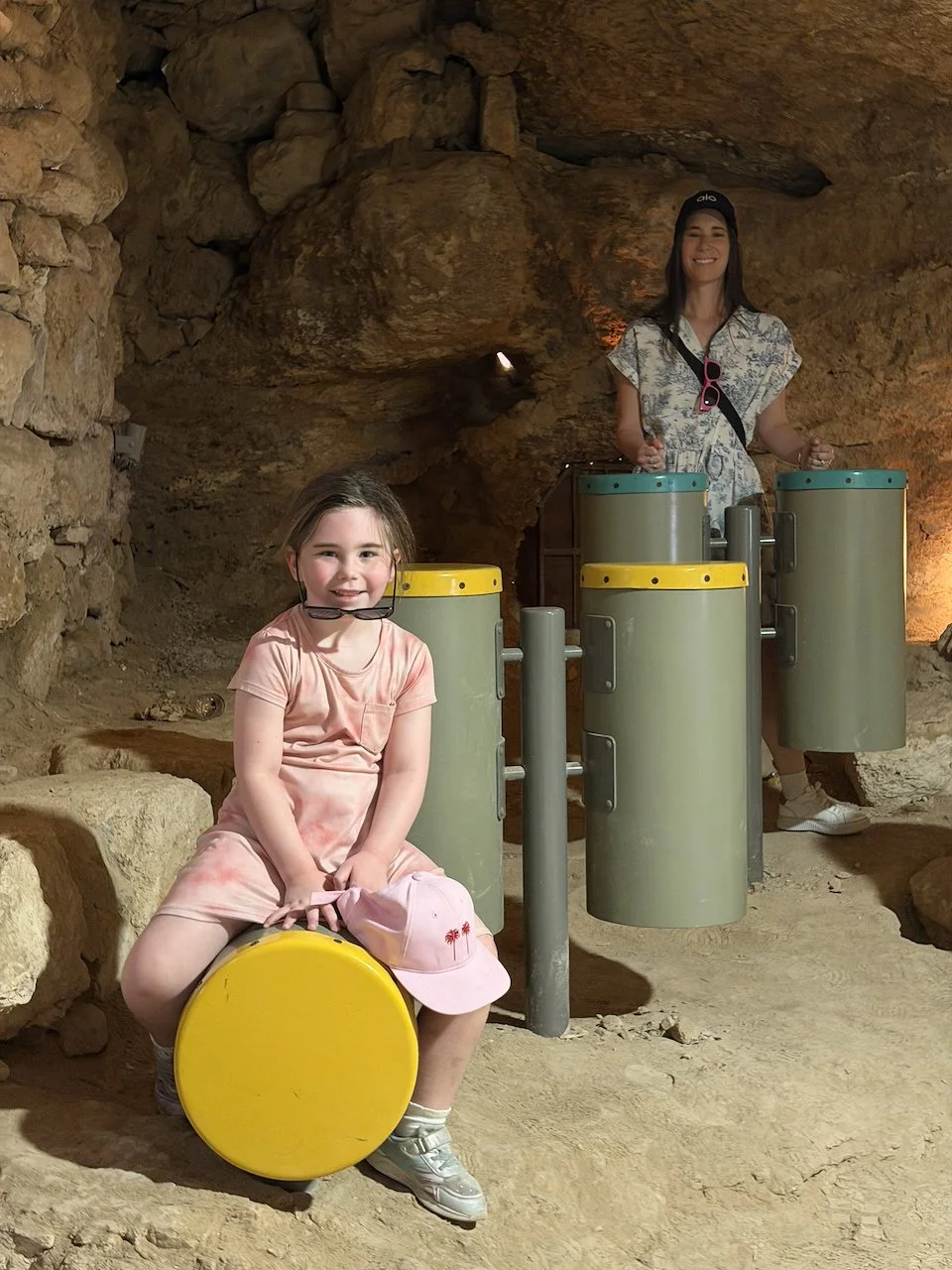
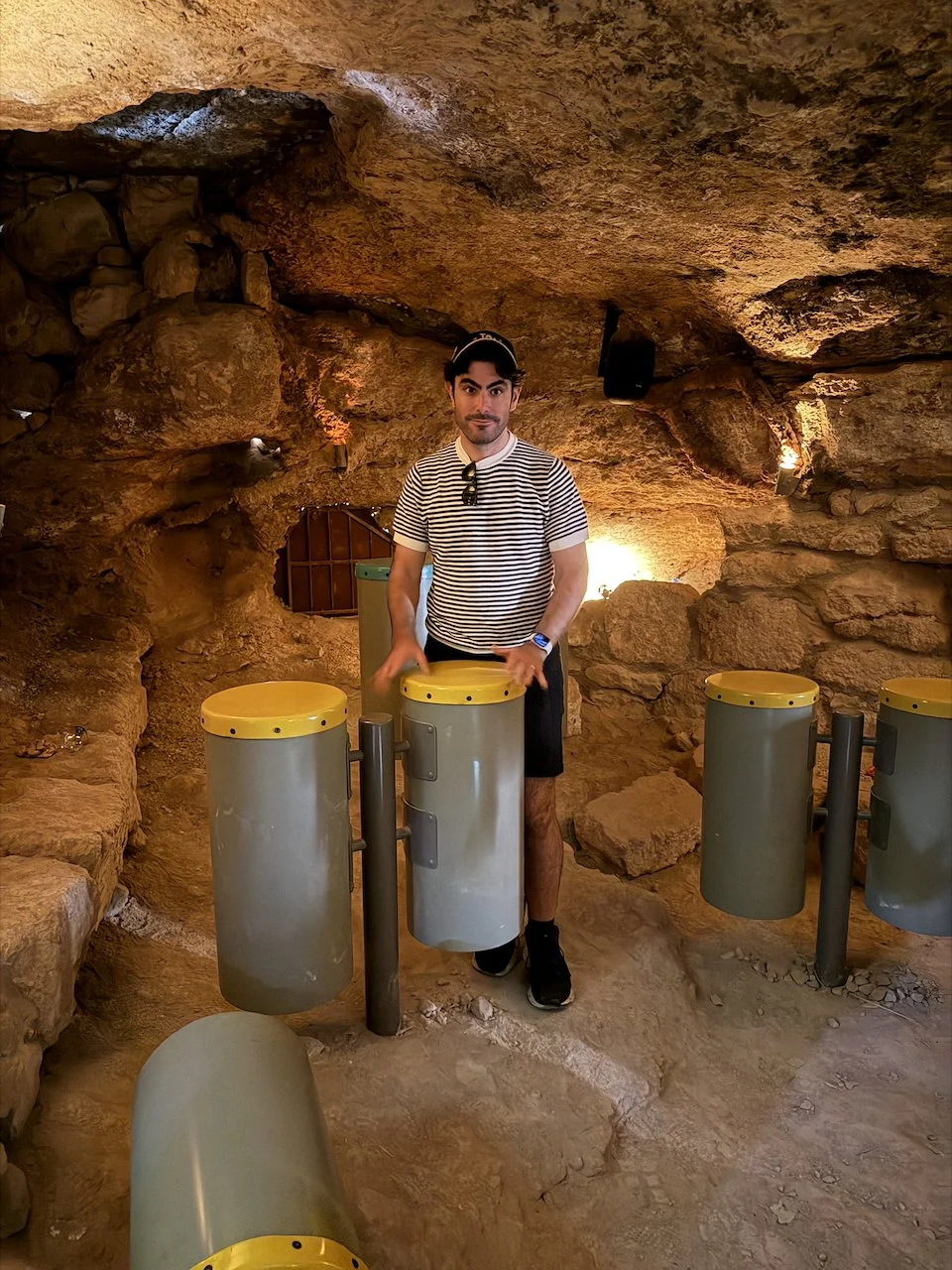
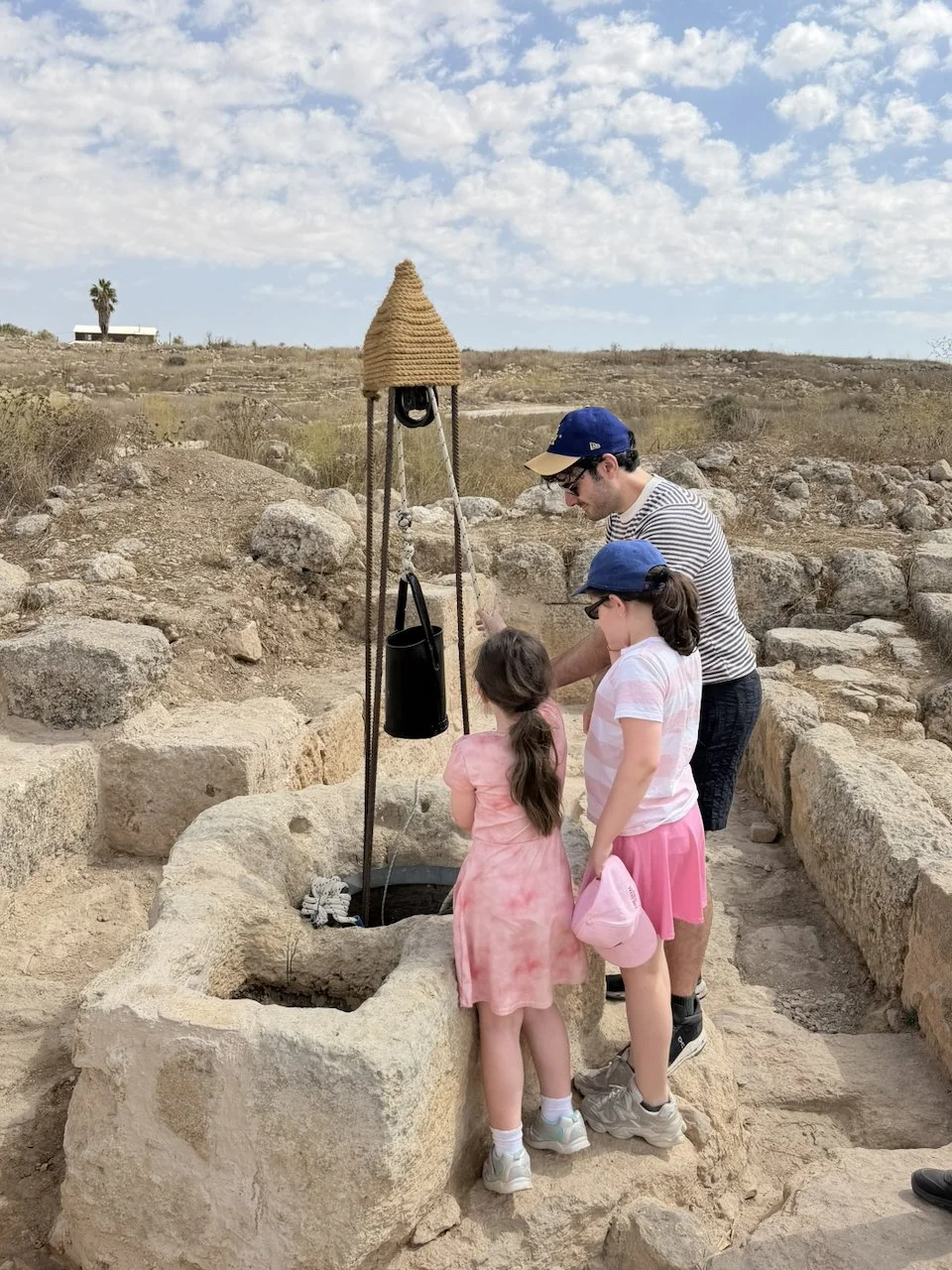
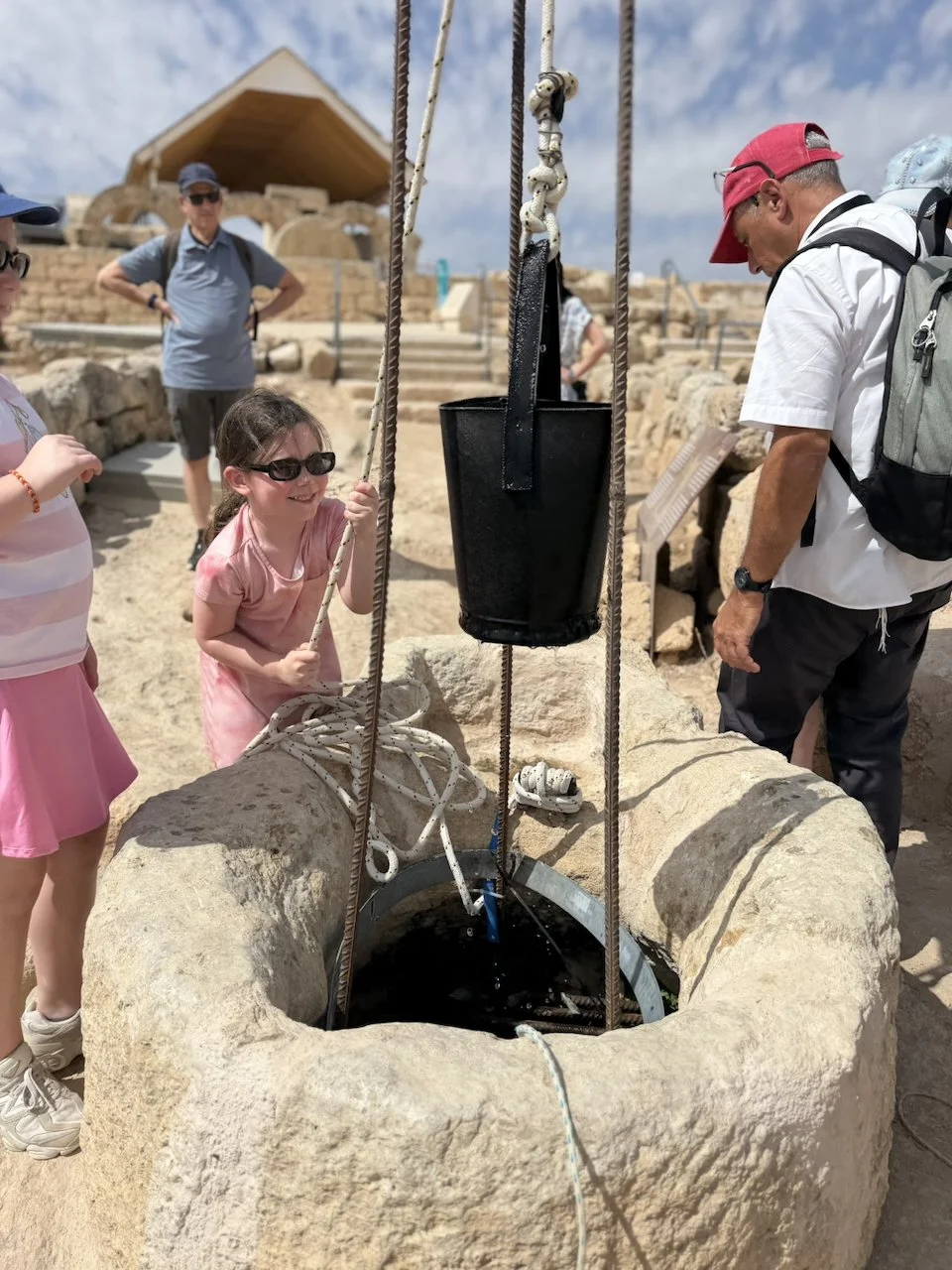
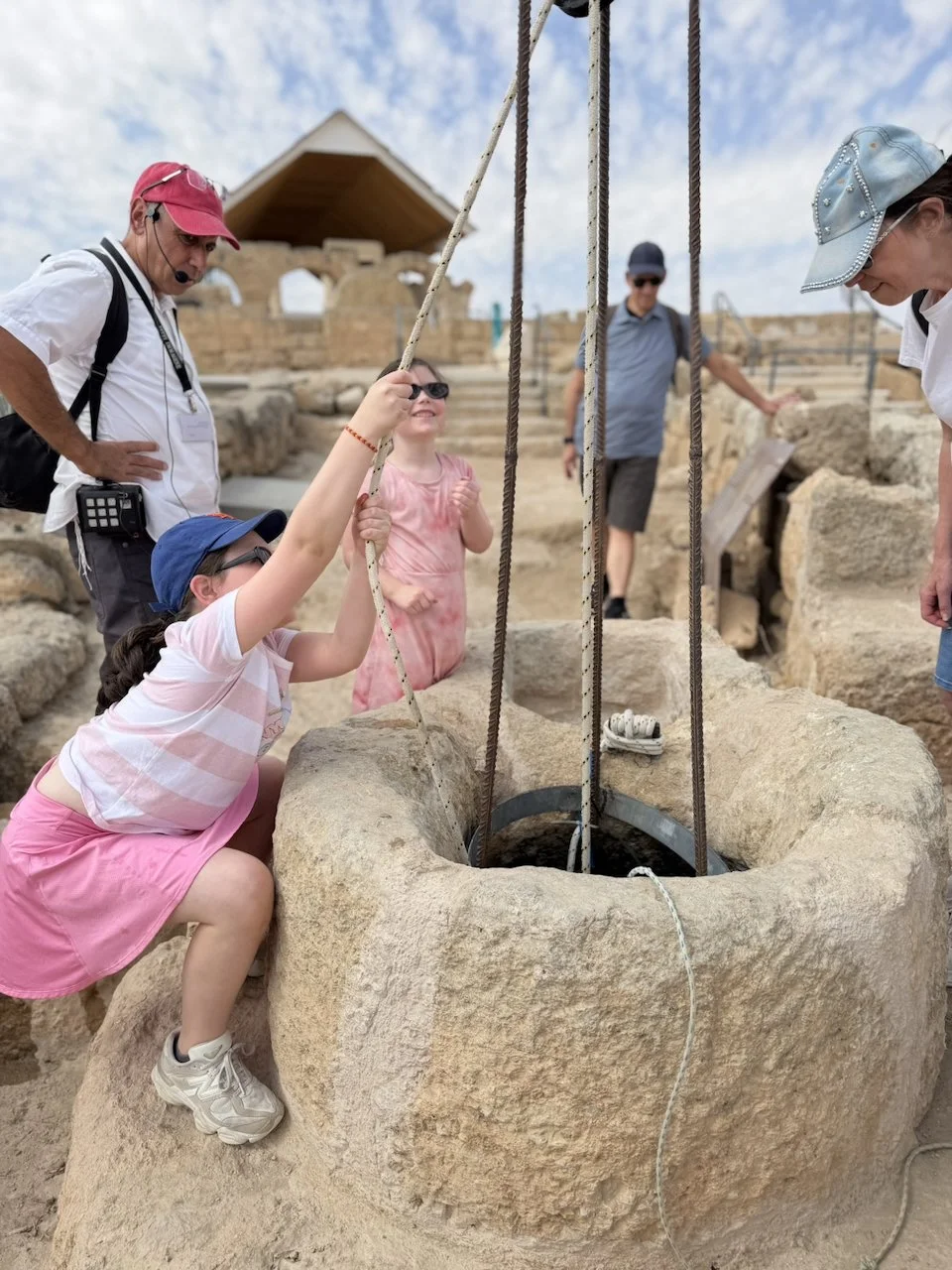
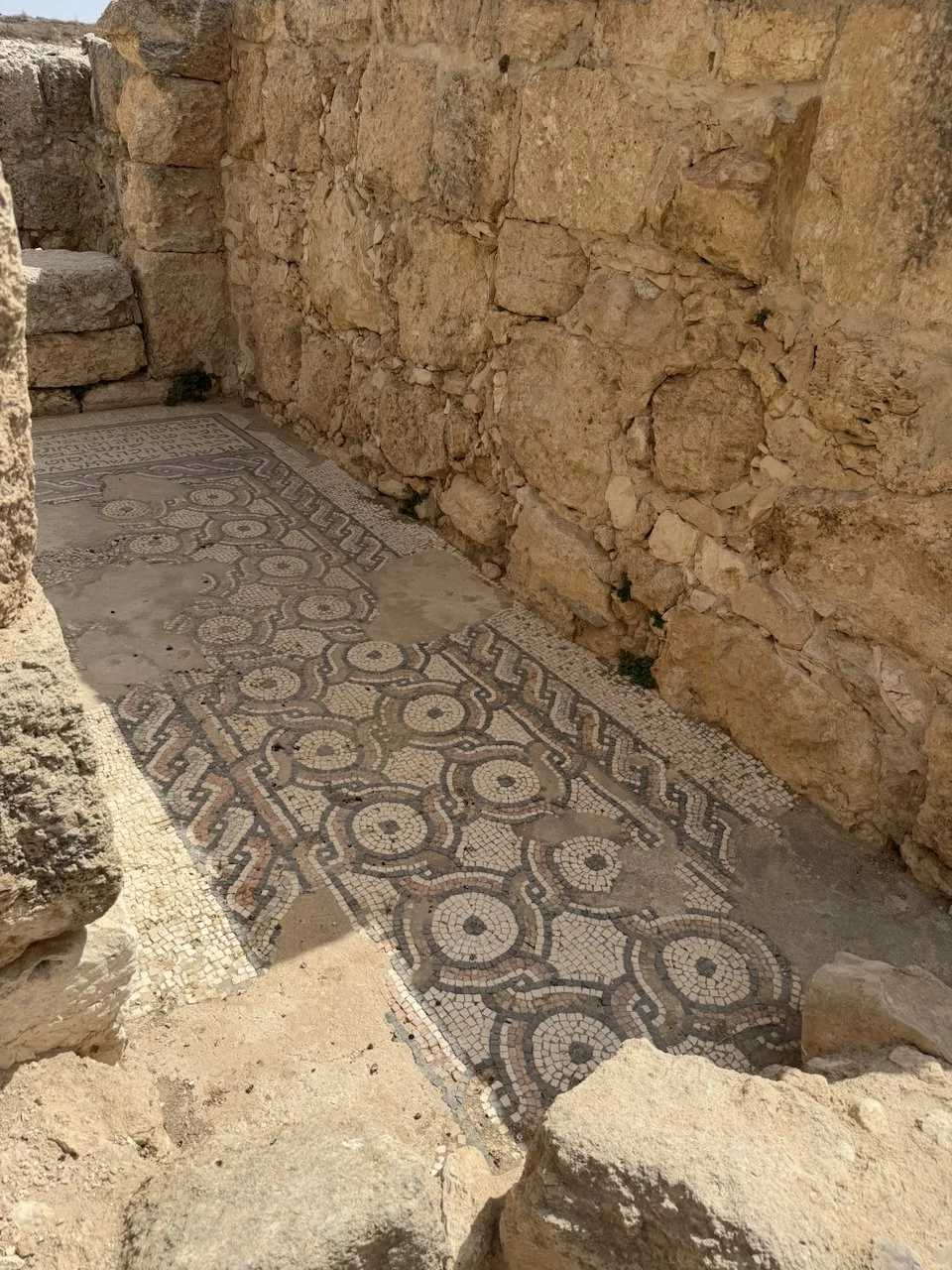
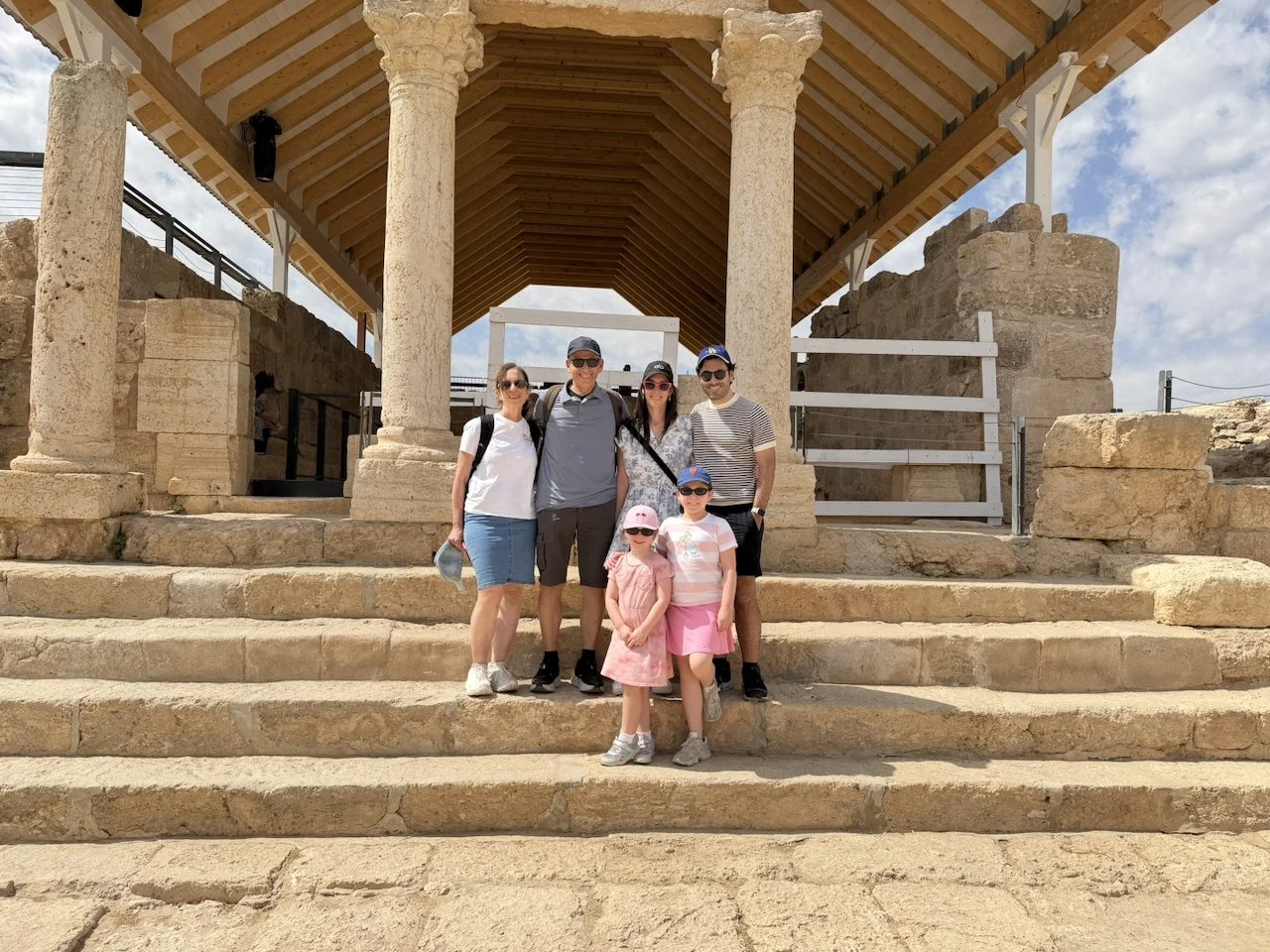
Our first stop was ancient Susya. Shmaya explained that archaeological evidence suggests that Jews, mostly kohanim, fled Jerusalem after the destruction of the Second Temple and settled in Susya. Archaeologists found remains of a Jewish village there, including caves, homes, and a synagogue. It was really interesting to walk through. Inside the ancient synagogue, you can still see a mosaic floor and there’s an inscription dedicated to the person who paid for it. So basically, 1,500 years ago somebody said, “Sure, I’ll donate the money, but I want my name on it.” Apparently nothing has changed.
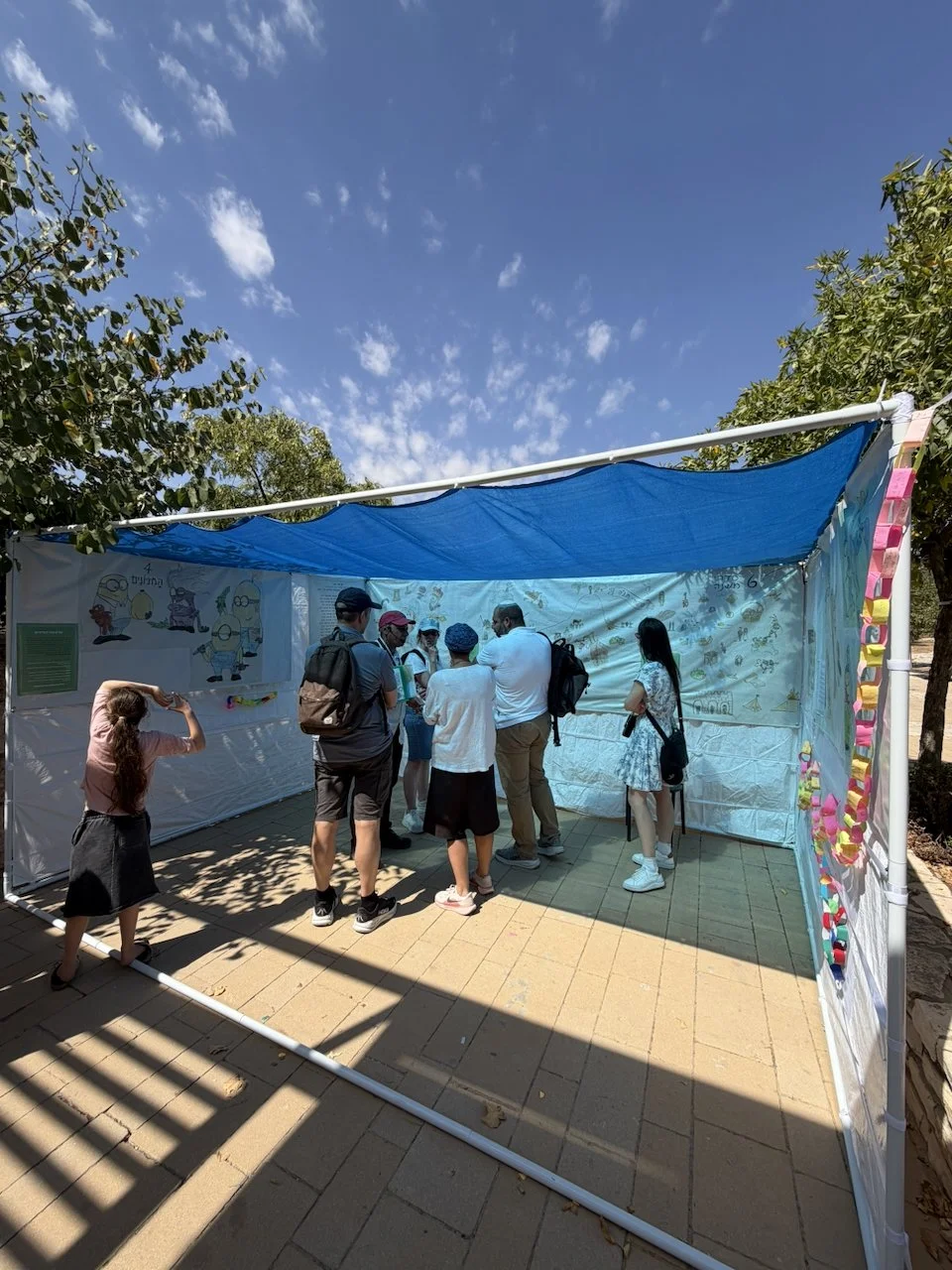
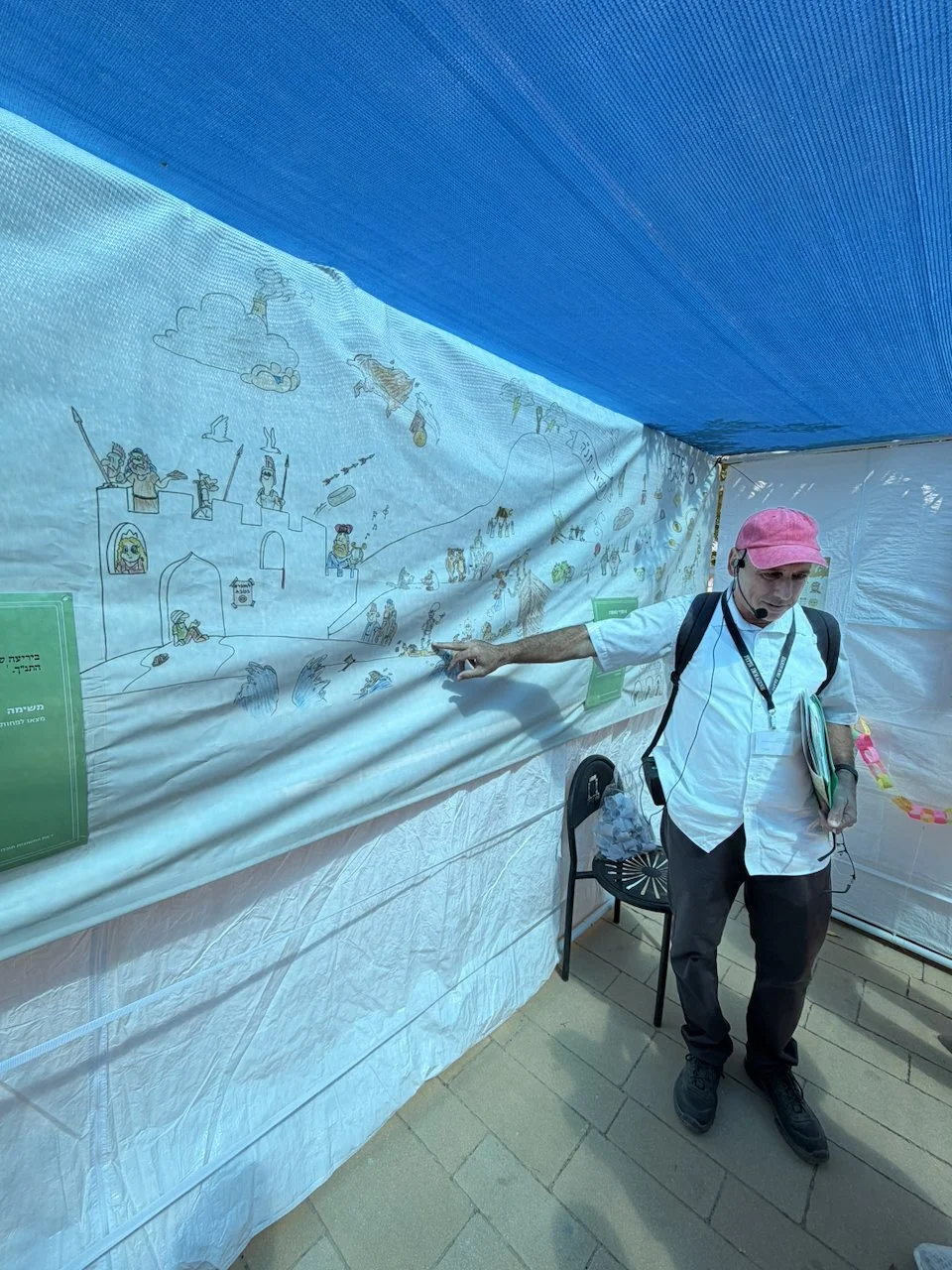
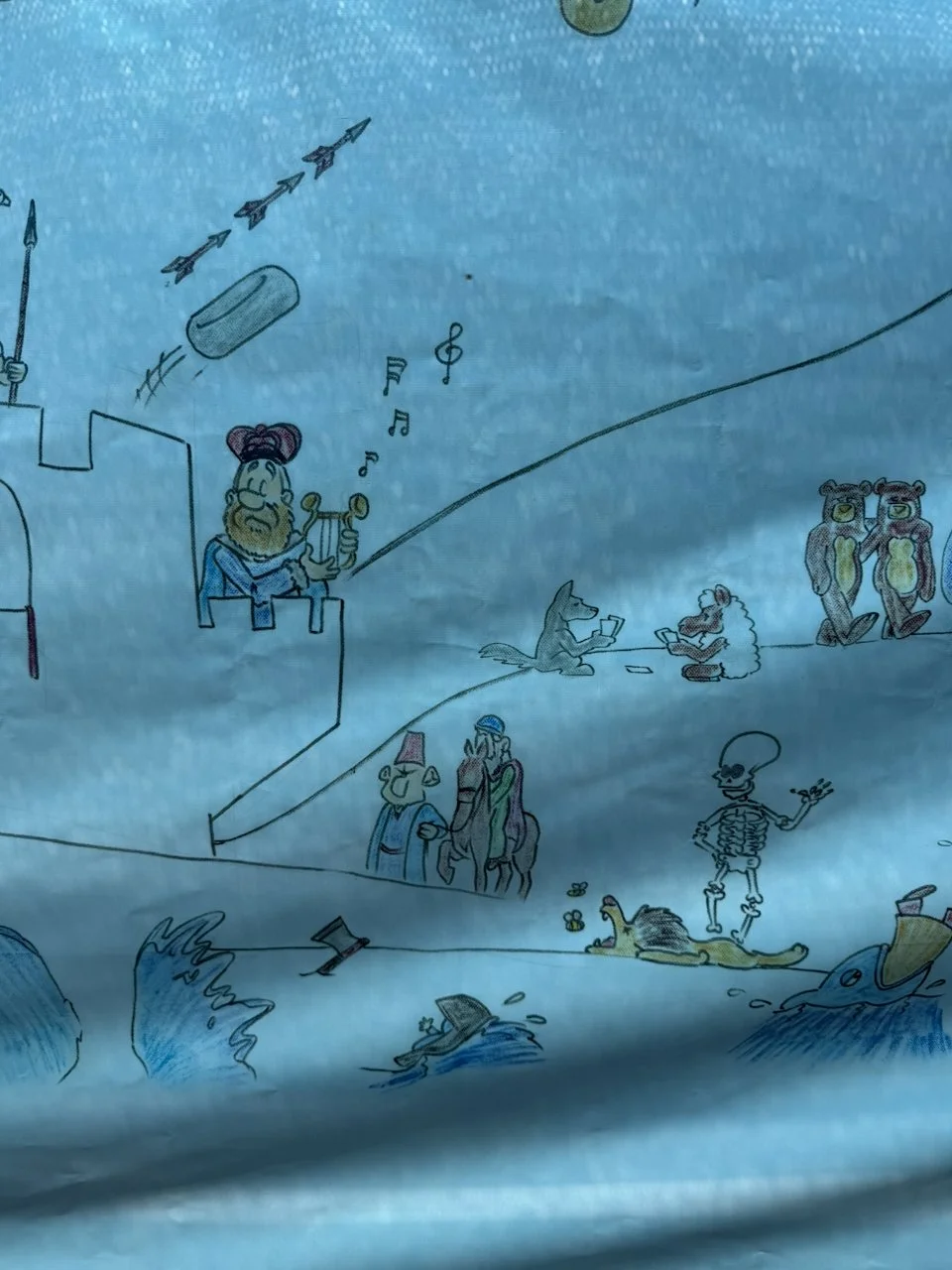
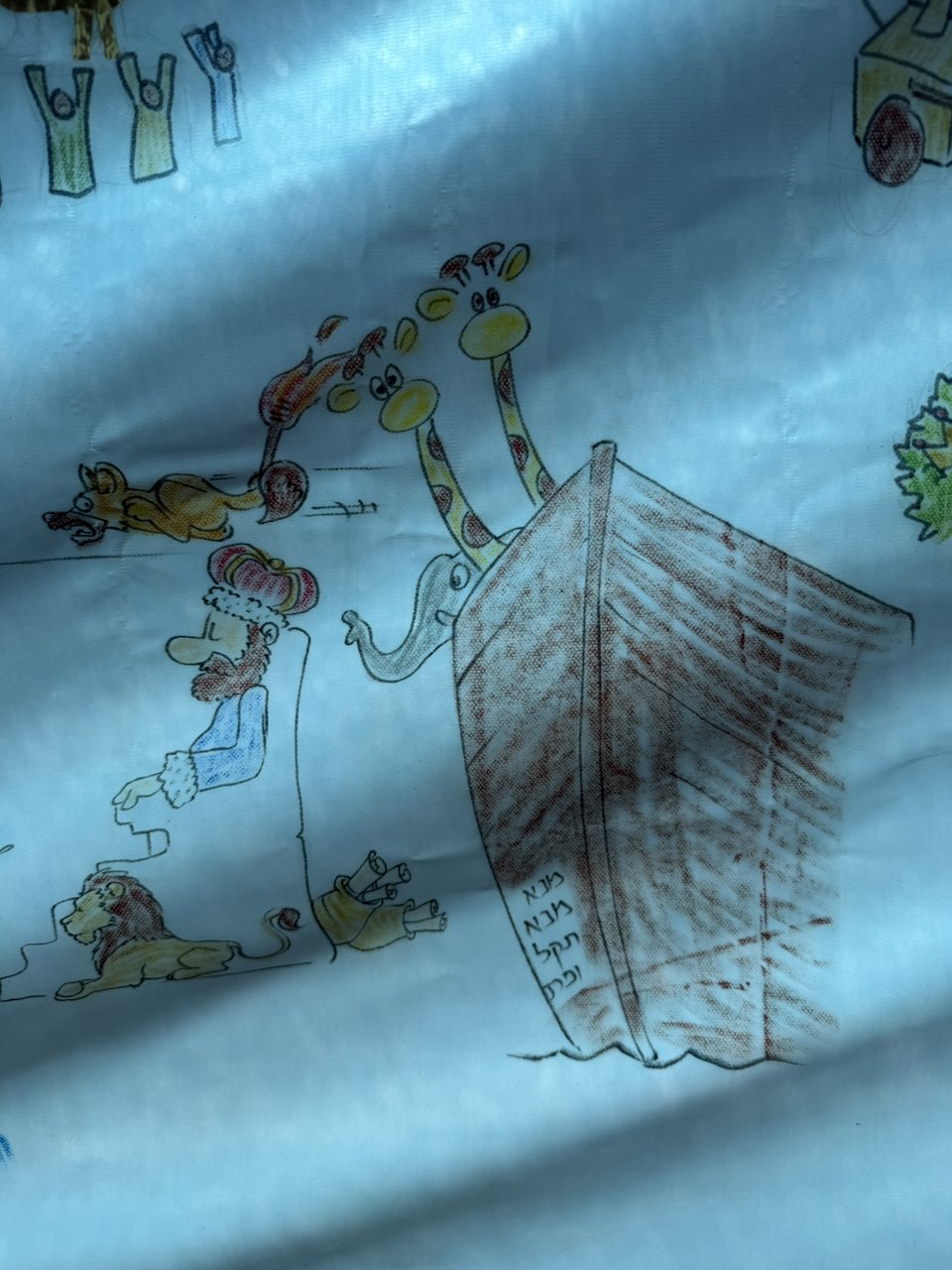
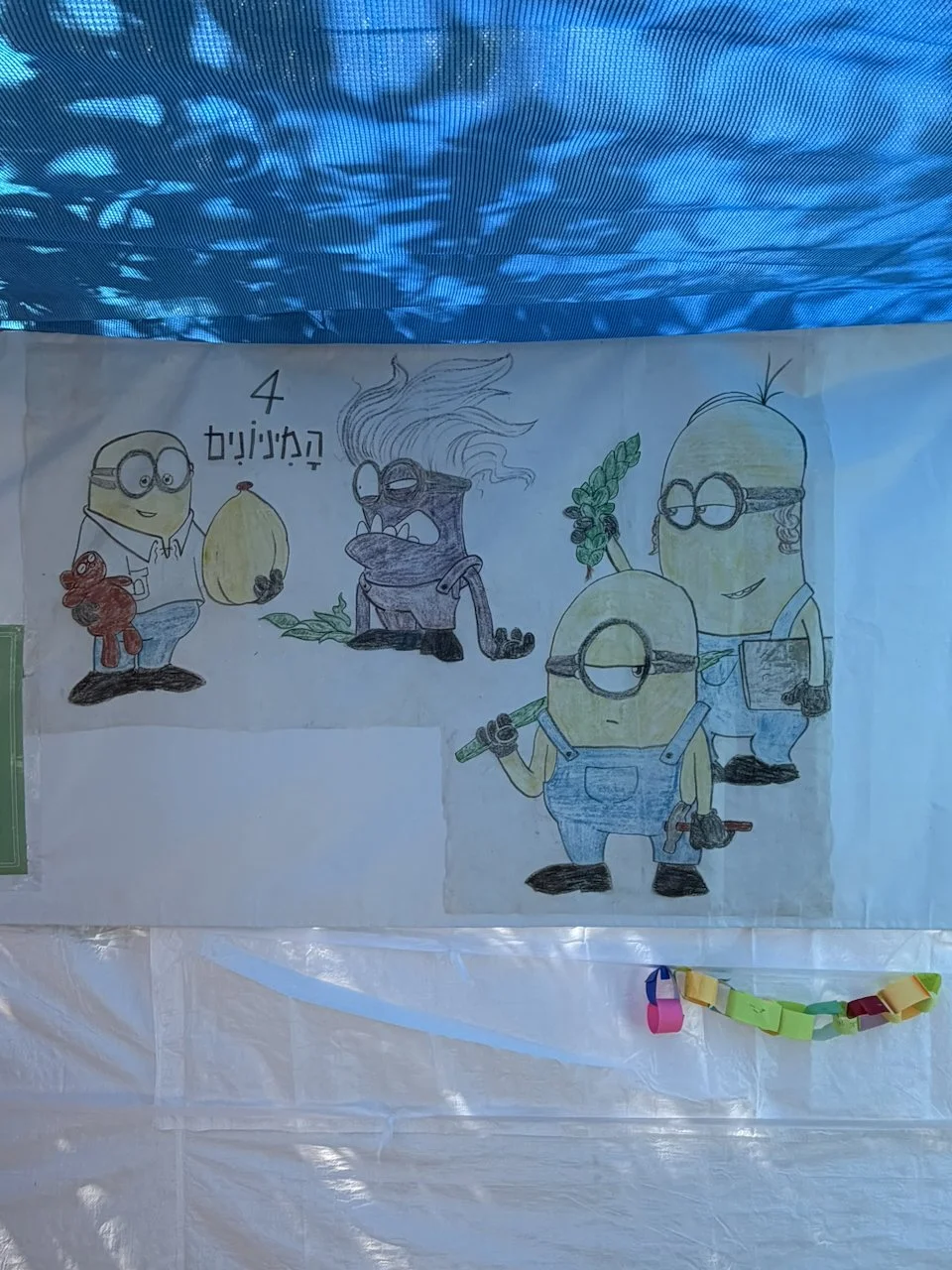
Before we even entered the archaeological site, Shmaya introduced us to his wife, who happened to be there helping with some Chol Hamoed activities for kids. There were bouncy houses, coloring, and all sorts of things set up near the entrance. Next to us was a sukkah covered with illustrations. Shmaya told us that the drawings had been made by his son, who was killed in Gaza along with a friend not long after October 7. They had been searching for hostages when an explosive device went off and both of them were killed. (The friend was Gal Eisenkot, the son of Gadi Eisenkot, who was IDF chief of staff and is now running for prime minister.) After his son died, the family found these drawings in his notebook, and the Israel Museum enlarged them and displayed them for a period of time. They were these very clever cartoon-style illustrations, many of them based on Jewish or Biblical ideas. One depicted a Kohen Gadol and connected to the Yom Kippur service. My favorite was a Sukkot one that showed four Minions—you know, the yellow characters from the Minions movies—and each one was holding one of the Arba Minim: a lulav, etrog, hadassim, and aravot. He called it the Arba Minyanim, which I thought was extremely clever. Obviously, it was very hard hearing the story behind the drawings, but it was also really special to see them.
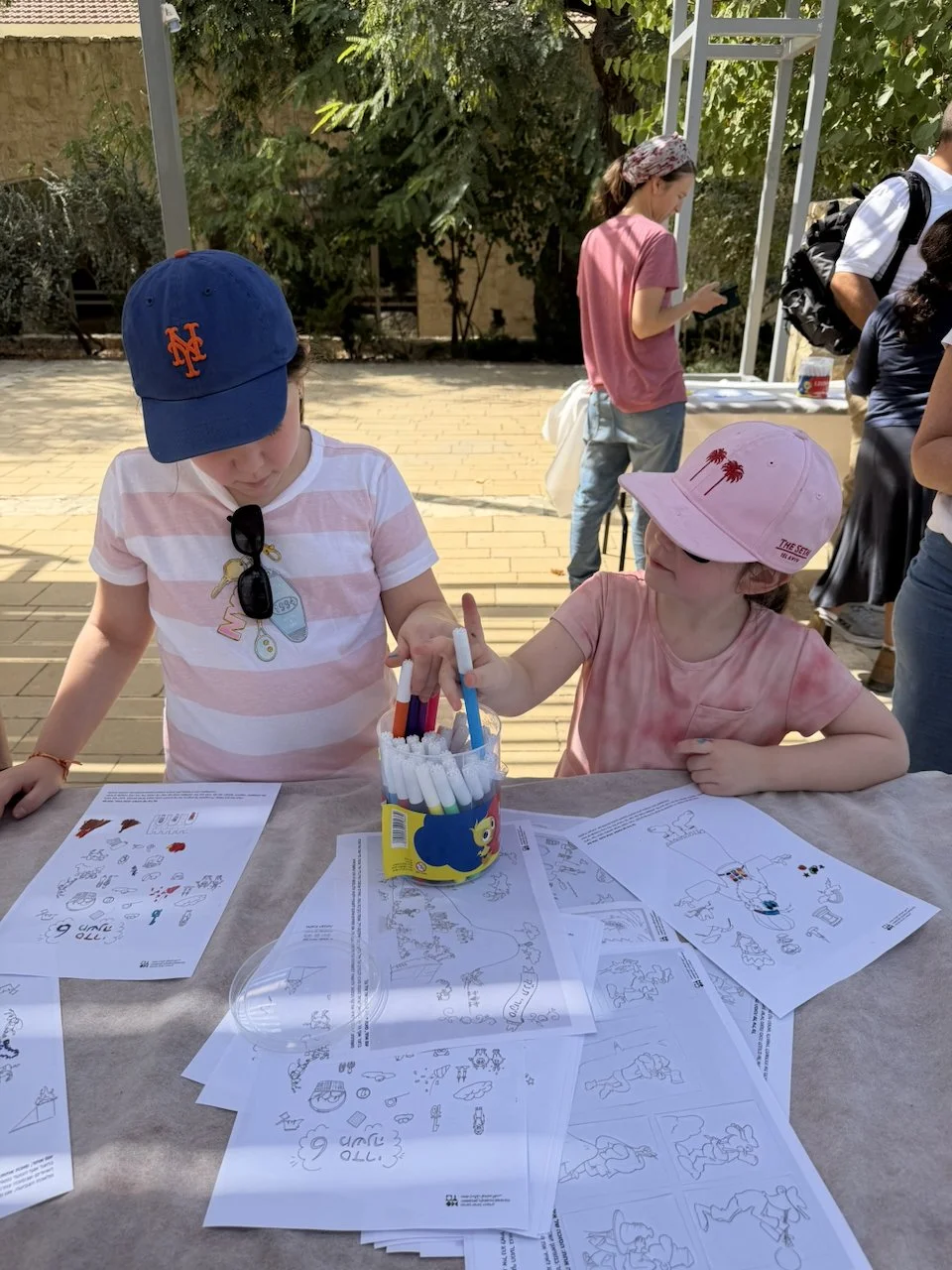
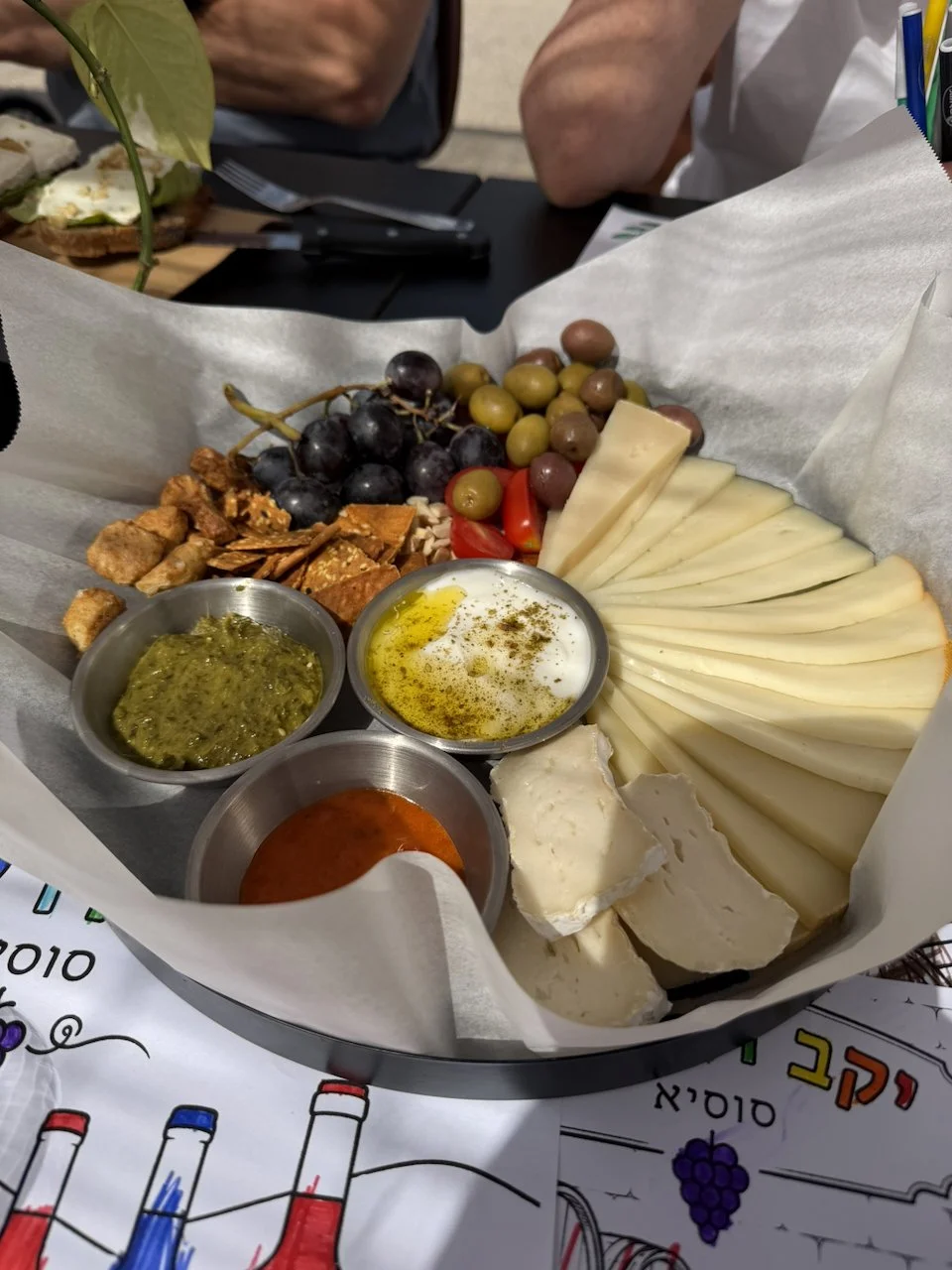
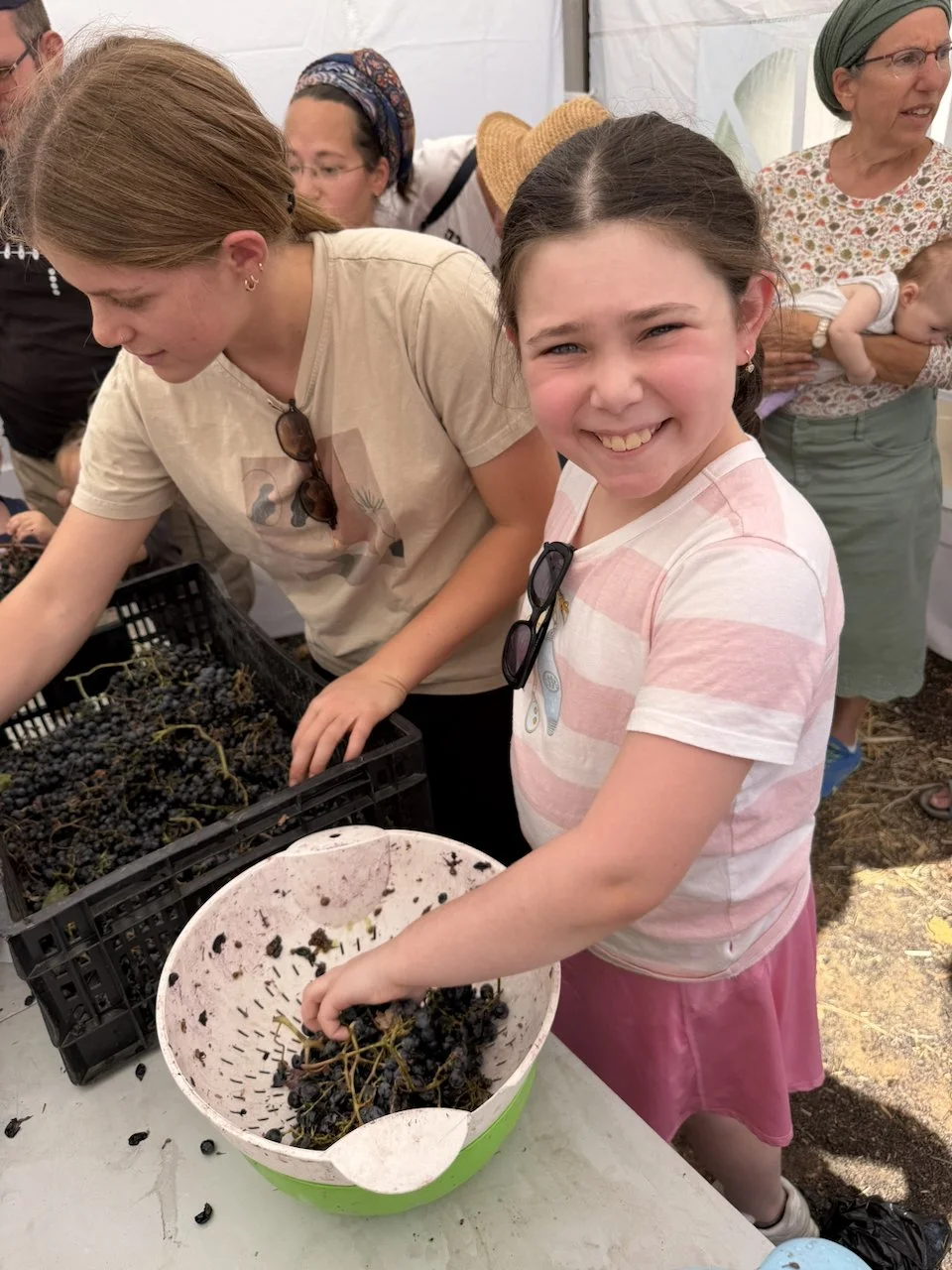
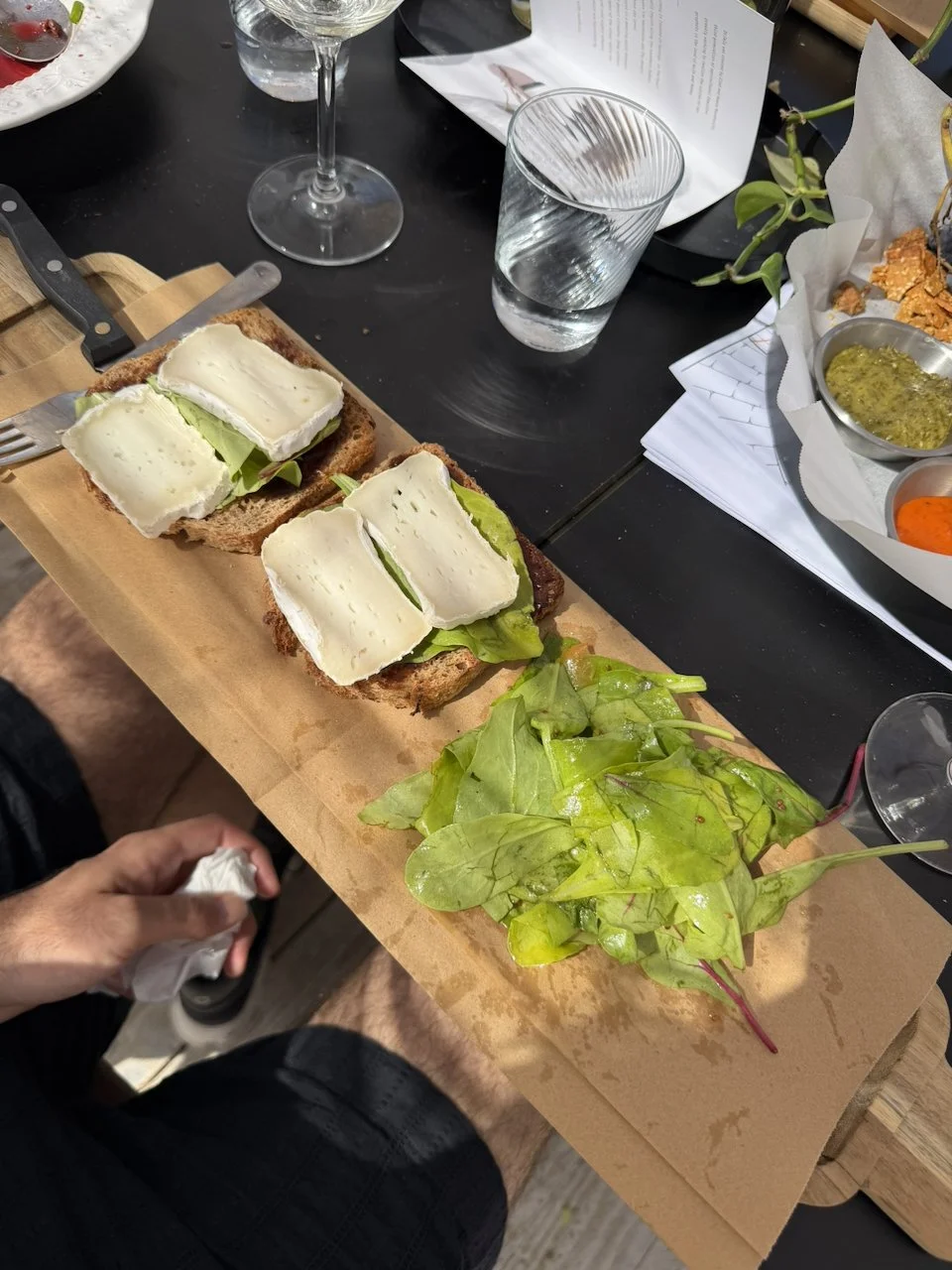
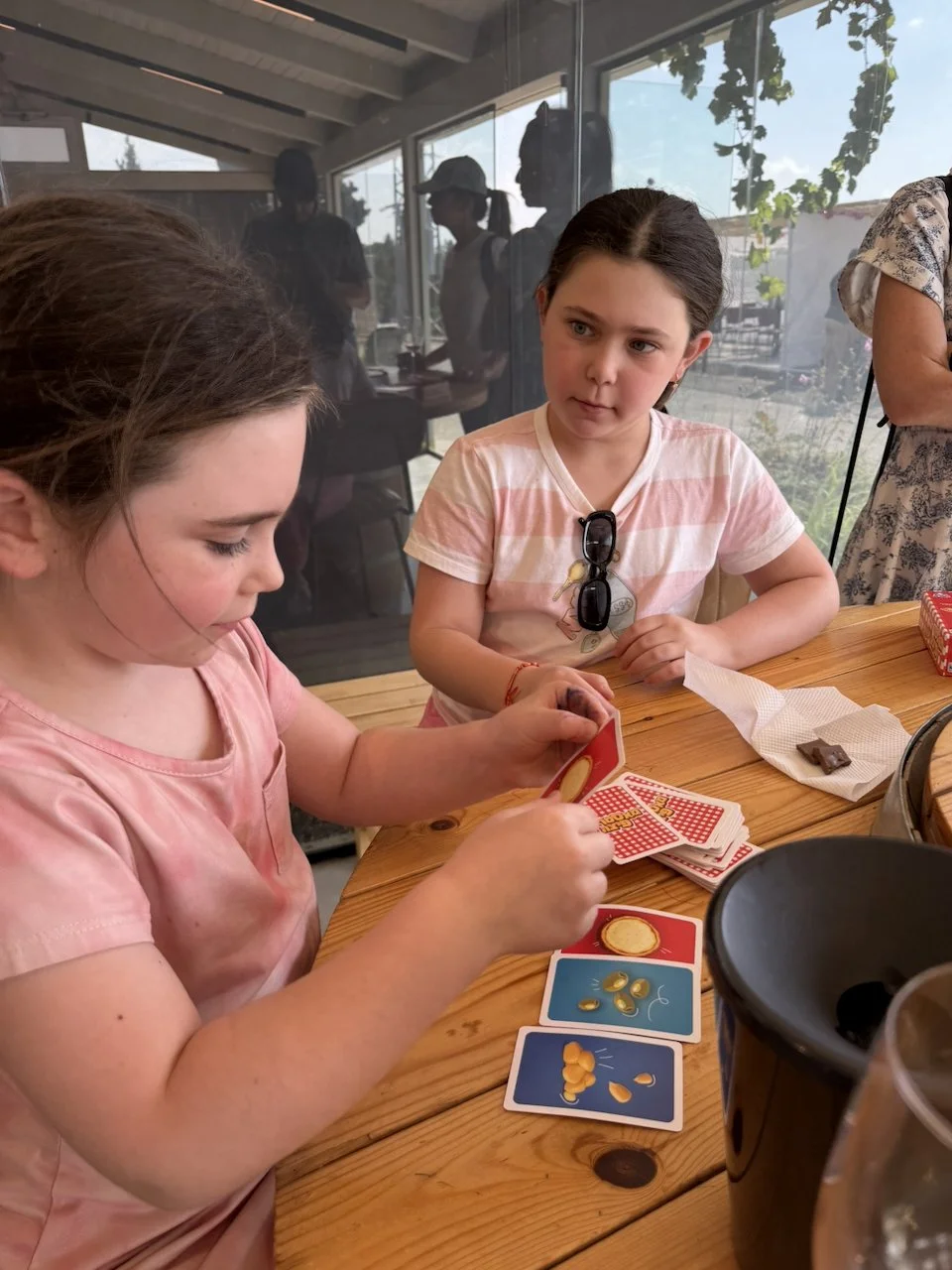
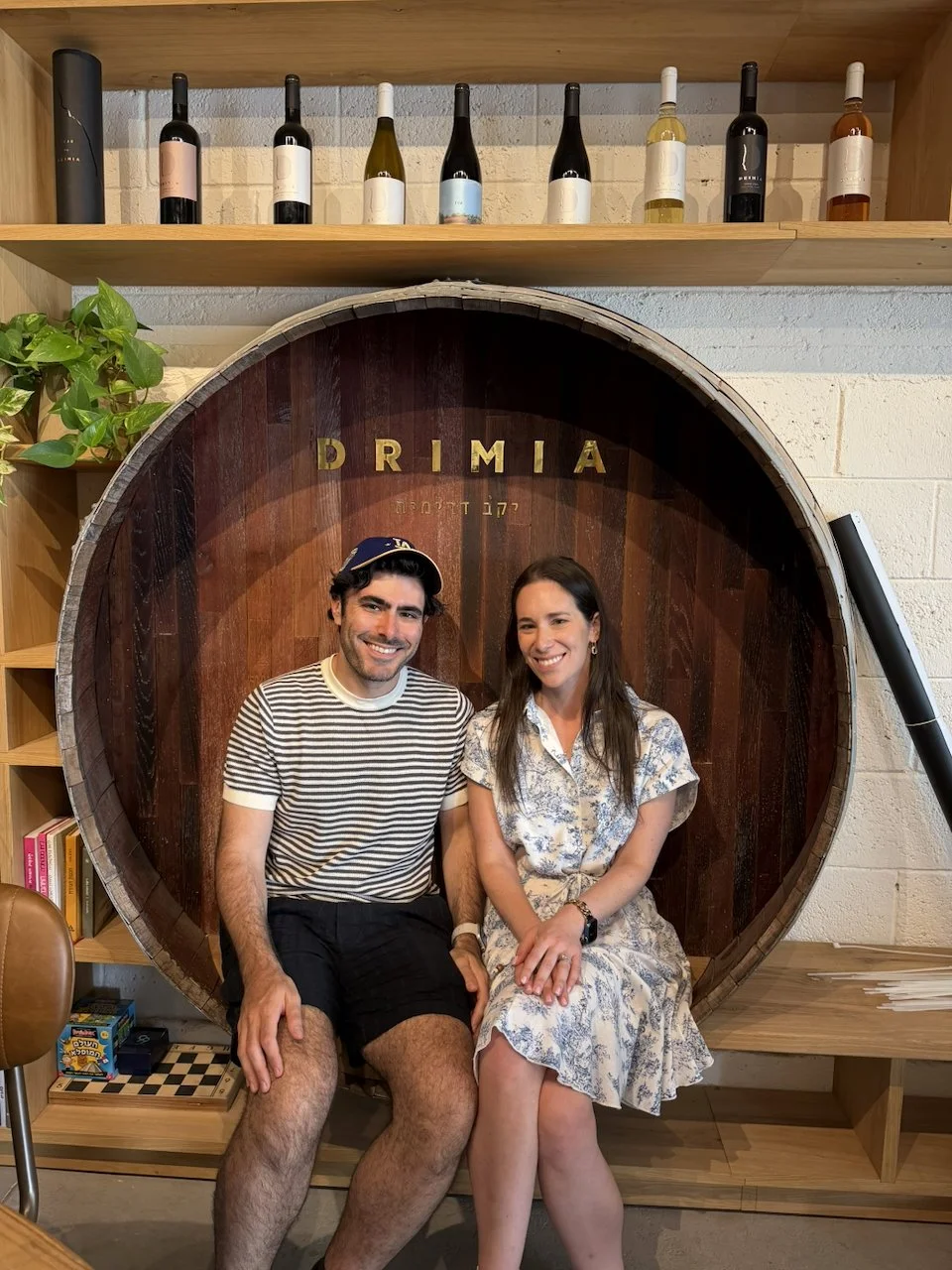
From ancient Susya, we went to Drimia Winery, which is in modern Susya. We had a very nice lunch with wine in the sukkah. There were also approximately one billion flies. Hallie got to crush grapes to make grape juice, which she found fairly disgusting, but I was impressed that she actually did it. They also had coloring sheets, which kept the girls occupied while we were sitting there.
During lunch, two people from the Har Hevron Regional Council came to speak with us about a program they are trying to develop for children in the area. The idea is to create after-school music programming where kids can learn to play instruments. They said the government is helping fund the program itself, but they still need money to purchase the instruments. They told us they were looking to raise around $100,000. We’re not sure if they thought we were going to fund the whole thing, but Tzvi set them straight and said, “we don’t have $100,000.” If anyone reading this happens to be looking to fund a children’s music program in Har Hevron though, apparently we know some people.
After lunch, we drove to Kiryat Arba and visited Moked Arba, the security center that monitors Kiryat Arba, the Jewish community in Hebron, and the surrounding area. That was fascinating. We met the guys who run the operation and saw how they monitor everything. They even showed us some video of incidents that they’d dealt with. As we were leaving, they let Hallie try on a protective vest and helmet. It was unbelievably heavy. I think she was genuinely shocked when we explained that this is the kind of weight they are carrying when they go out on missions. It was just such a cool visit and such an unusual thing to get to see firsthand. And then, at the very end, my dad went to the bathroom and could not figure out how to flush the toilet, so he had to ask the man responsible for security across all of Har Hevron how to flush the toilet. At least he didn’t ask if anyone ever falls in.
From there, we drove to Me’arat HaMachpela. We were especially excited to take Hallie because she had learned about it in school. It also happened to be one of the handful of days during the year when Jews are permitted access to the entire complex. Normally, different sections are divided between Jewish and Muslim worshippers, but on certain Jewish holidays the full site is opened to Jewish visitors. Which, in theory, sounded great. In reality, it was absolute insanity.
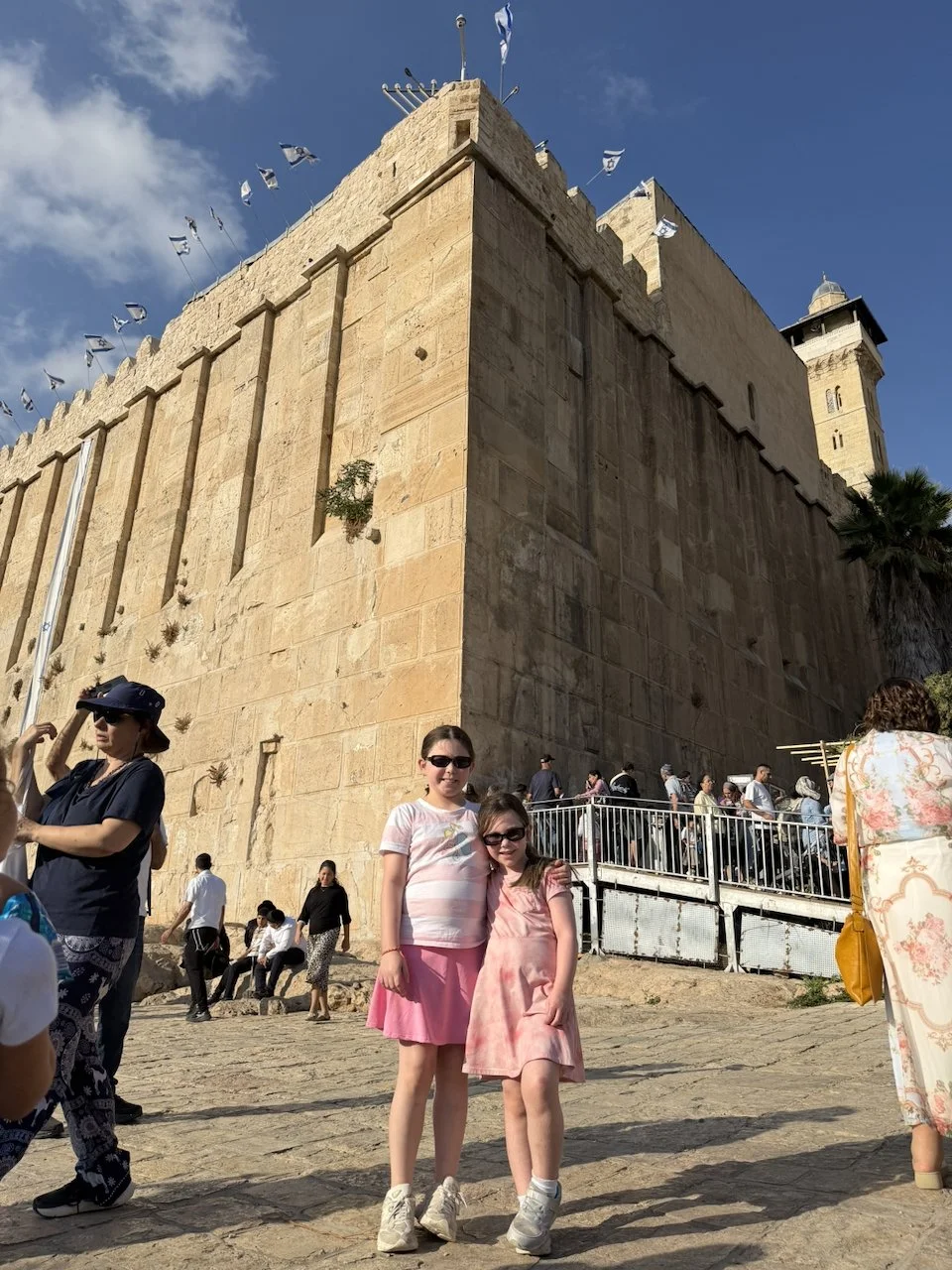
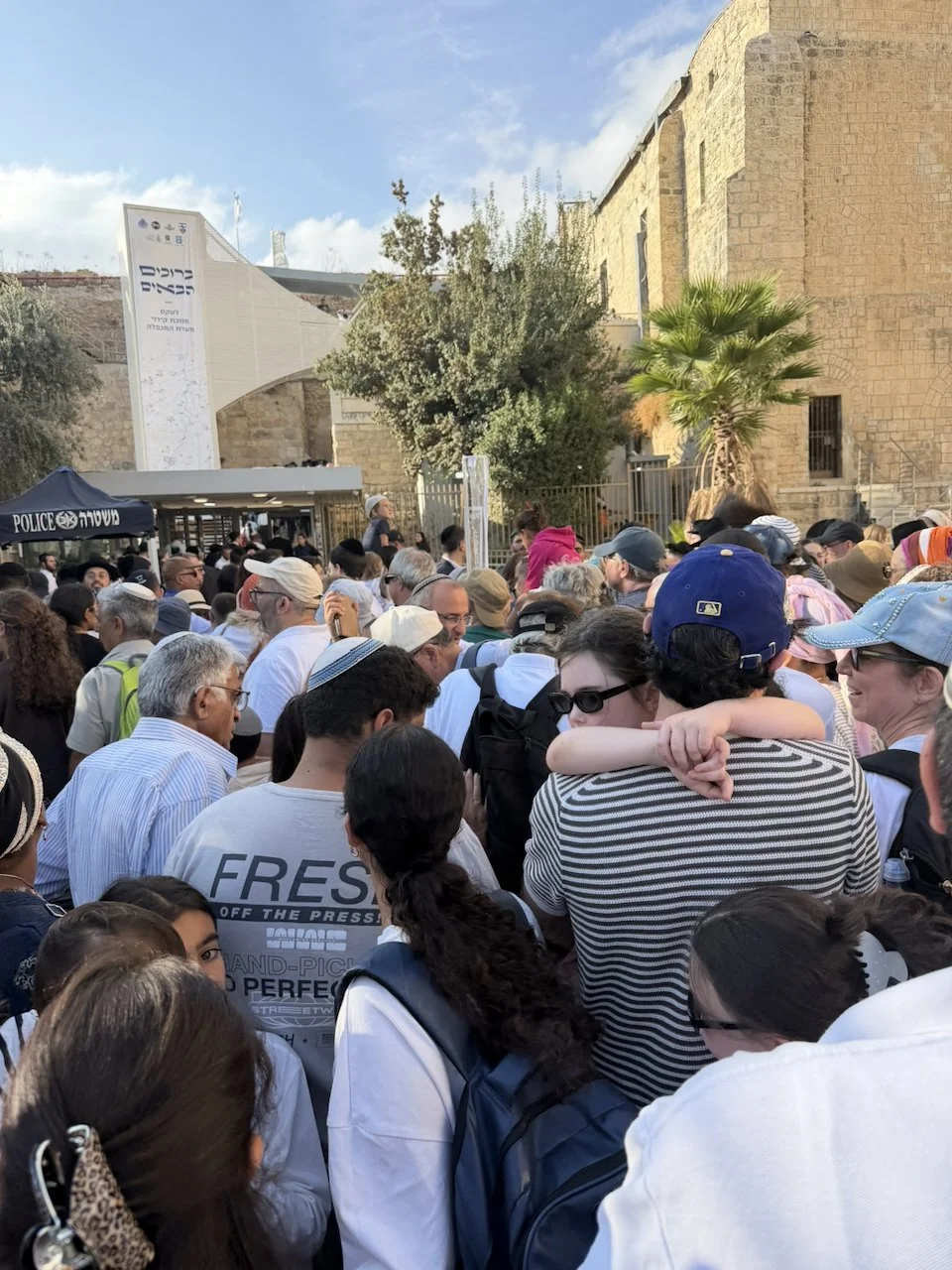
First, as you approach, there is basically an entire Chol Hamoed carnival happening outside. There were rides, activities for kids, and crowds everywhere. Then we reached the entrance to Me’arat HaMachpela and they weren’t letting anyone in yet. So we were all packed together, basically corralled on top of one another, waiting. Eventually, the crowd started moving and we were herded forward like sheep. We finally got inside, and then suddenly someone told everyone to separate into men and women, which made absolutely no sense because nobody had been separating men and women anywhere else. But fine. So the men went one way and we went another. And the women’s side was terrifying. It was so crowded that you could barely move. We couldn’t even get close enough to see some of the graves, including Yitzchak and Rivka (which are the ones only opened on the ten special days), because there were simply too many people. It was incredibly claustrophobic, and at a certain point it honestly felt unsafe. I have no idea how they allowed that many people into such a small space at once. I never need to do that again.
The men, meanwhile, somehow had a completely different experience. Tzvi, my dad, and Shmaya walked around, saw the mosque that Jews can only see ten days a year, saw all the different graves, and apparently had a perfectly pleasant visit. It was crowded, but nothing remotely like what we experienced. I still do not understand how that happened.
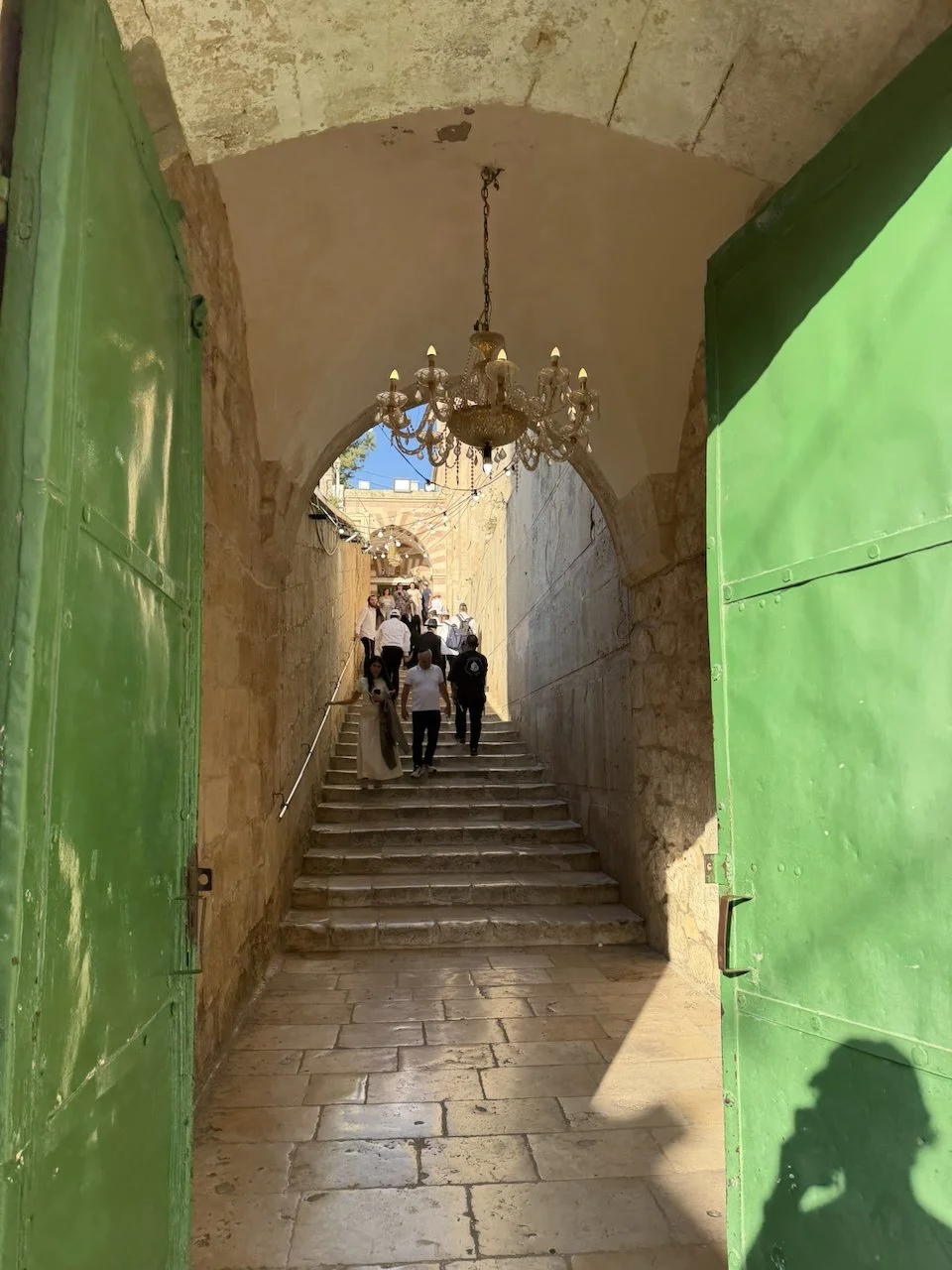
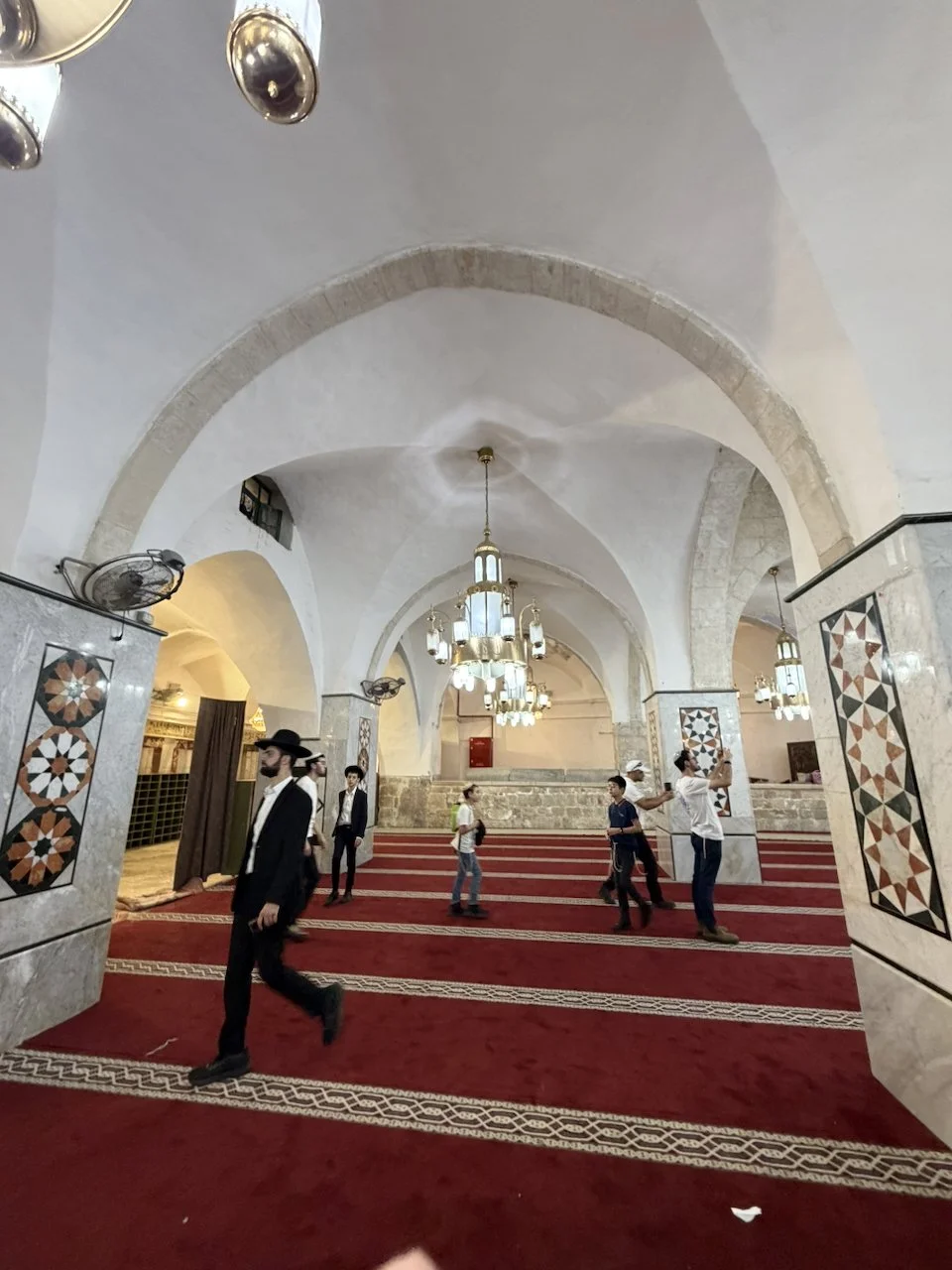
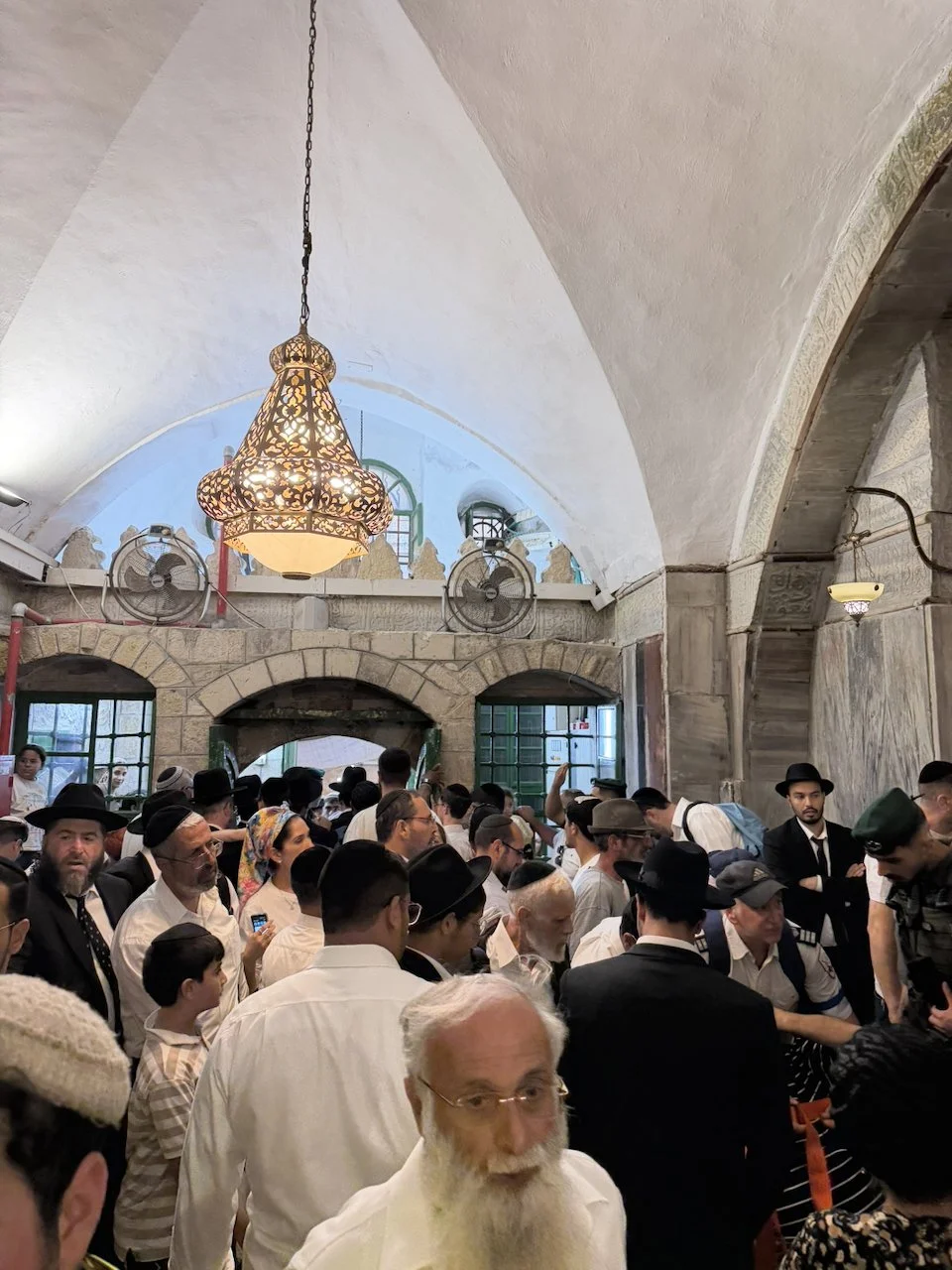
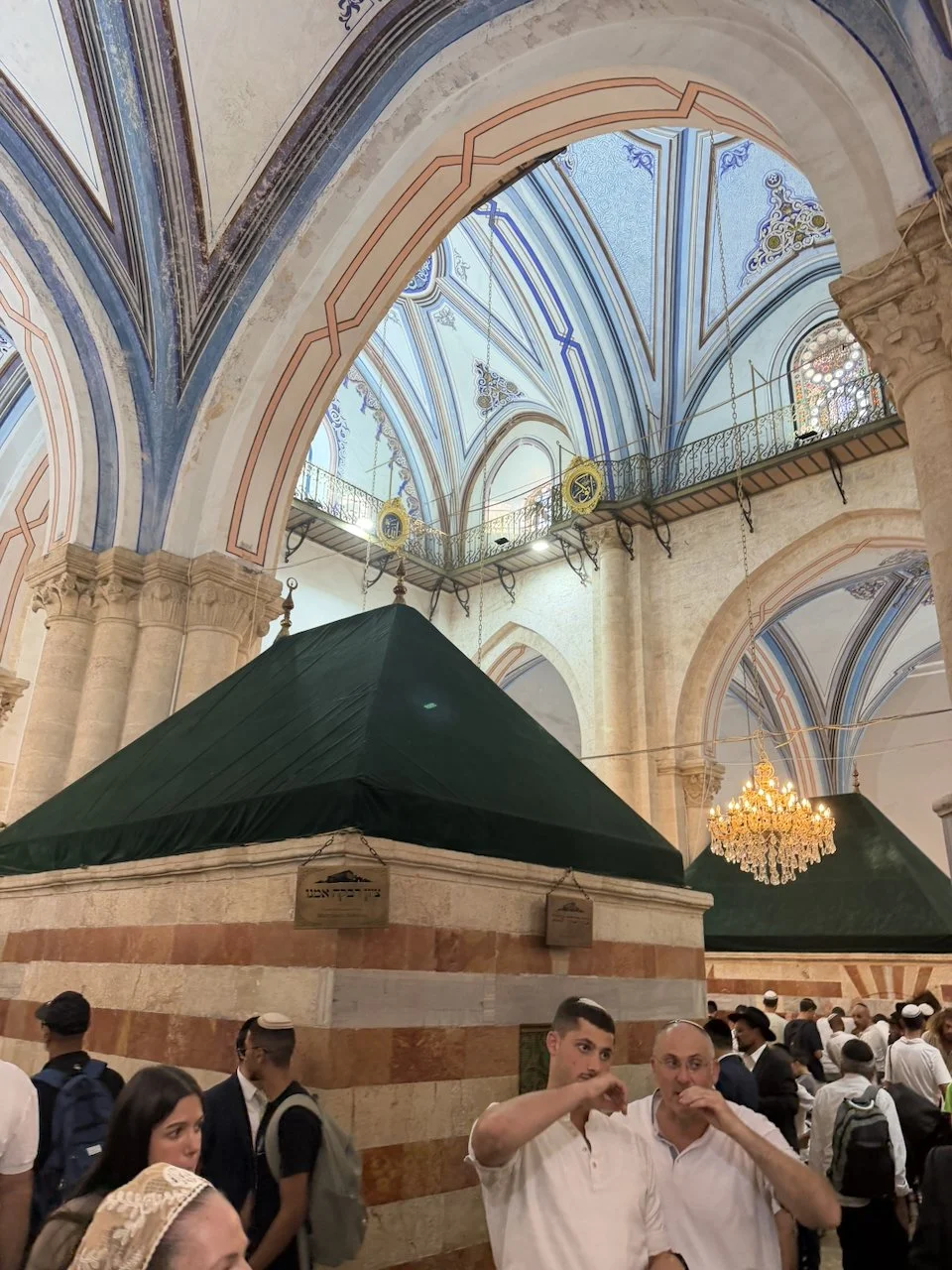
I think the whole thing was also kind of anti-climactic because there’s just not that much to see. It’s basically monuments that are covered in carpets and inside a box that’s inside a little building that you can look into through some bars. Any by the way, none of these monuments are actually on top of the real graves.
After Me’arat HaMachpela, we said goodbye to Shmaya and headed back to Jerusalem.
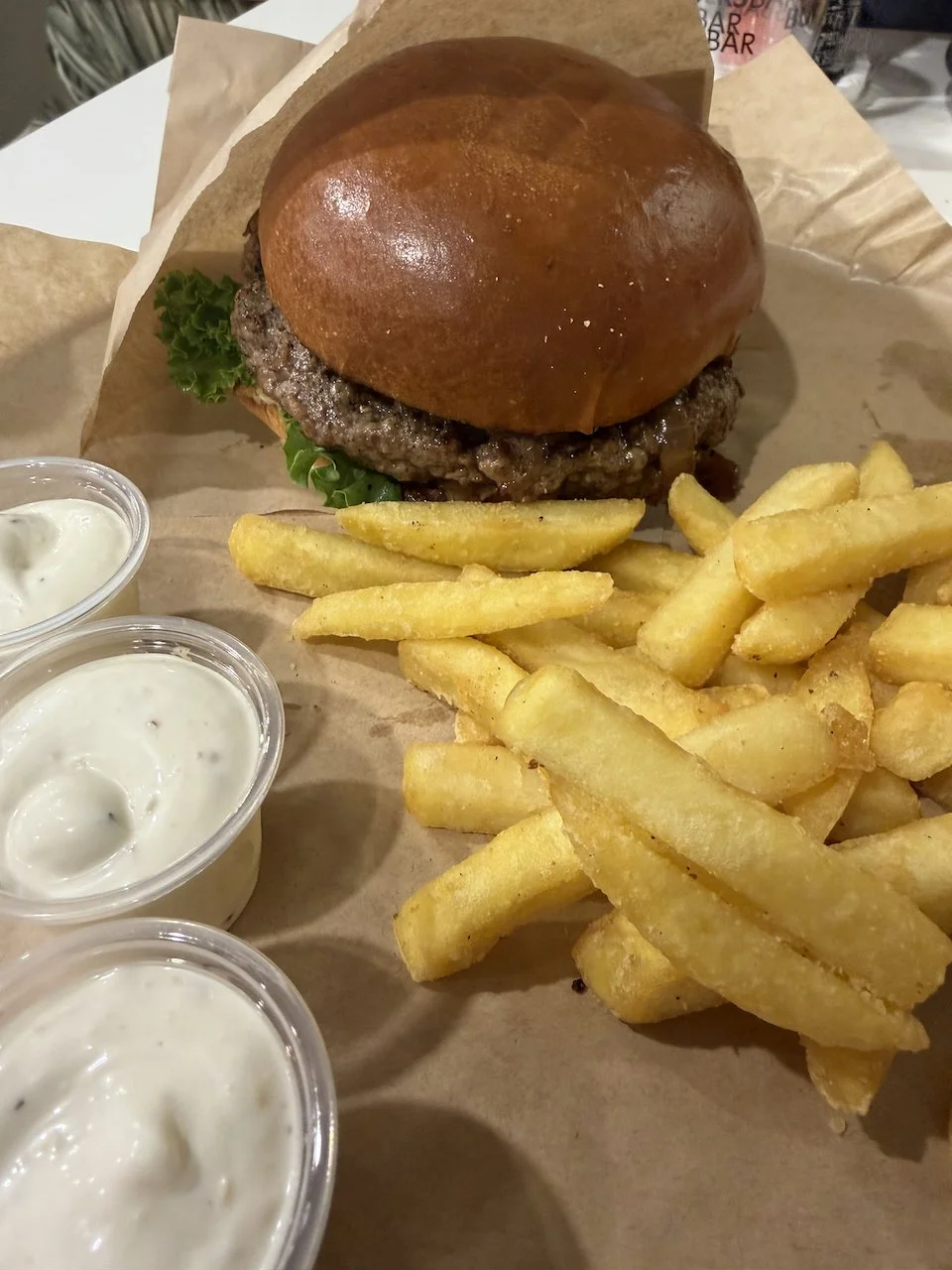
We got to the hotel, quickly dropped off our stuff, and decided we wanted a very easy dinner. Tzvi had been wanting Burgers Bar and absolutely did not want another sit-down restaurant. According to Google, there was a Burgers Bar about four or five minutes from the hotel. We even confirmed with the concierge that it existed. So we started walking. And walking. And walking. It was not where Google said it was. At a certain point I said, “There is absolutely no way this place exists.” We tried calling. Nobody answered. So we gave up, turned around, and walked all the way back to the hotel.
We walked into the lobby and basically confronted the concierge.
“What are you talking about? There is no Burgers Bar there.”
And he said, “I was there two days ago.”
So we explained exactly where we had gone.
And he said, “Oh. You needed to go one more block.”
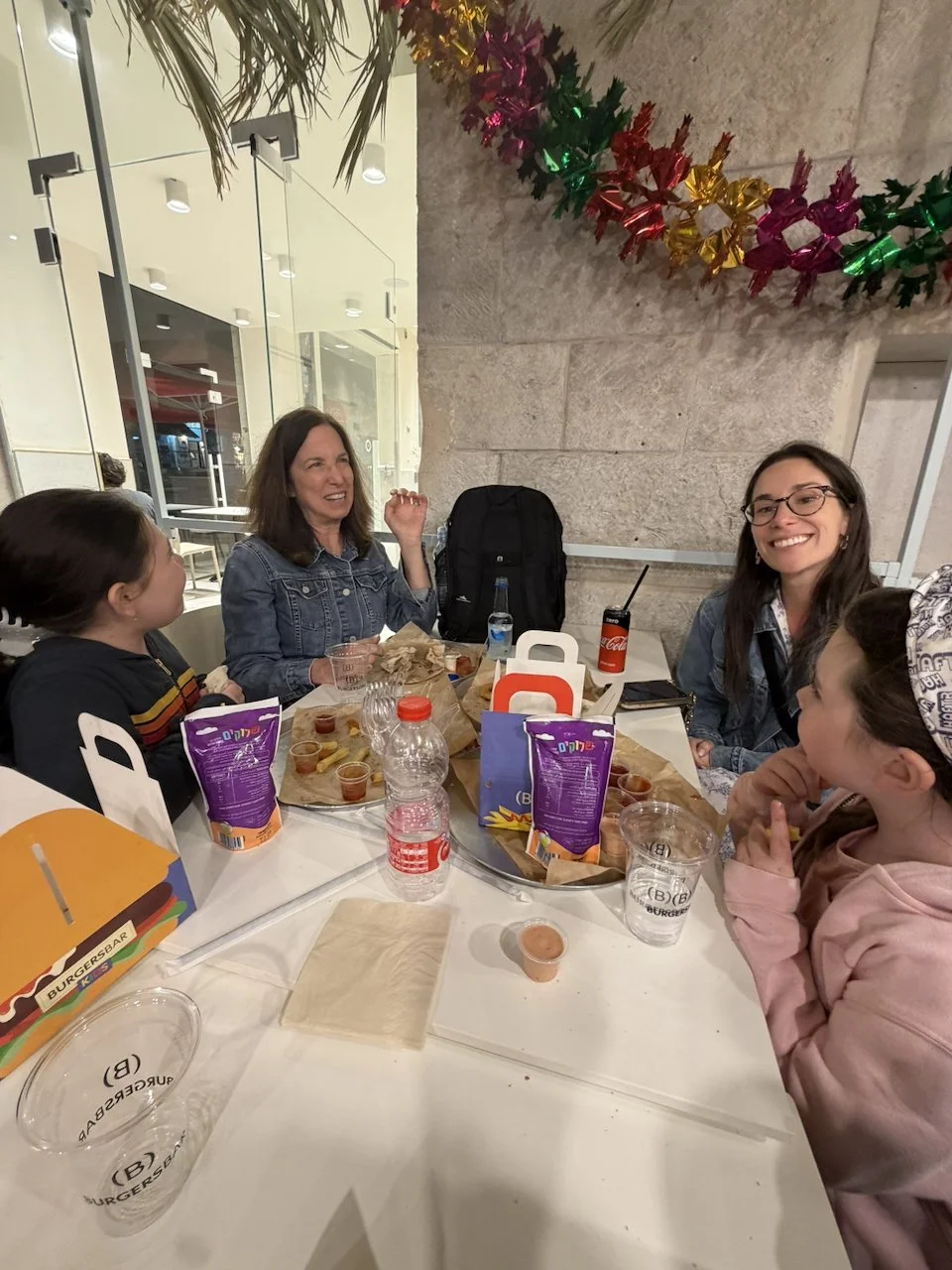
Apparently Google had the location wrong. Had we simply continued walking one more block, we would have found it. So we turned around, went back outside, and did the entire walk again. And eventually, we found Burgers Bar. We had a very nice dinner. We also ran into somebody from the neighborhood. Of course. Then we went back to the hotel.
Great day.