Tuesday: Sometimes You Just End Up on the Wrong Side of the River
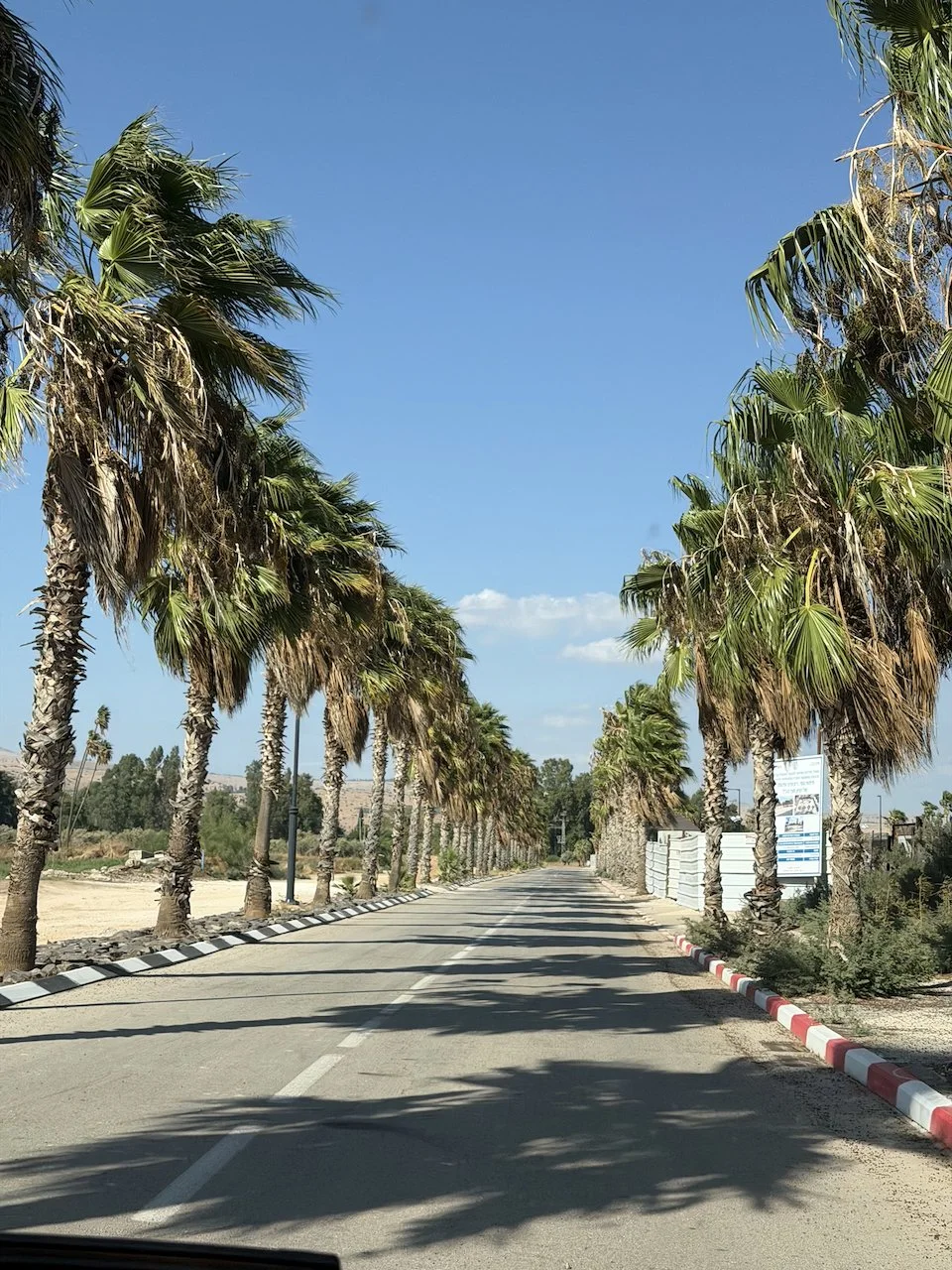
Tuesday morning we got up early—8:15—and got ready to head north. We were all ready to meet our guide at 10:00. And when I say all of us, I mean all of us except my mother, who, at 9:57, still had not showered for the morning. So I will say it was extremely impressive when she came downstairs and got into the car at 10:17.
Our guide’s name is Muriel, and she has a van that somehow fit all of us and our luggage. We loaded up and started heading north. The drive was a little over two hours, and the kids did pretty well. Madeleine started getting nauseous toward the end and then fell asleep for the last 20 minutes. Please take note that for this drive and almost every subsequent drive of this north trip I was in the middle seat of the third row between two children and Tzvi was up in the front seat alone.
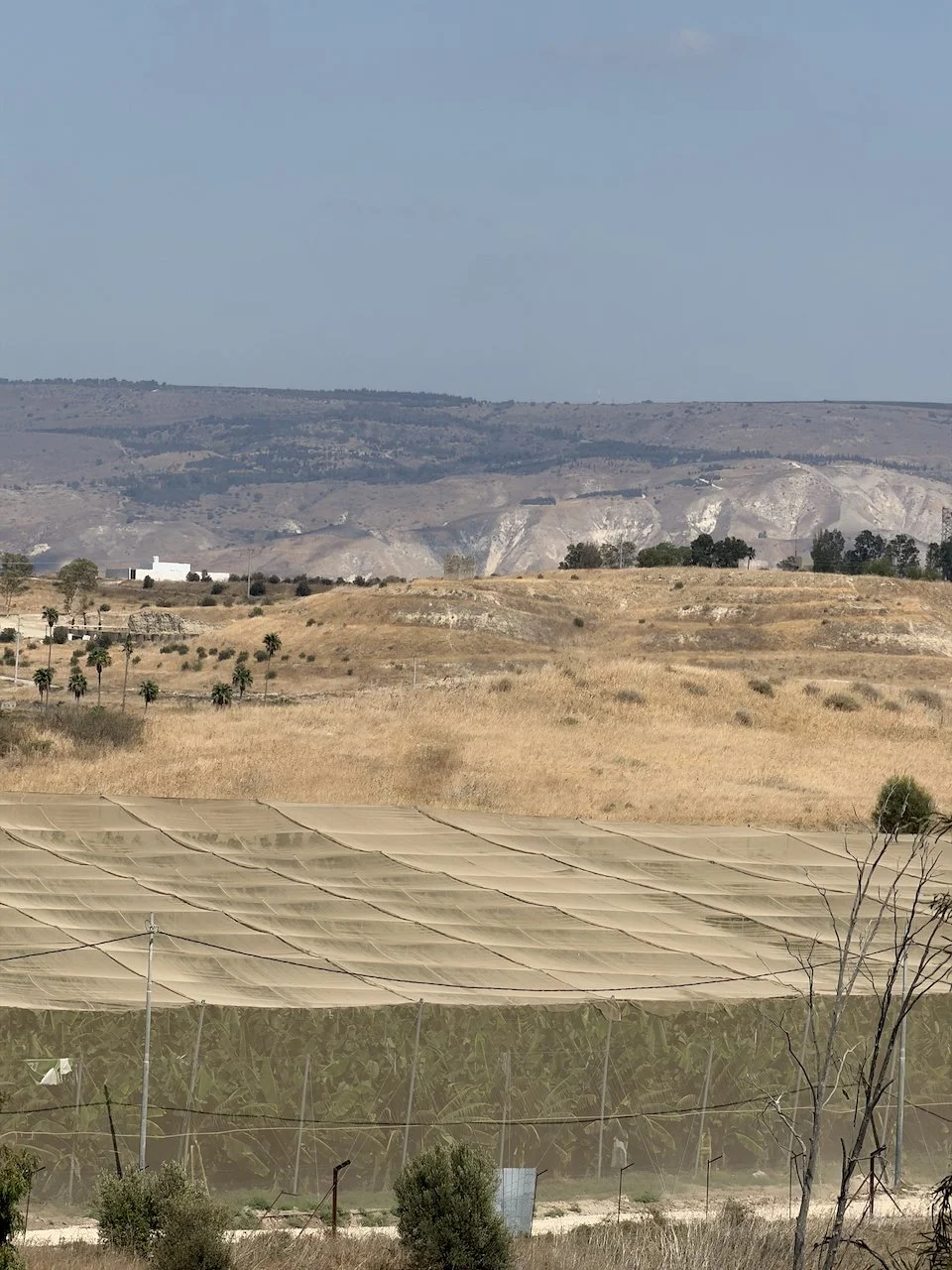
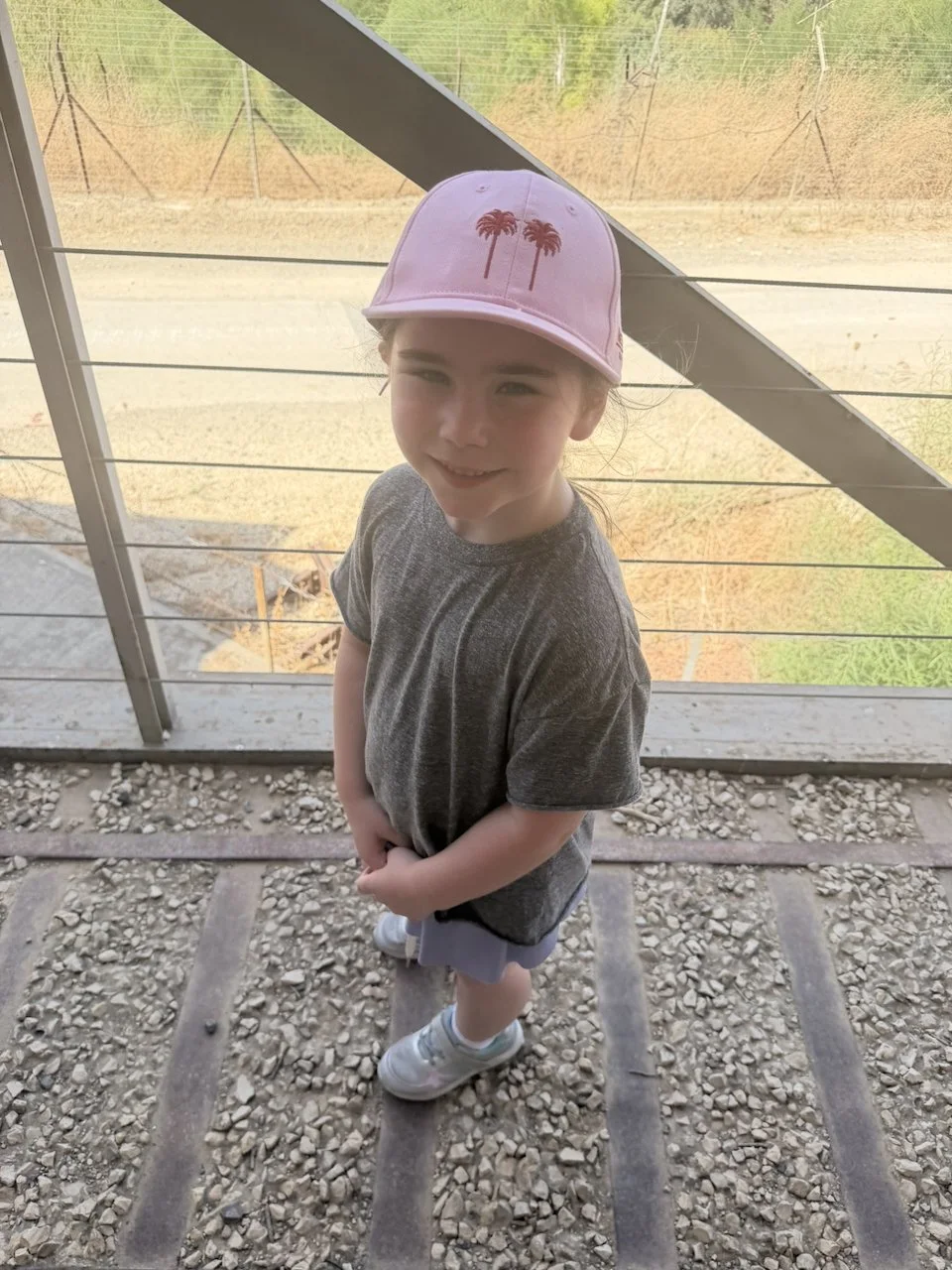
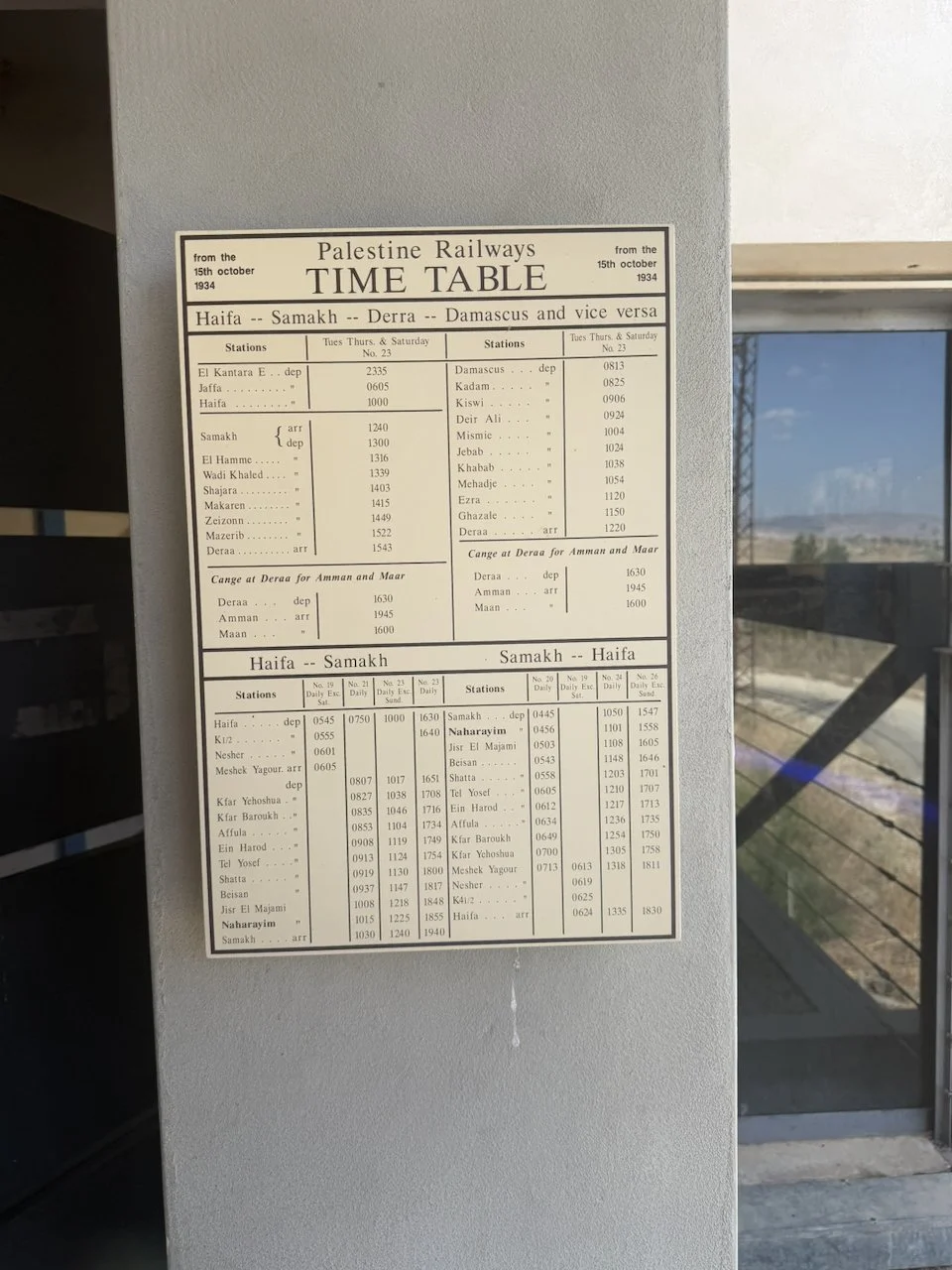
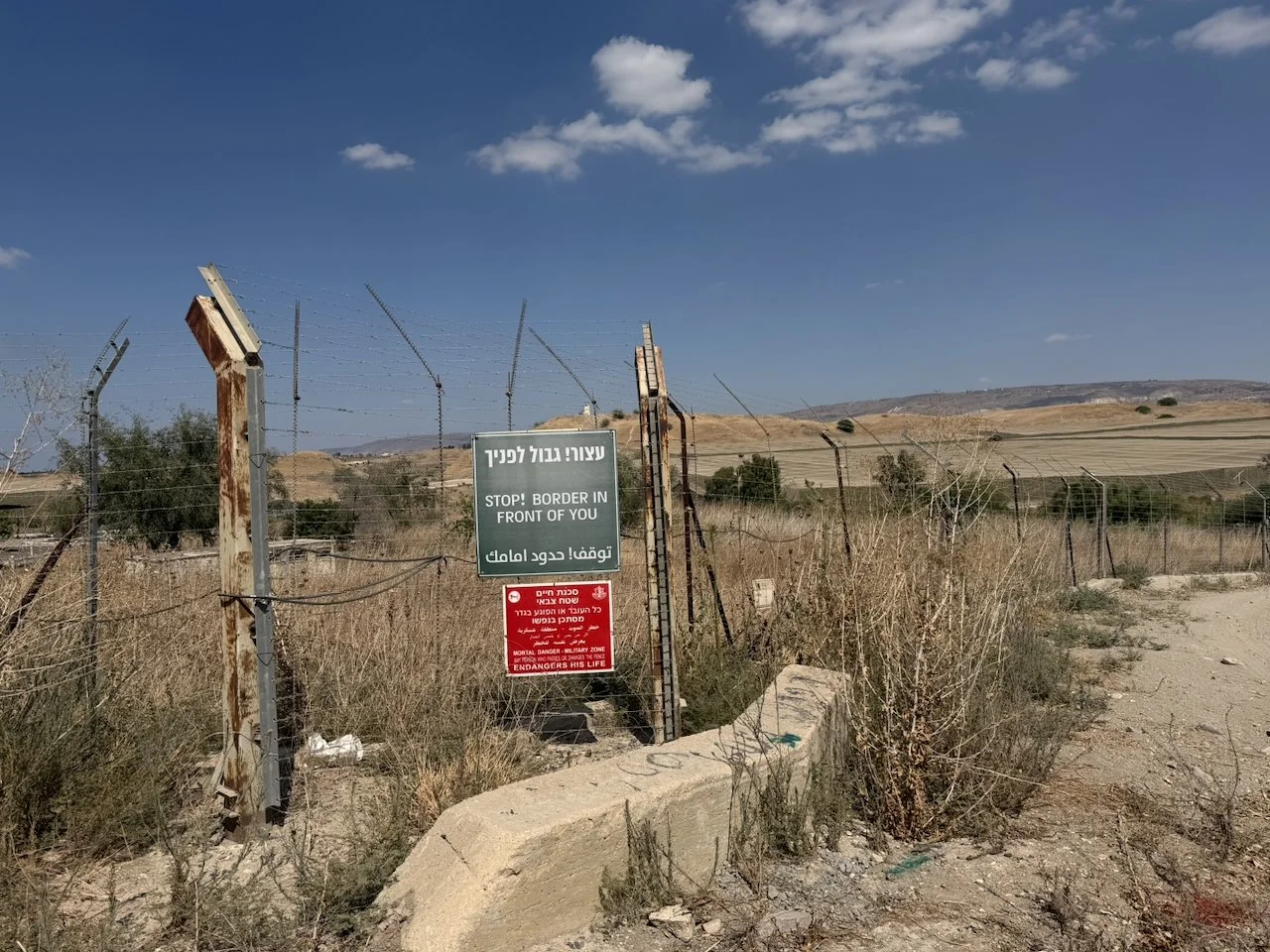
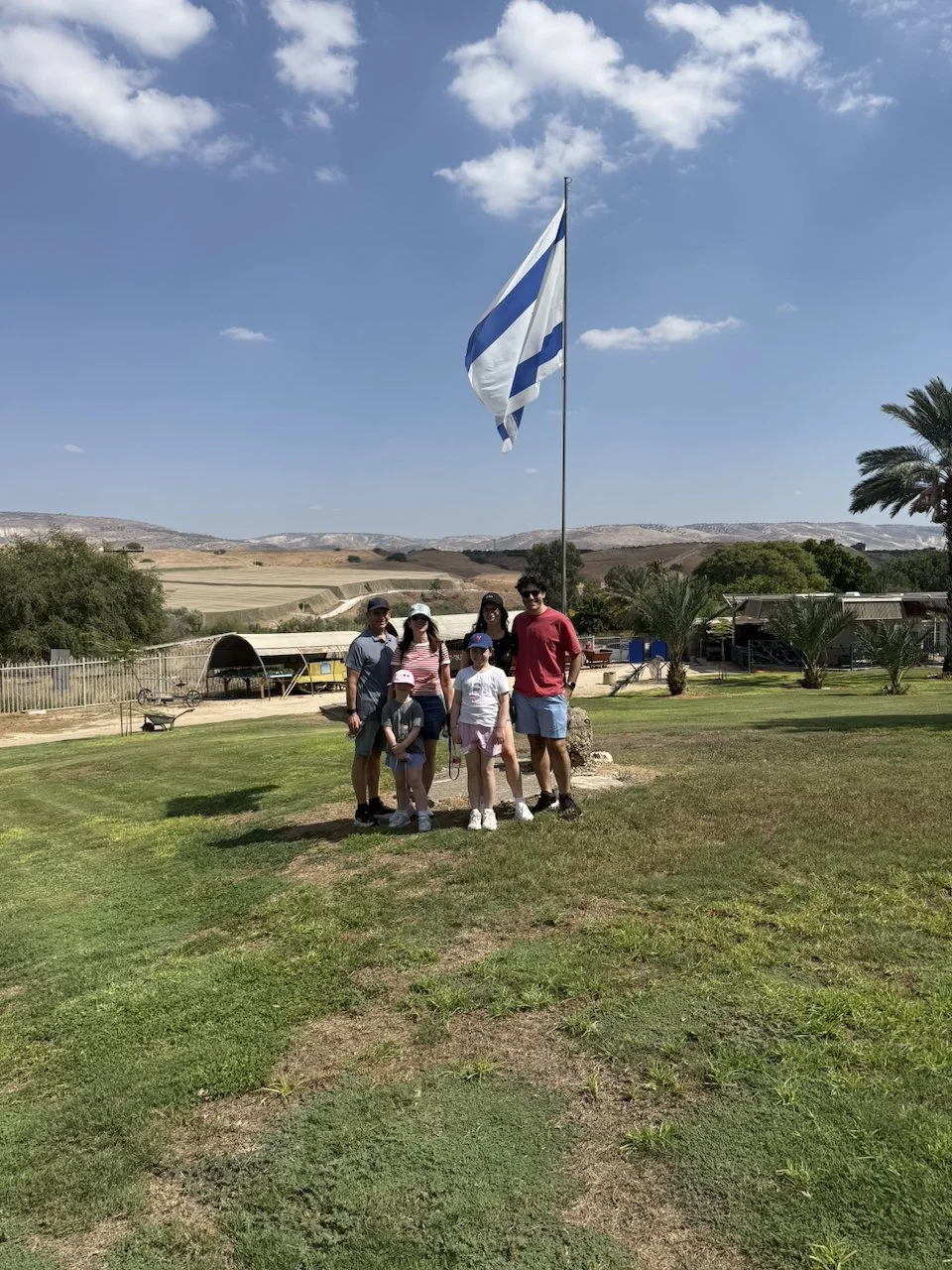
Our first stop was Naharayim at Gesher, at the site of the old Kibbutz Gesher. We learned about the kibbutz and what happened there during the War of Independence in 1948, when it came under attack by Jordanian and Iraqi forces. The area had three different bridges—a Roman bridge, a railway bridge, and a road bridge—and we heard about the attempts to destroy them during the fighting. “Gesher,” appropriately, means “bridge.” We also learned about Pinchas Rutenberg, who came up with an idea to build a hydroelectric power station there using water from the Jordan and Yarmouk Rivers. The plant operated for 16 years, from 1932 until 1948. Unfortunately, he built it on the side of the river that would become Jordan so it was abandoned in 1948. Another part of the story that really stuck with us was what happened to the children living on the kibbutz. There were young children there when the fighting started, and they were evacuated to Haifa, where they stayed for almost two years before eventually being able to return after the community was rebuilt. Muriel pointed out how similar that feels to what has happened recently with families from northern Israel who had to evacuate their homes and then wait until they were able to return. History repeats itself. The visit was actually pretty interesting, and a lot of it was indoors, so the girls didn’t complain very much. So that was nice.
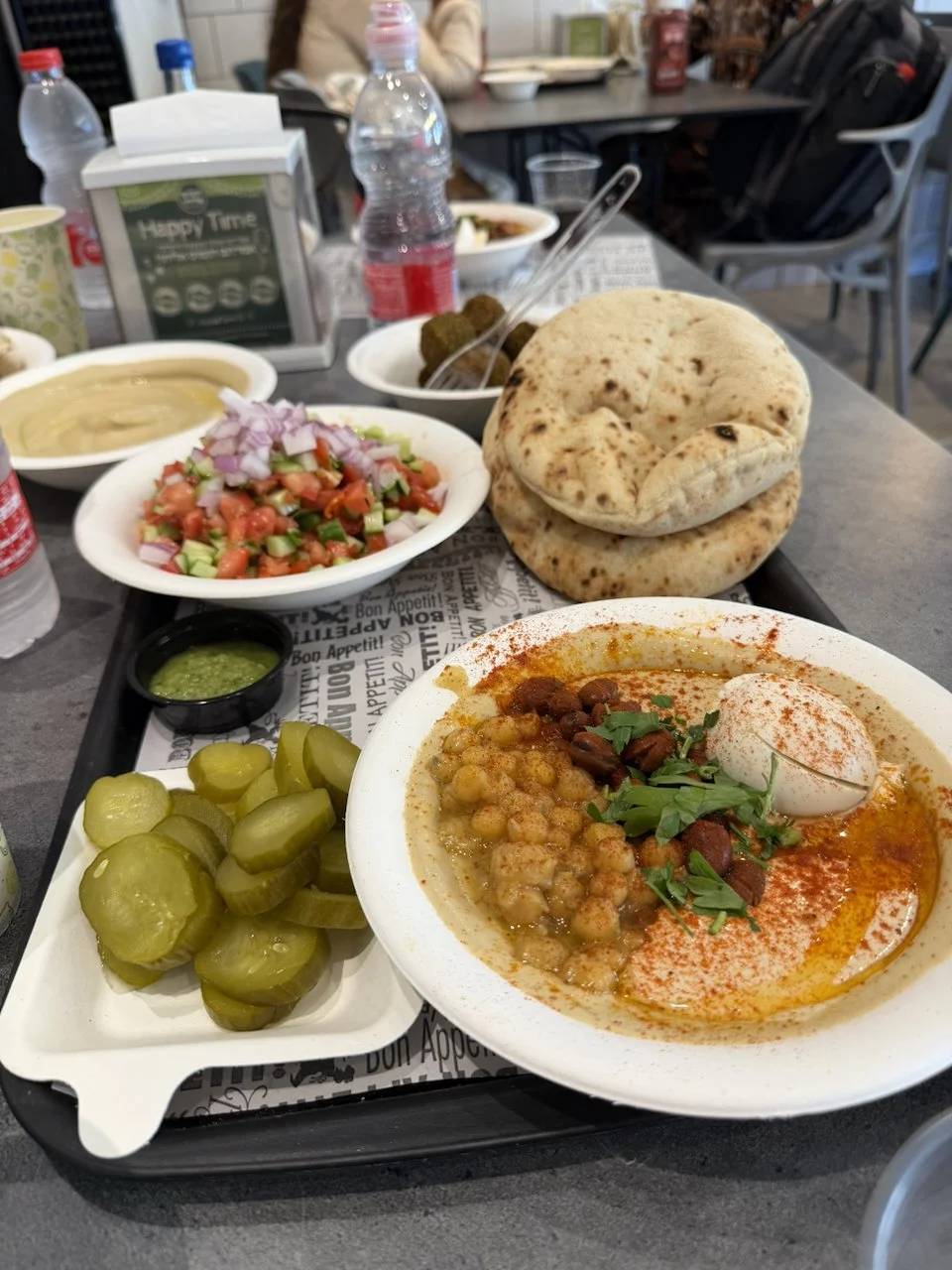
Afterward, we drove about 20 minutes to a shopping center for lunch and ate at Humus Eliyahu, a chain of humus places. The food was delicious but we ordered way too much humus and the manager seemed to be offended that we didn’t finish it. After lunch, we got coffees from Aroma and then drove to the hotel.
We’re staying at the Gomeh Hotel, and nobody can really agree on how we found this hotel. I think Tzvi sent it to me in one of the approximately 8,000 Instagram reels he has sent me, but he says no. My mom says that I told her about it, which I don’t believe. And Tzvi says the travel agent suggested it. [Tzvi: I am correct.] So nobody really knows who found it, but we’re here. [Tzvi: I know.]
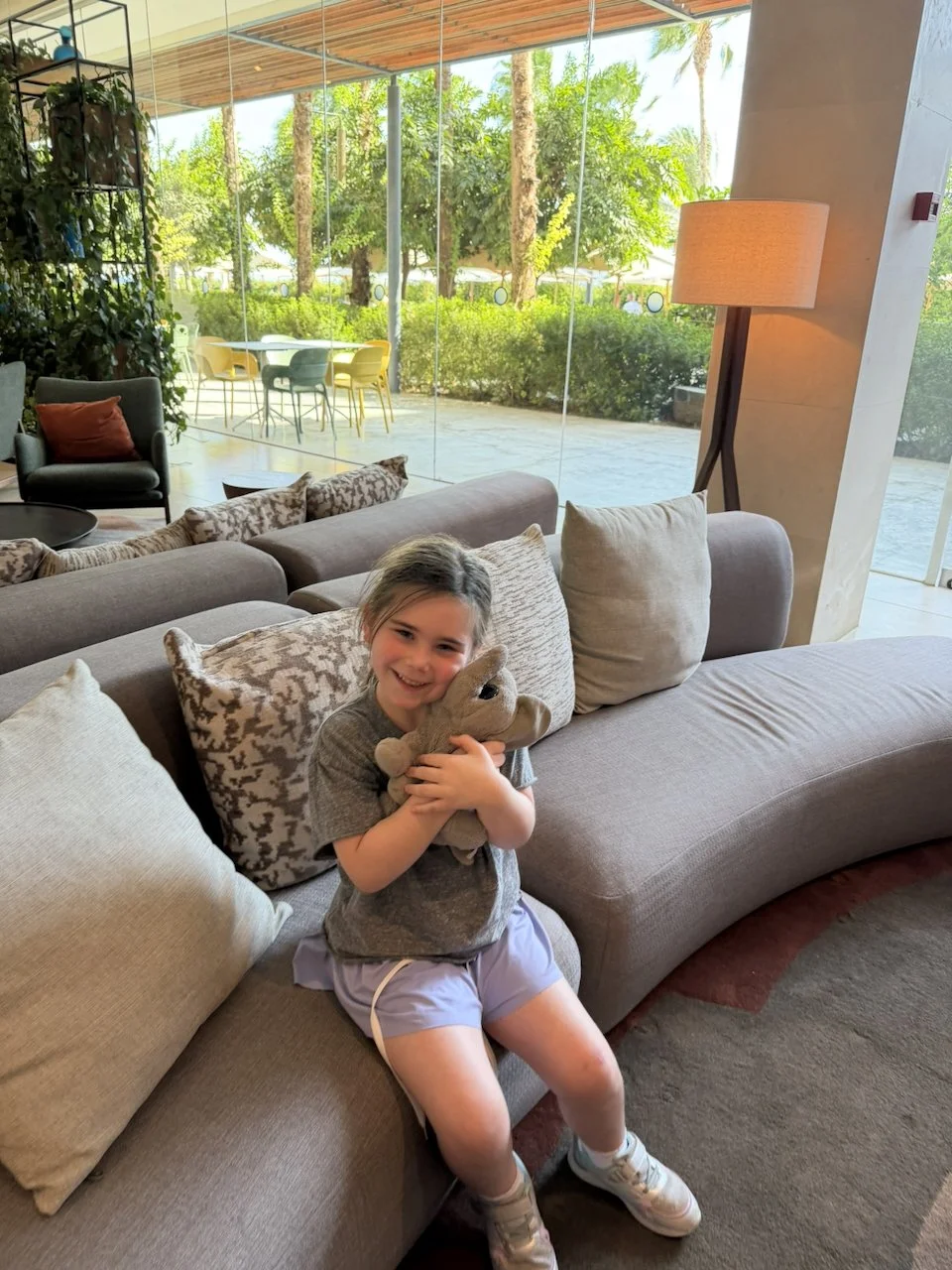
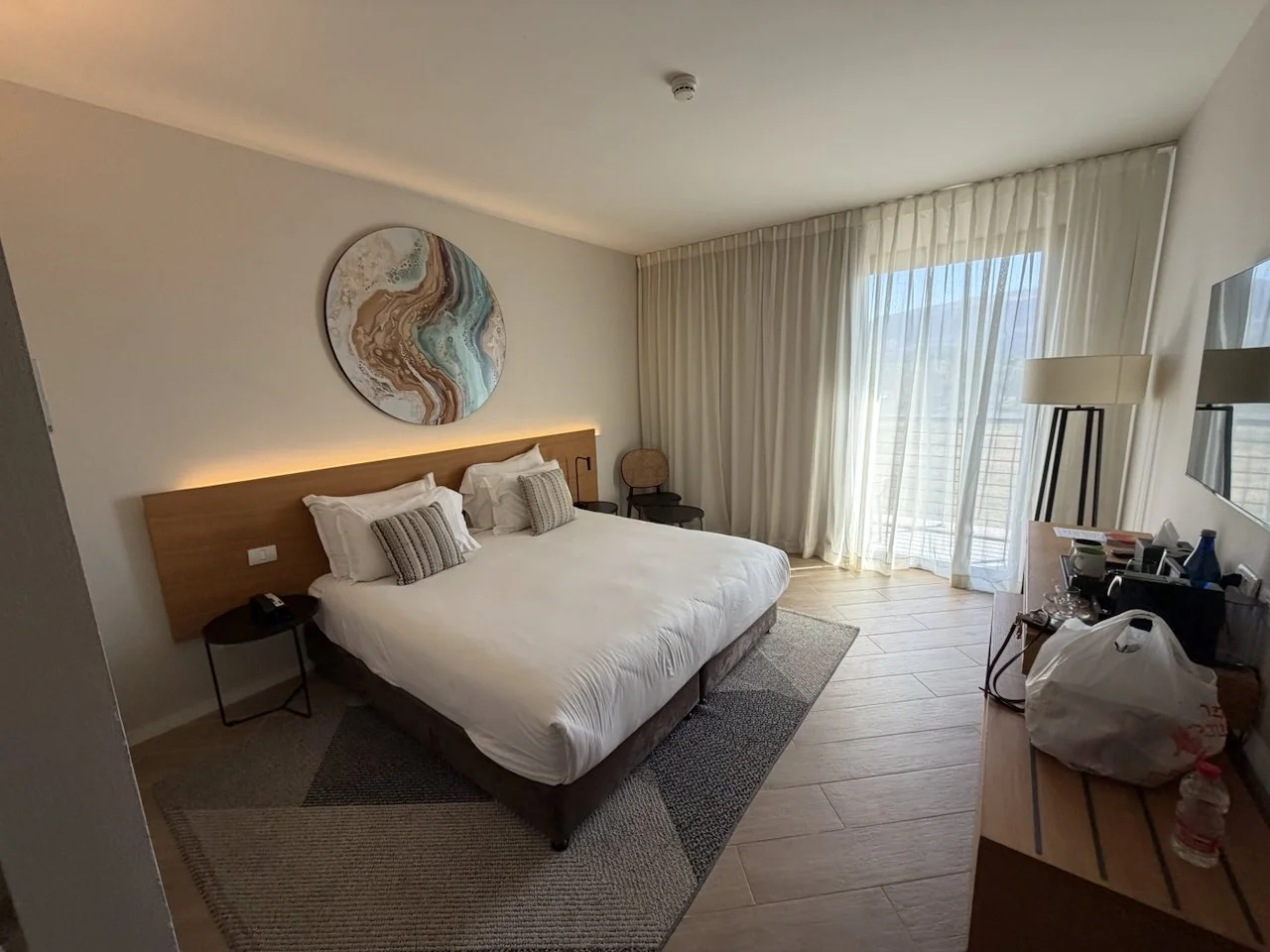
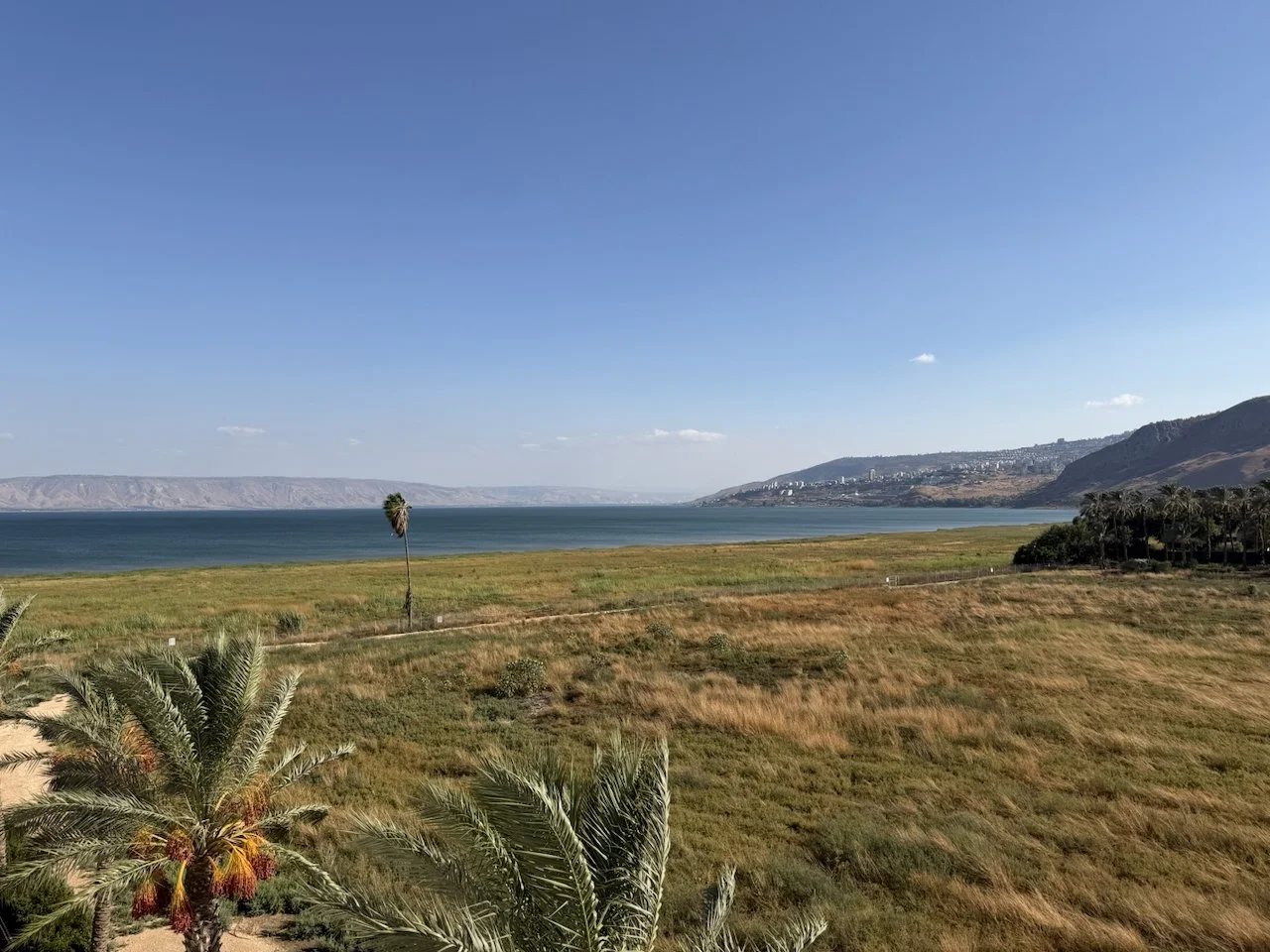
We went to check in and, of course, nothing was 100% smooth. But at least we have connecting rooms, so we headed upstairs. The rooms are very small, which I feel like is just characteristic of Israeli hotels—or maybe specifically hotels in the north. But they’re very nice. [Tzvi: they’re fine. They’re sparse. We basically have patio furniture.]. The best part about the room is the view, it’s a stunning view of the Kineret, palm trees and Tiveria in the distance.
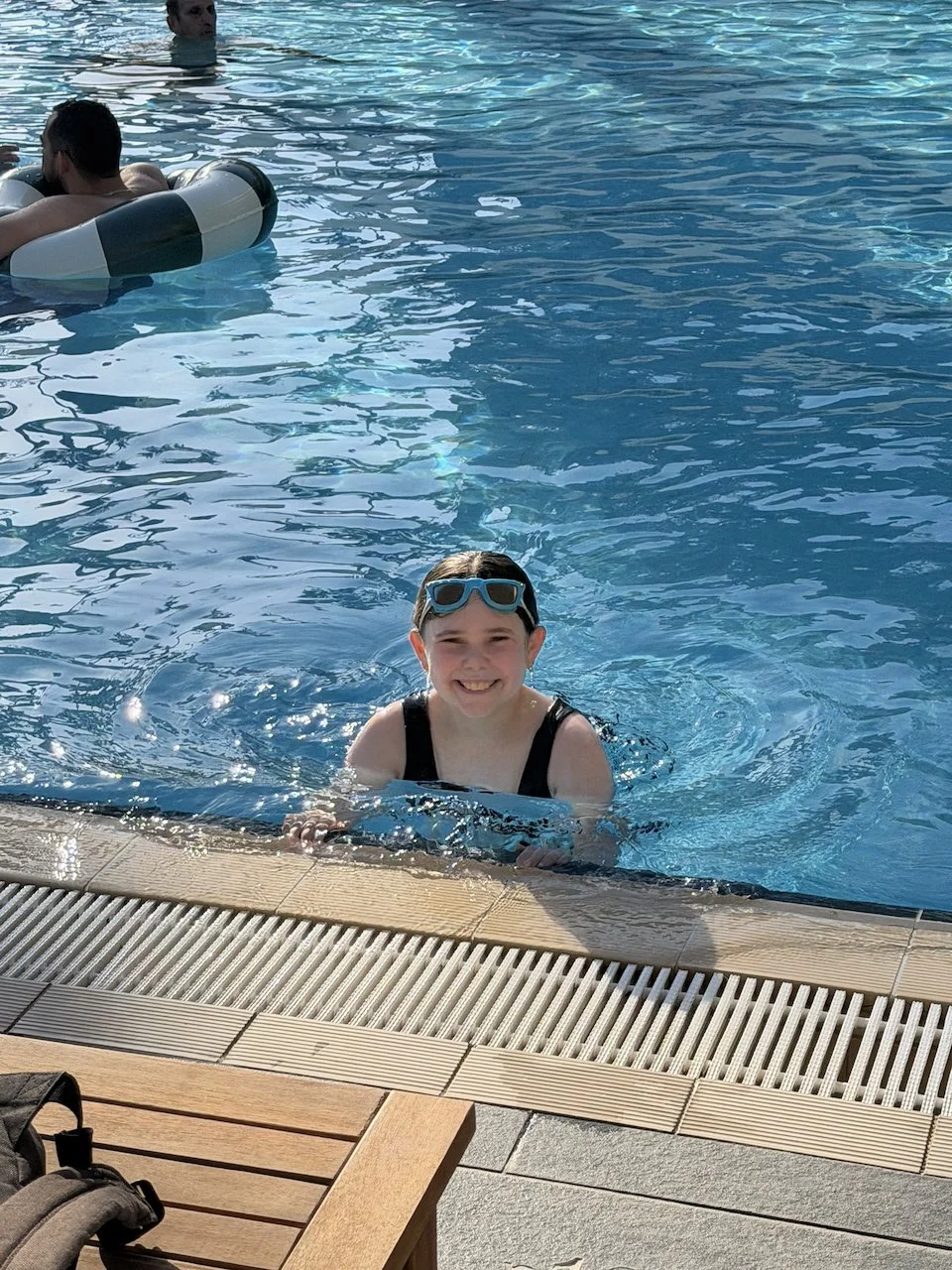
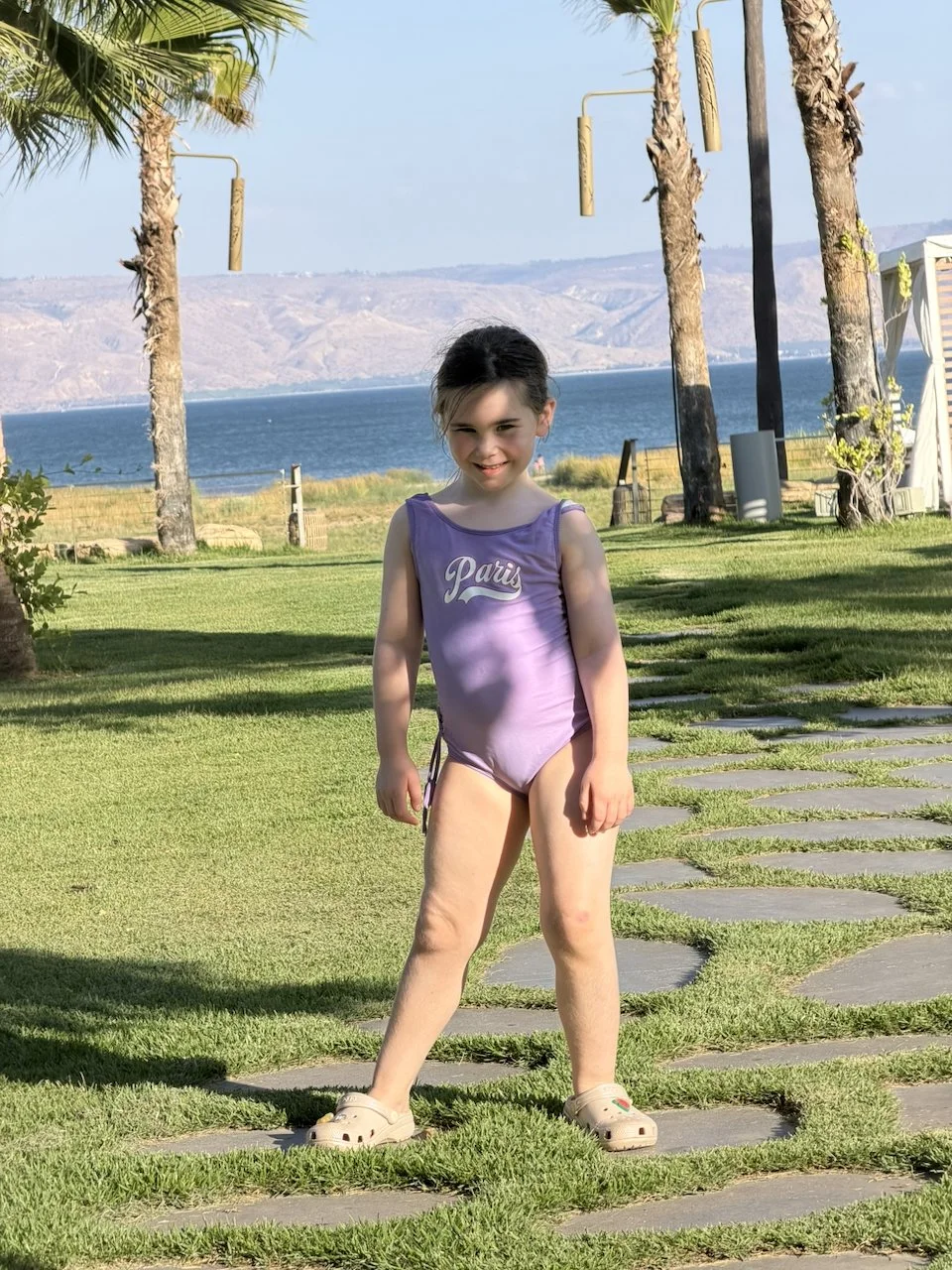
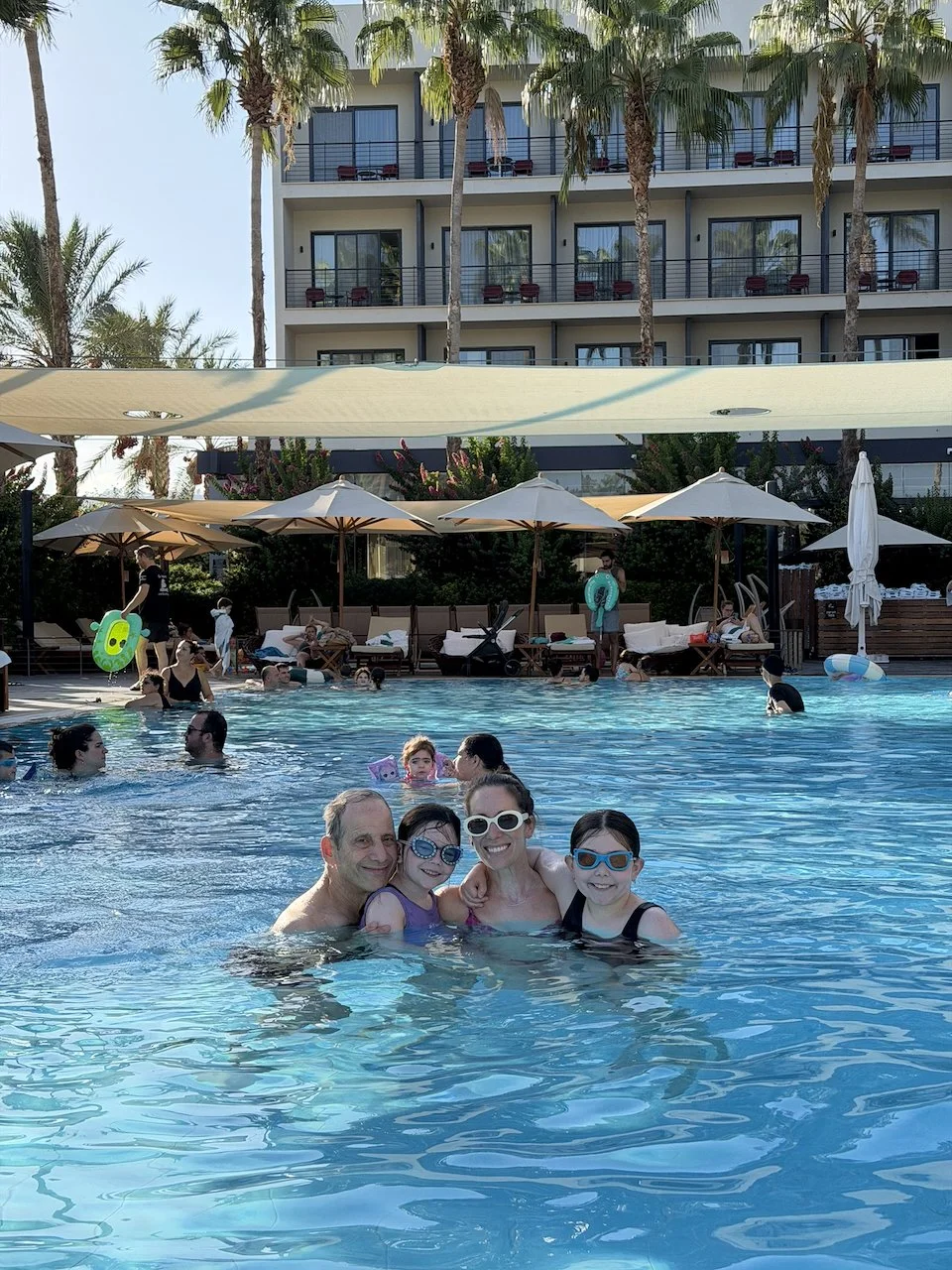
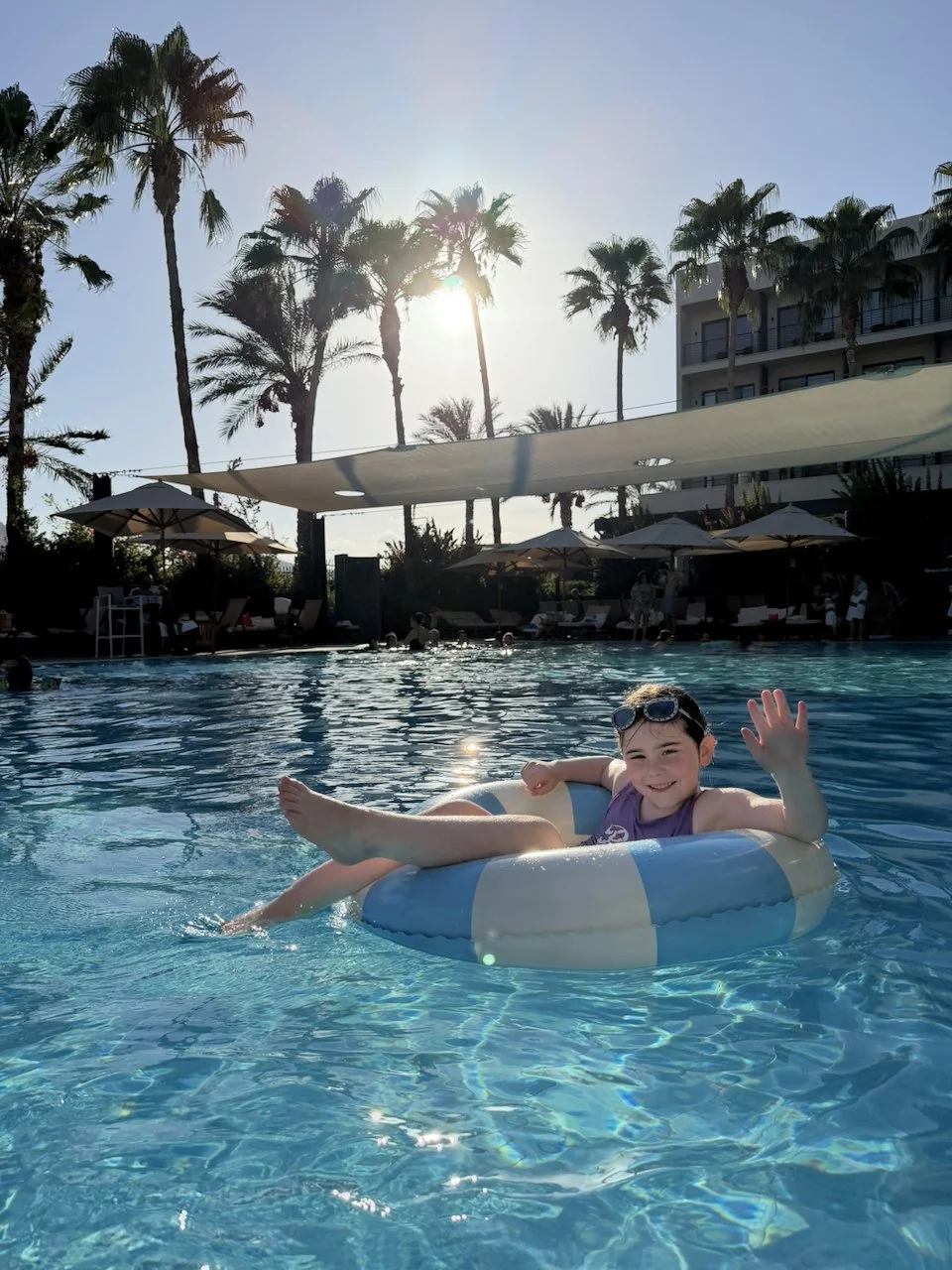
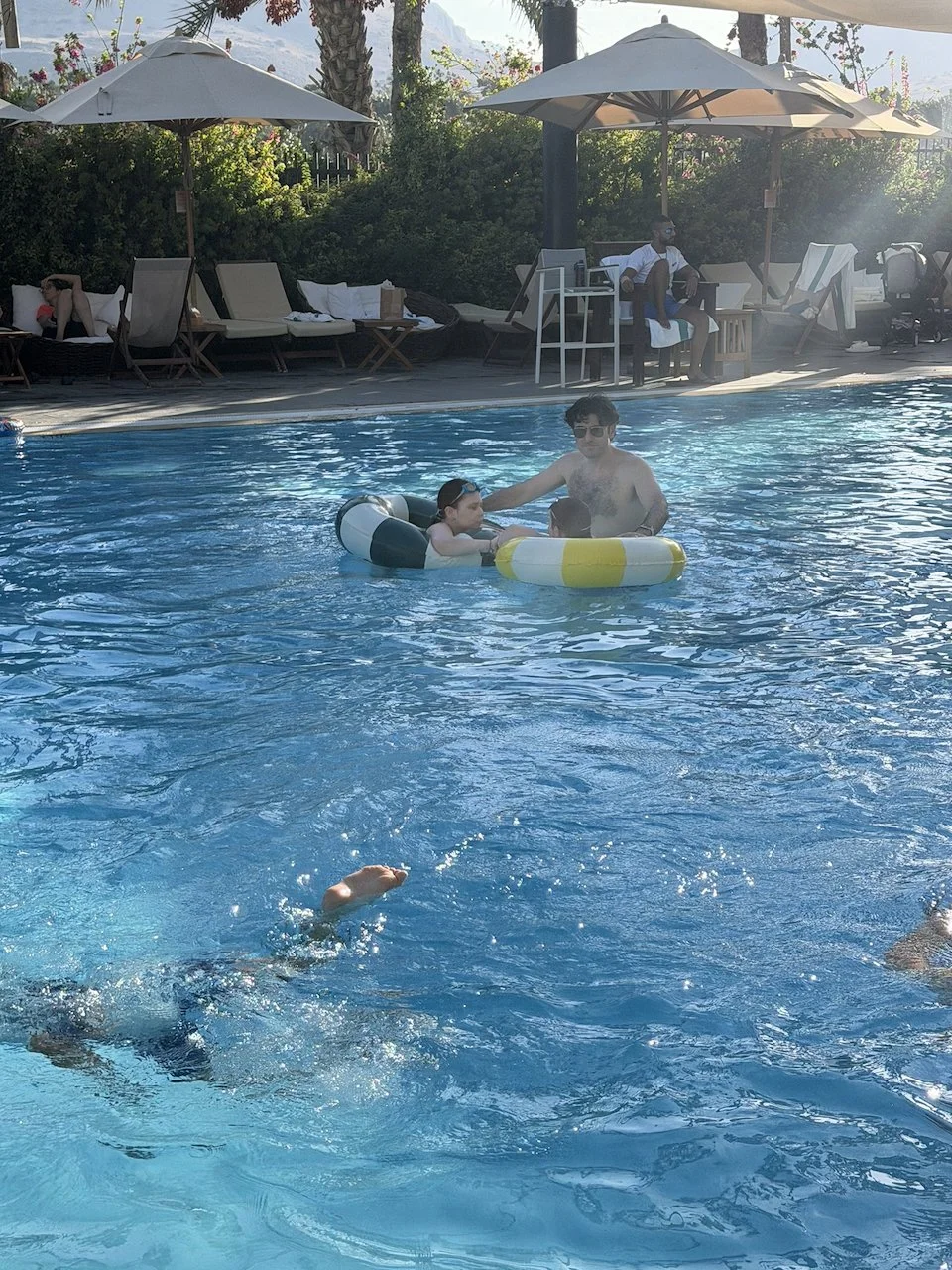
We got settled, changed, and headed down to the pool. The pool is really nice and pretty big, and we wanted to swim for a little while before we had to get ready for dinner. While I was putting lotion on Madeleine, a woman came over to me and said that she had met me before. I had no idea where, but it turned out she’s from the Five Towns and lives in Lawrence, so I guess she must have seen me around before. Devorah Rosner I think. Anyway, we spent about an hour at the pool and then went back upstairs to change for dinner.
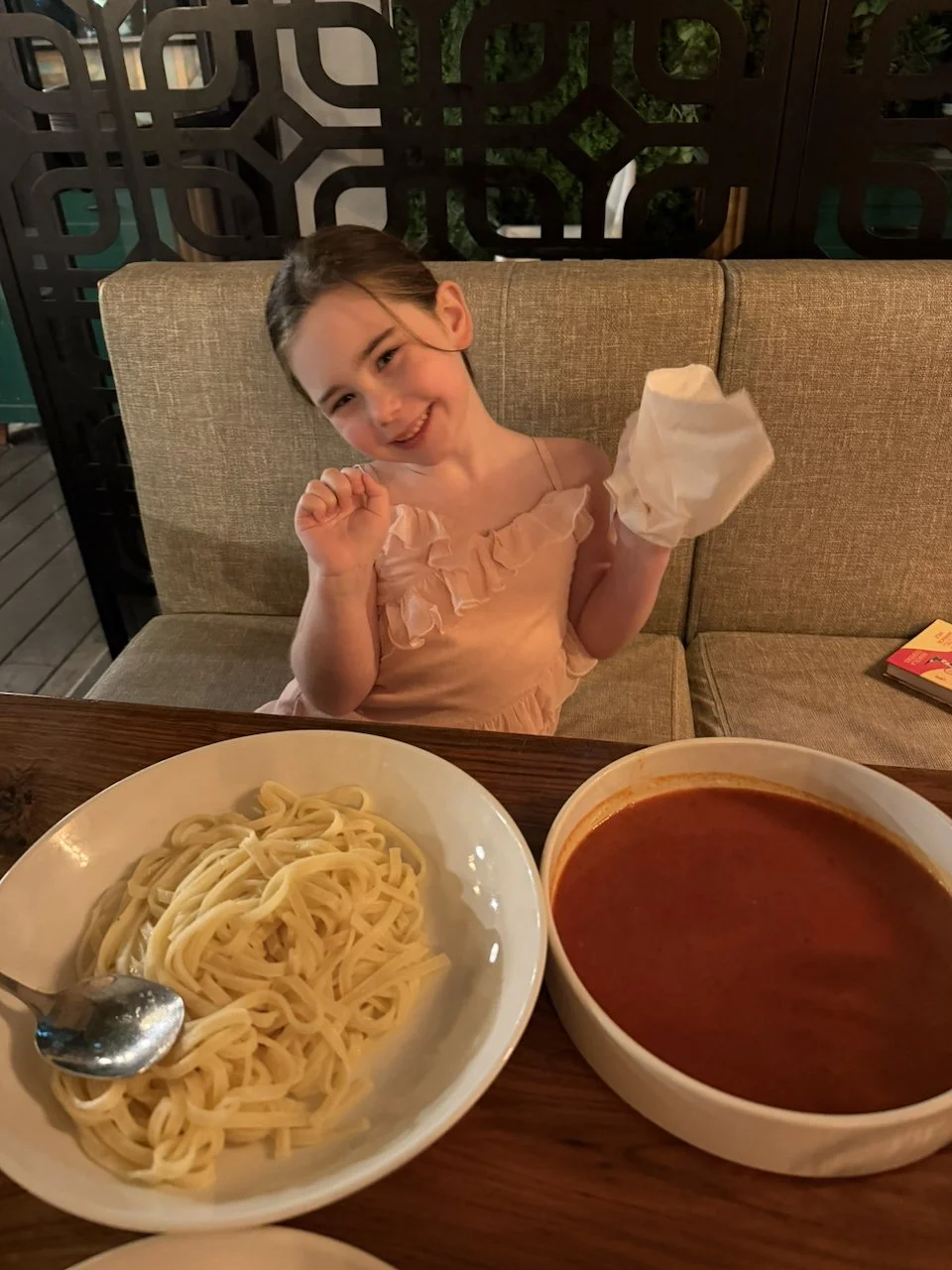
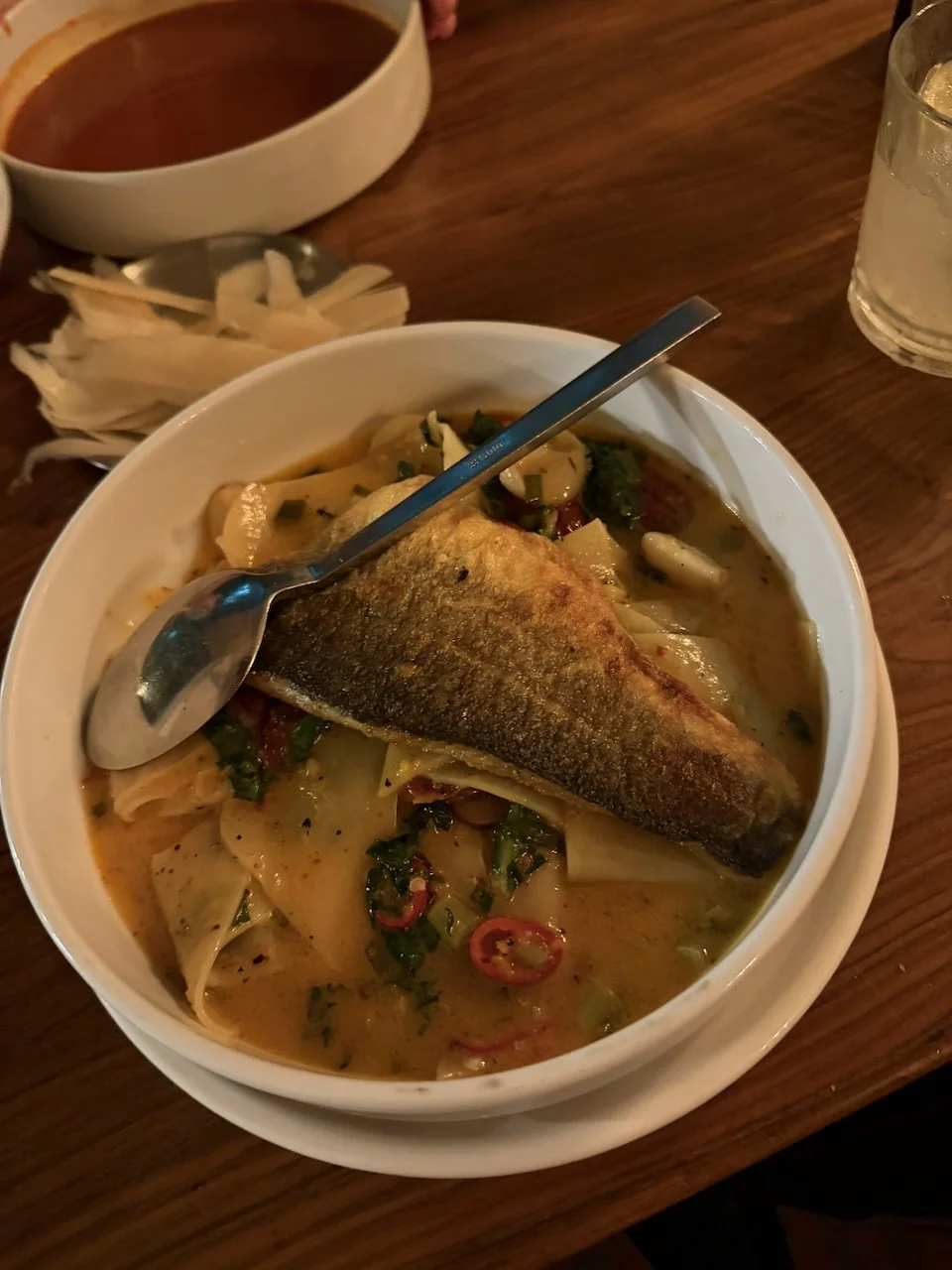
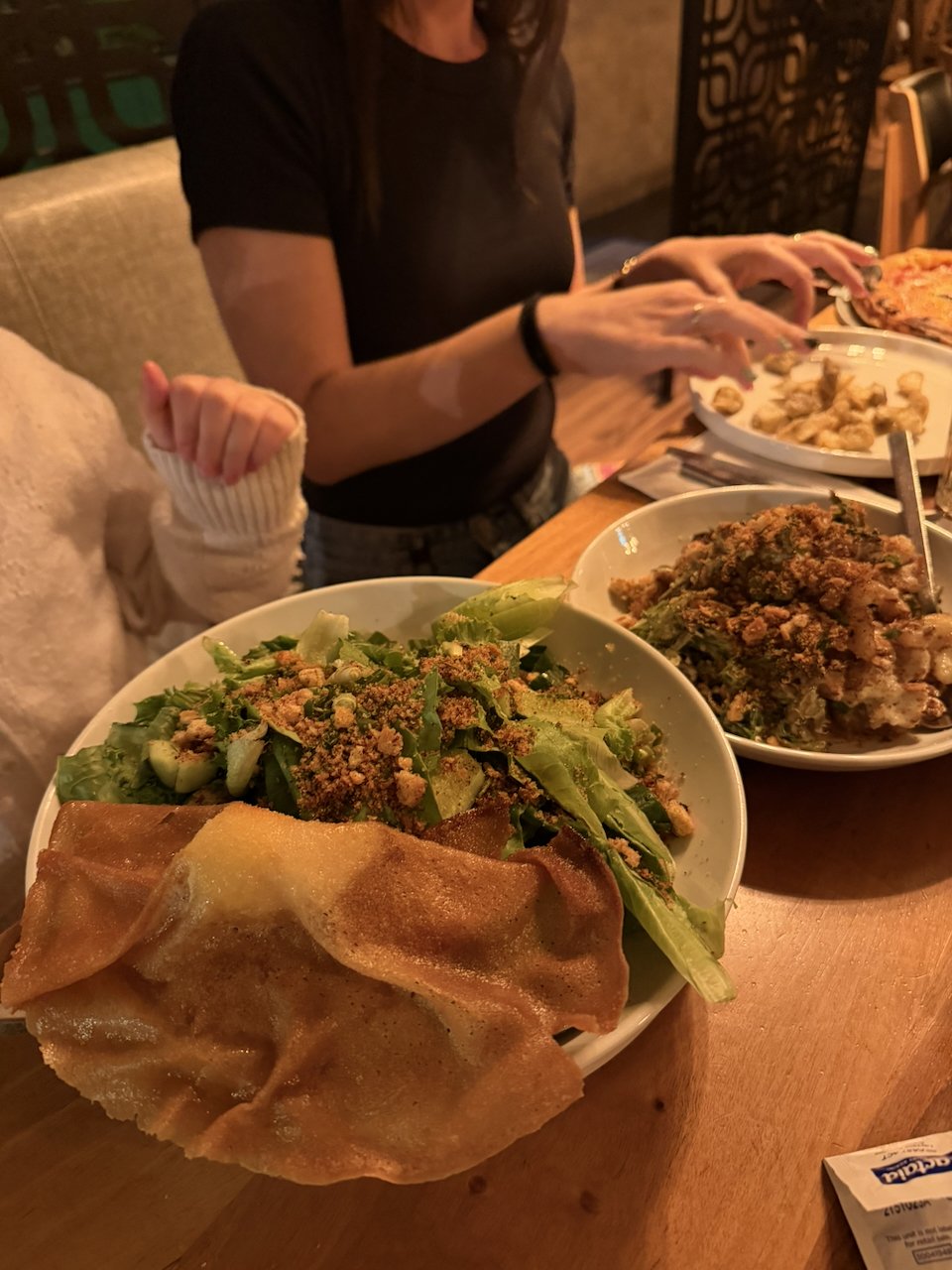
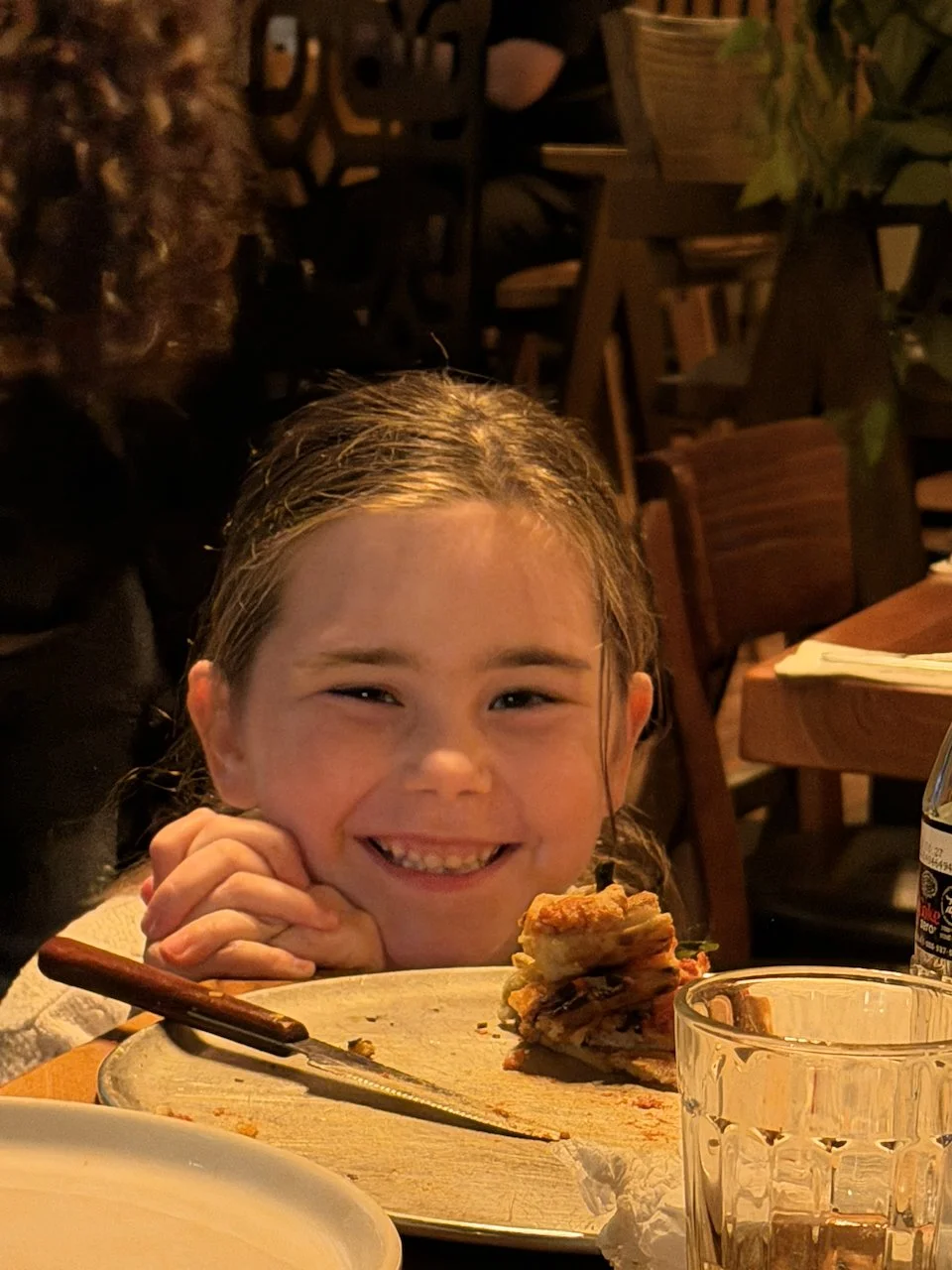
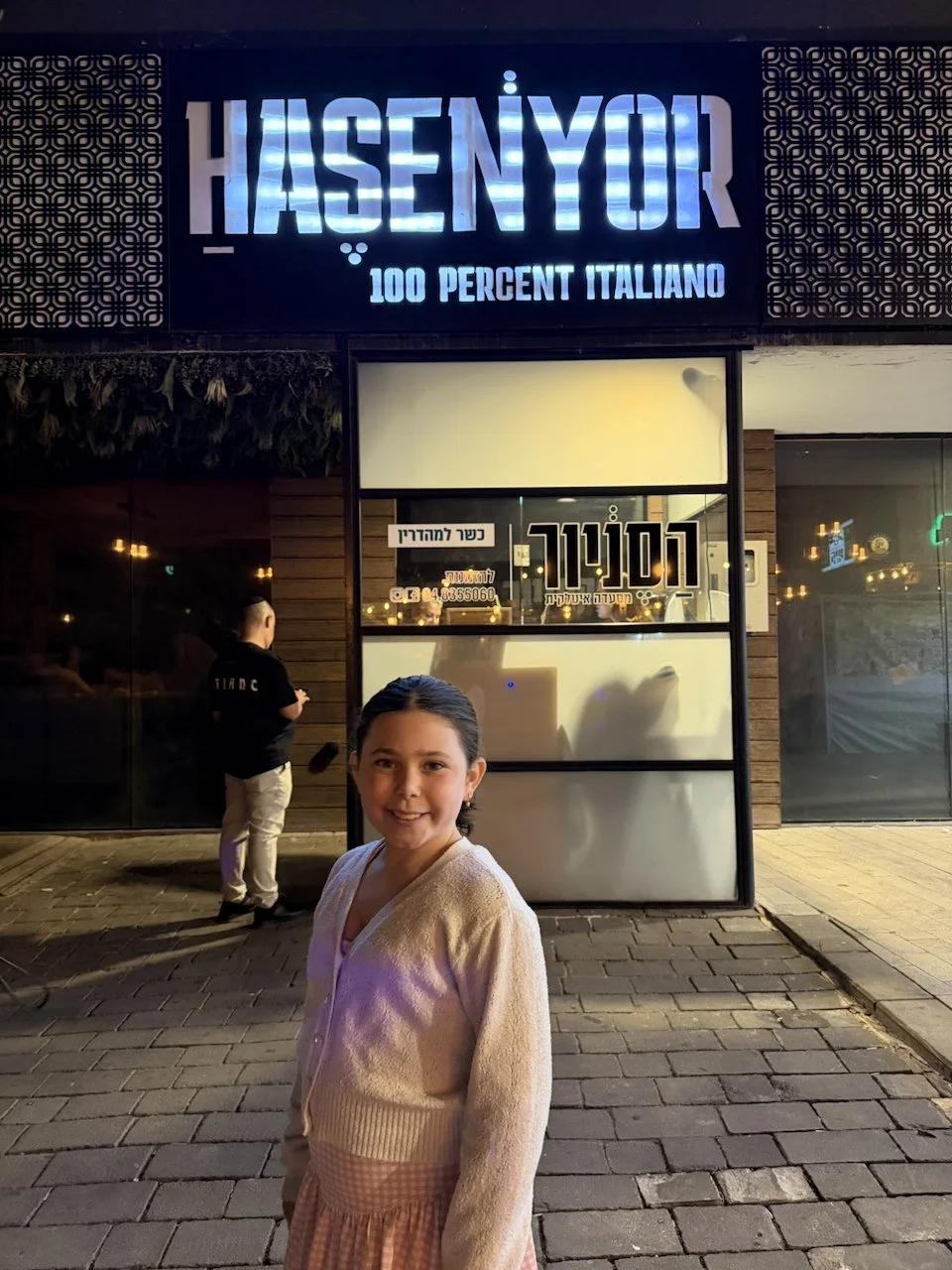
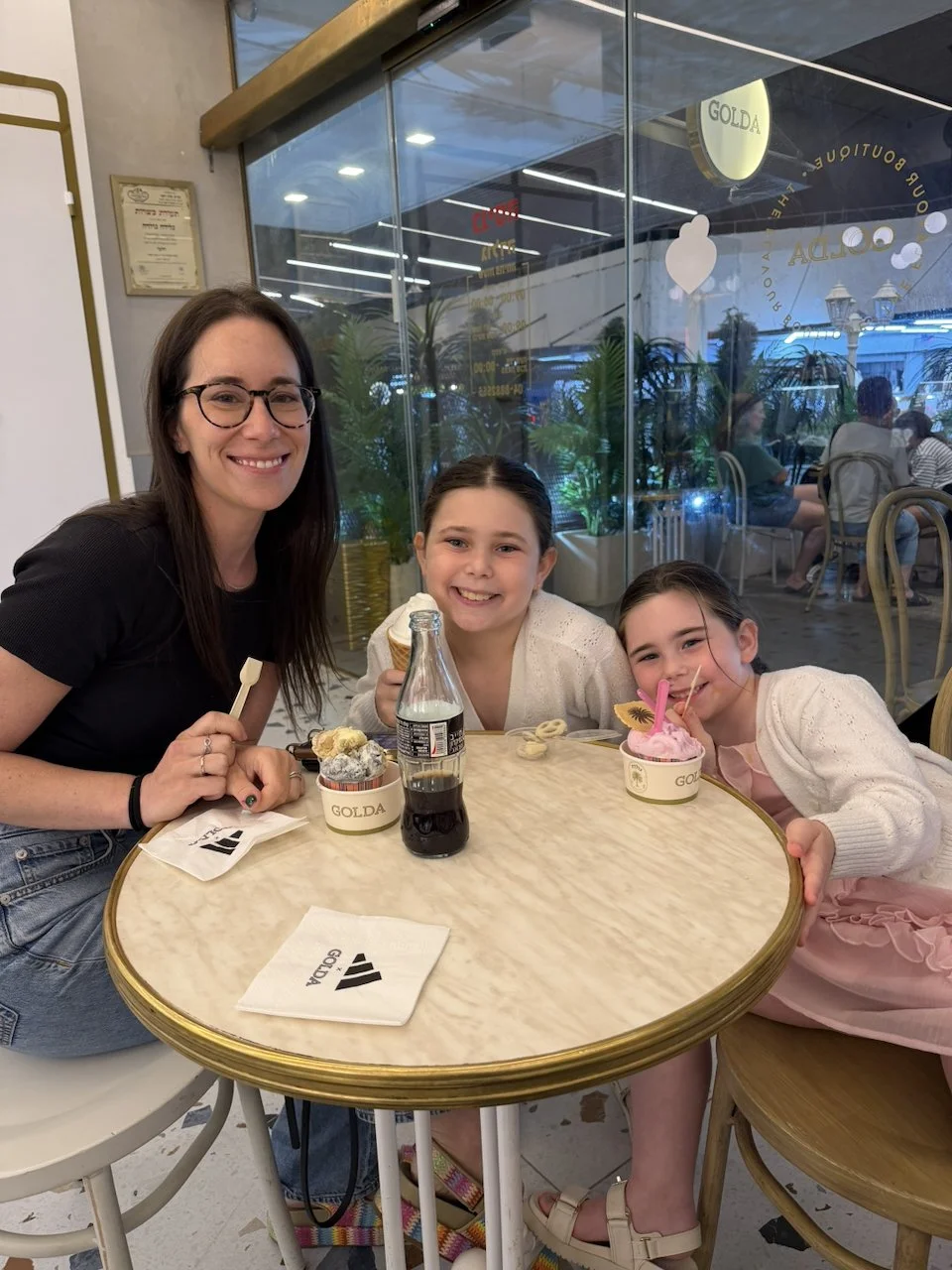
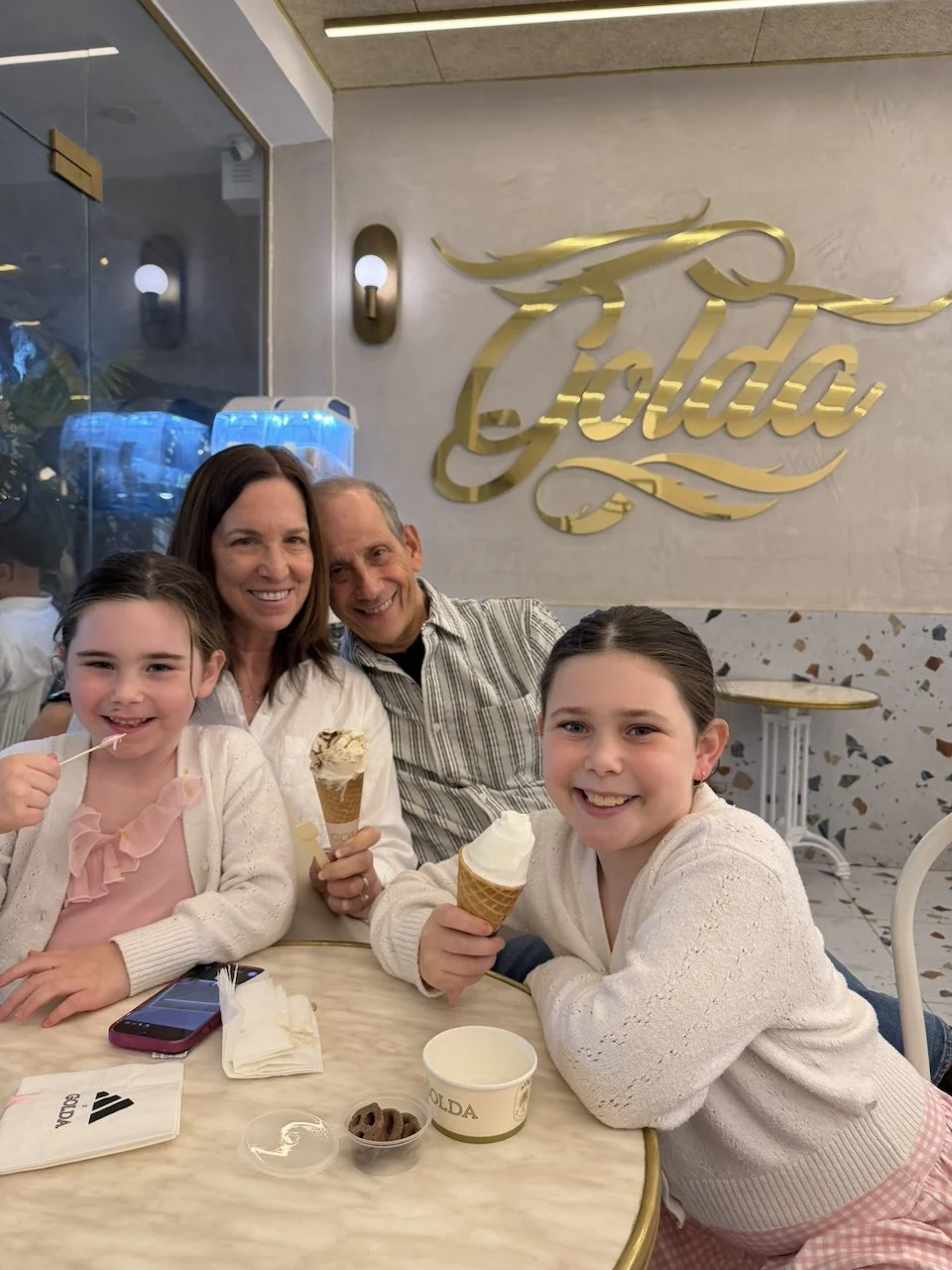
Dinner was in Tiveria at a dairy Italian restaurant called HaSenor. It was completely empty when we first got there, but it started filling up as we ate. The food was pretty good. I got sweet potato ravioli; one thing I really like about Israel is that you can get sweet potato ravioli without cheese in it. Other people got various pastas. Afterward, we decided to get dessert at Golda a few doors down, because Golda ice cream is always good. Then we headed back to the hotel.
My dad decided to go down to the lobby to do some work where he encountered some live music and kids running around. Always a party in Israel.
And then Tzvi did a lot of work until 2:00 in the morning, in our room. Always a pleasure.
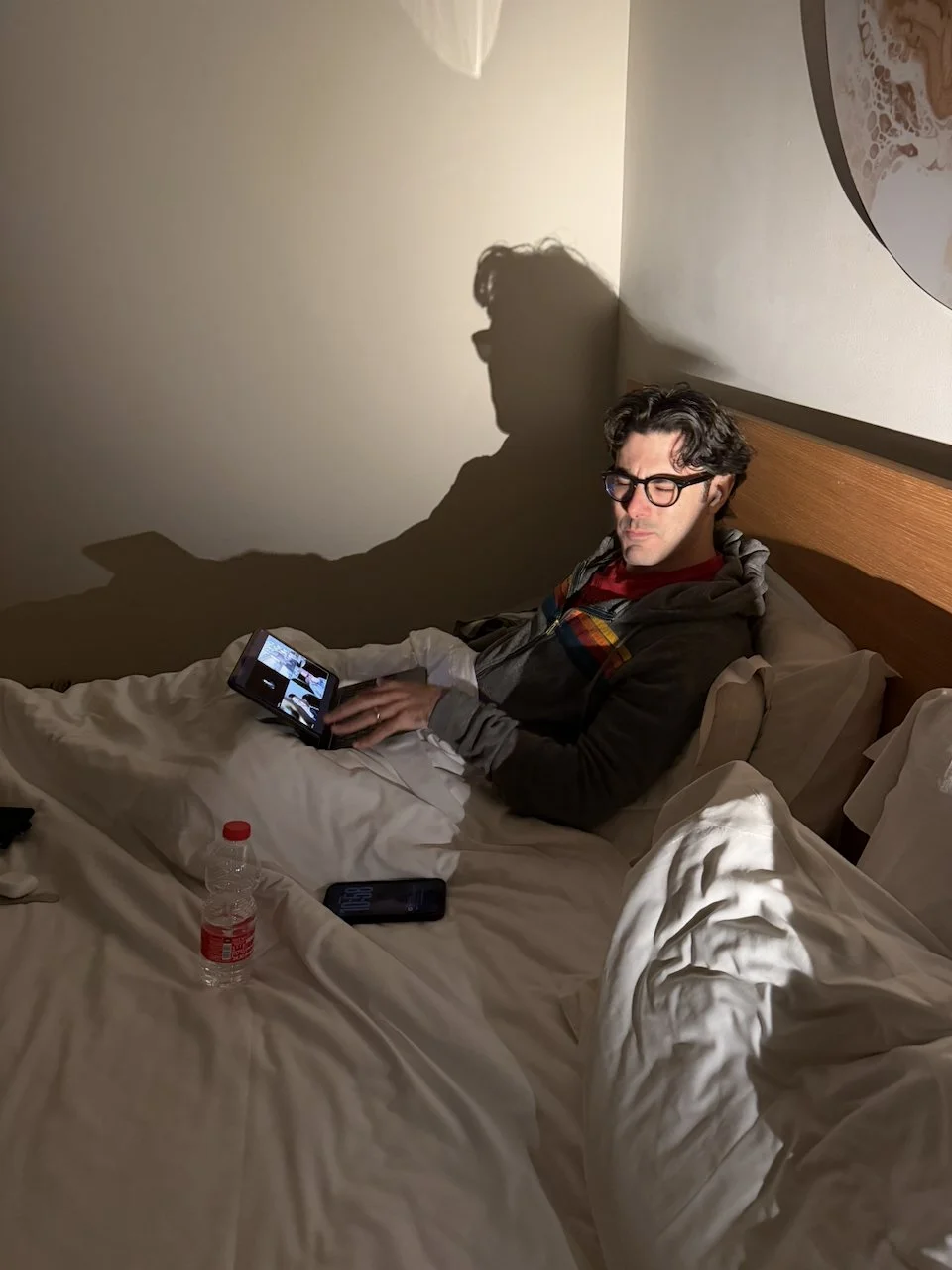
Good day.
Wednesday: Everyone Dies of Malaria
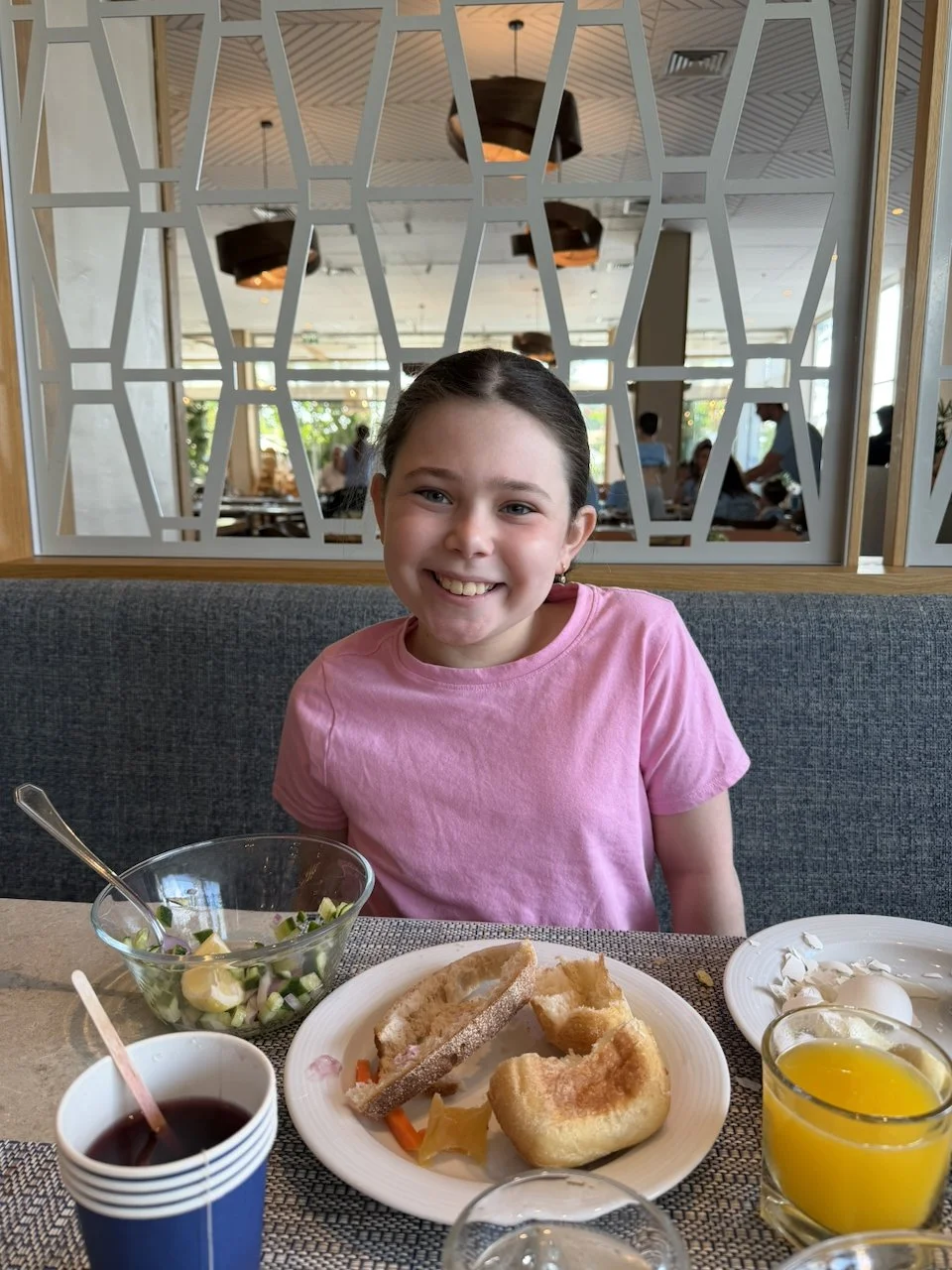
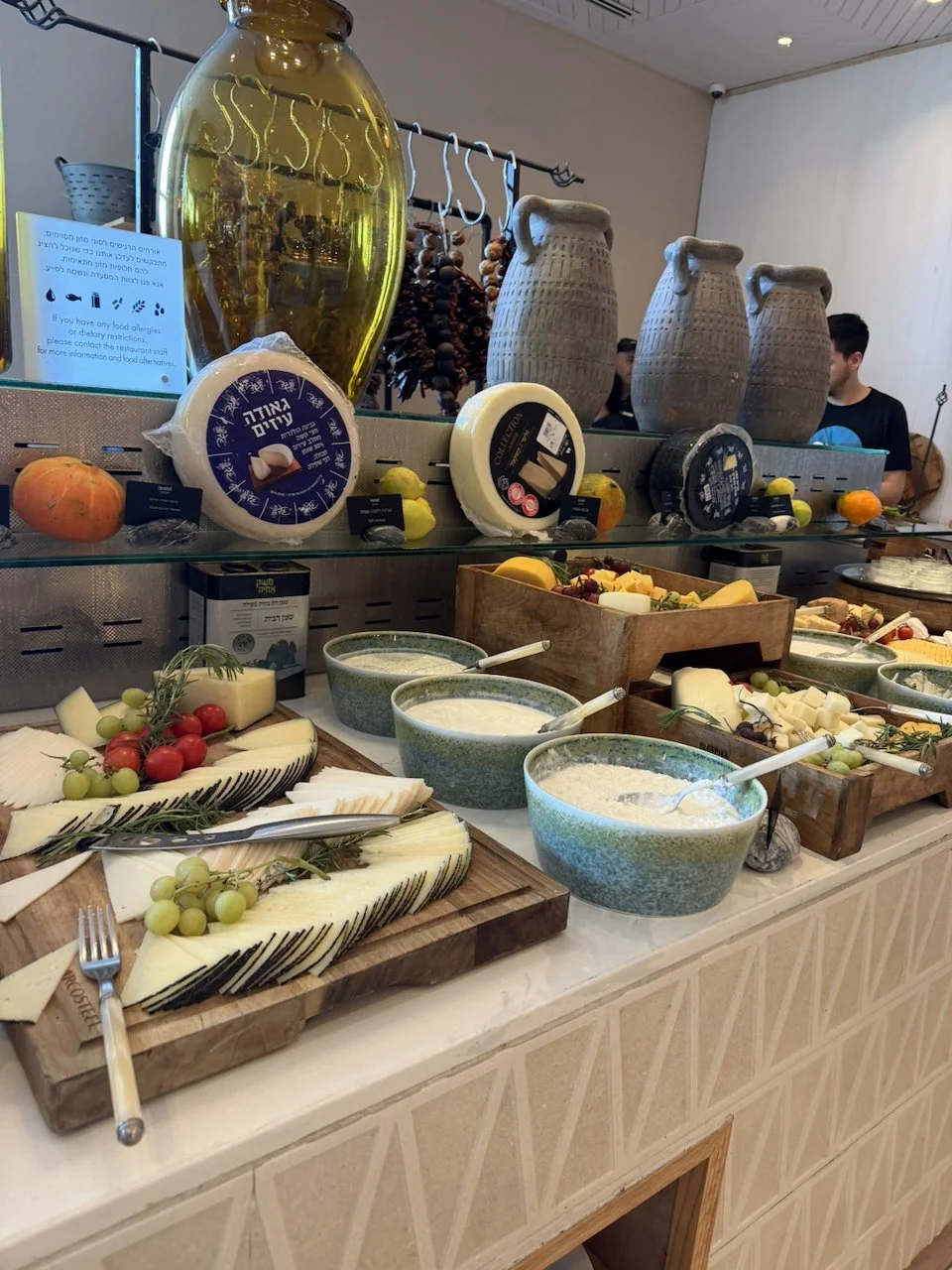
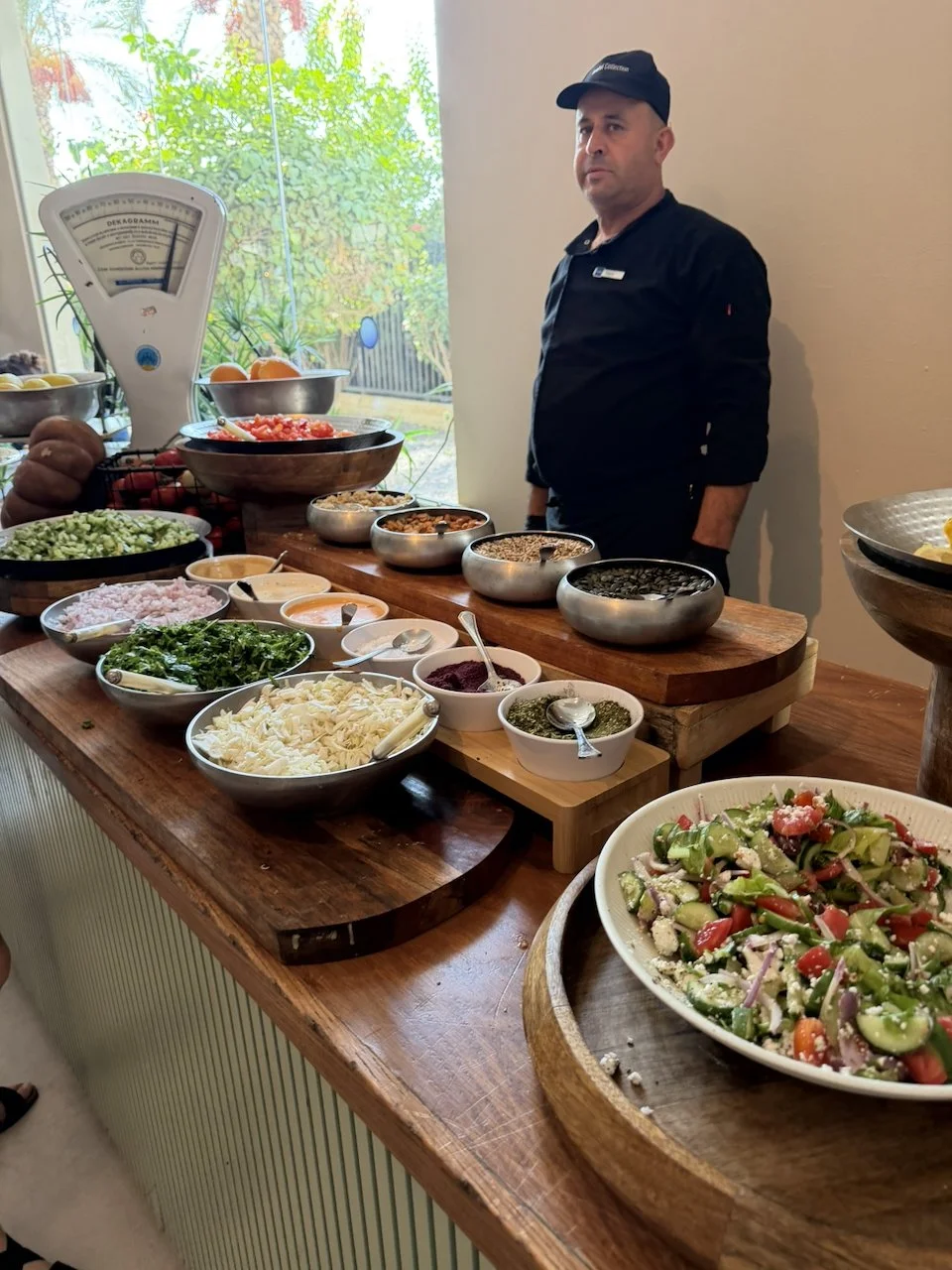
This morning we woke up bright and early at 8:00 and headed down to breakfast. Breakfast was crazy. There was a yogurt station with tart yogurt and all sorts of sweet toppings and fruit toppings, and then literally right next to it was a pizza station. Then you walked into the other room and there was an entire buffet. There were pastries, plain tuna, tuna with vegetables, cheeses, bourekas—I can’t even describe everything they had because there was just so much food. The unfortunate part is that I don’t actually like the majority of it, but I can appreciate it for everyone else. Also, they had no decaf coffee, which was disappointing. But otherwise, I was extremely impressed with this breakfast.
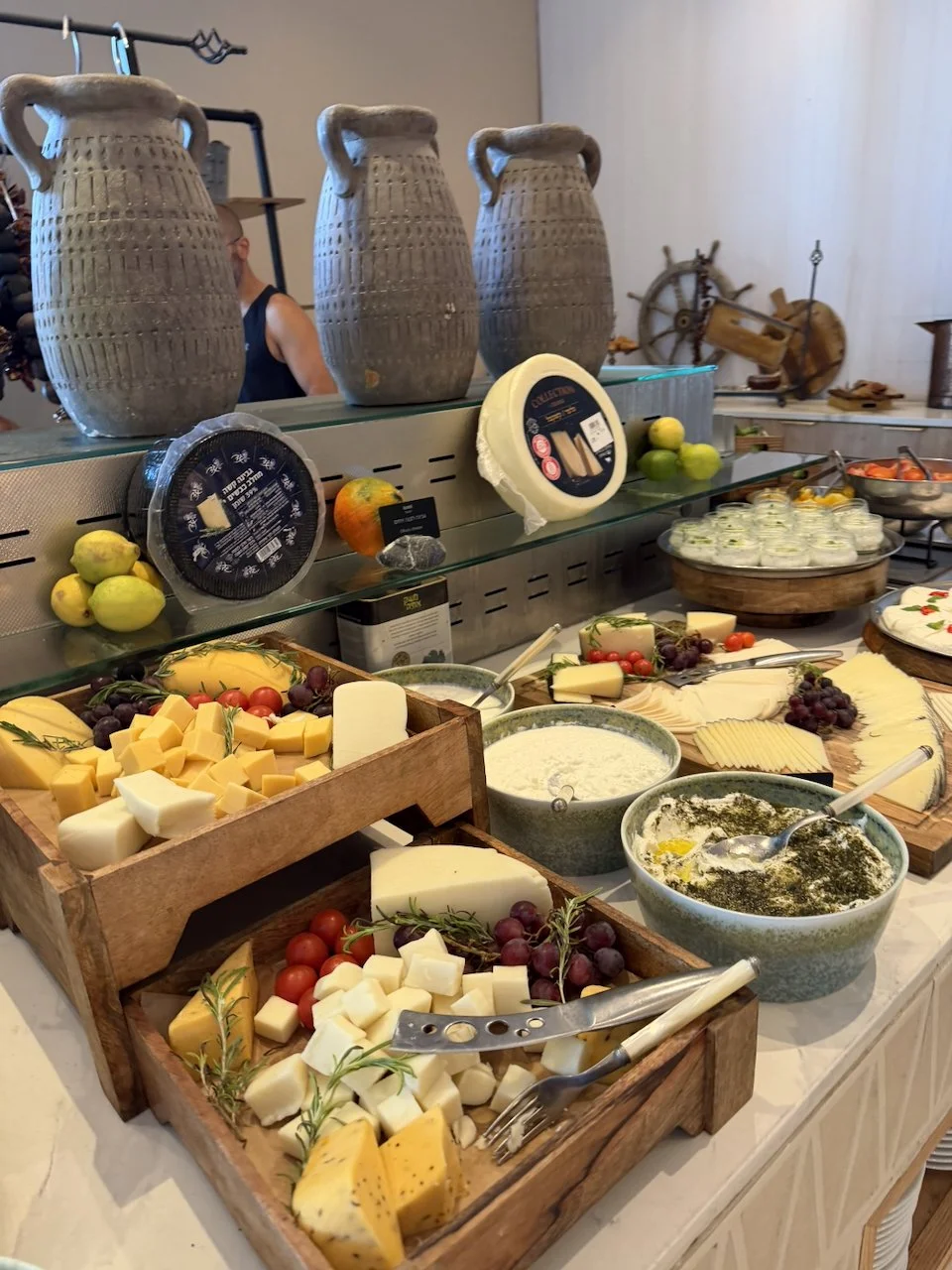
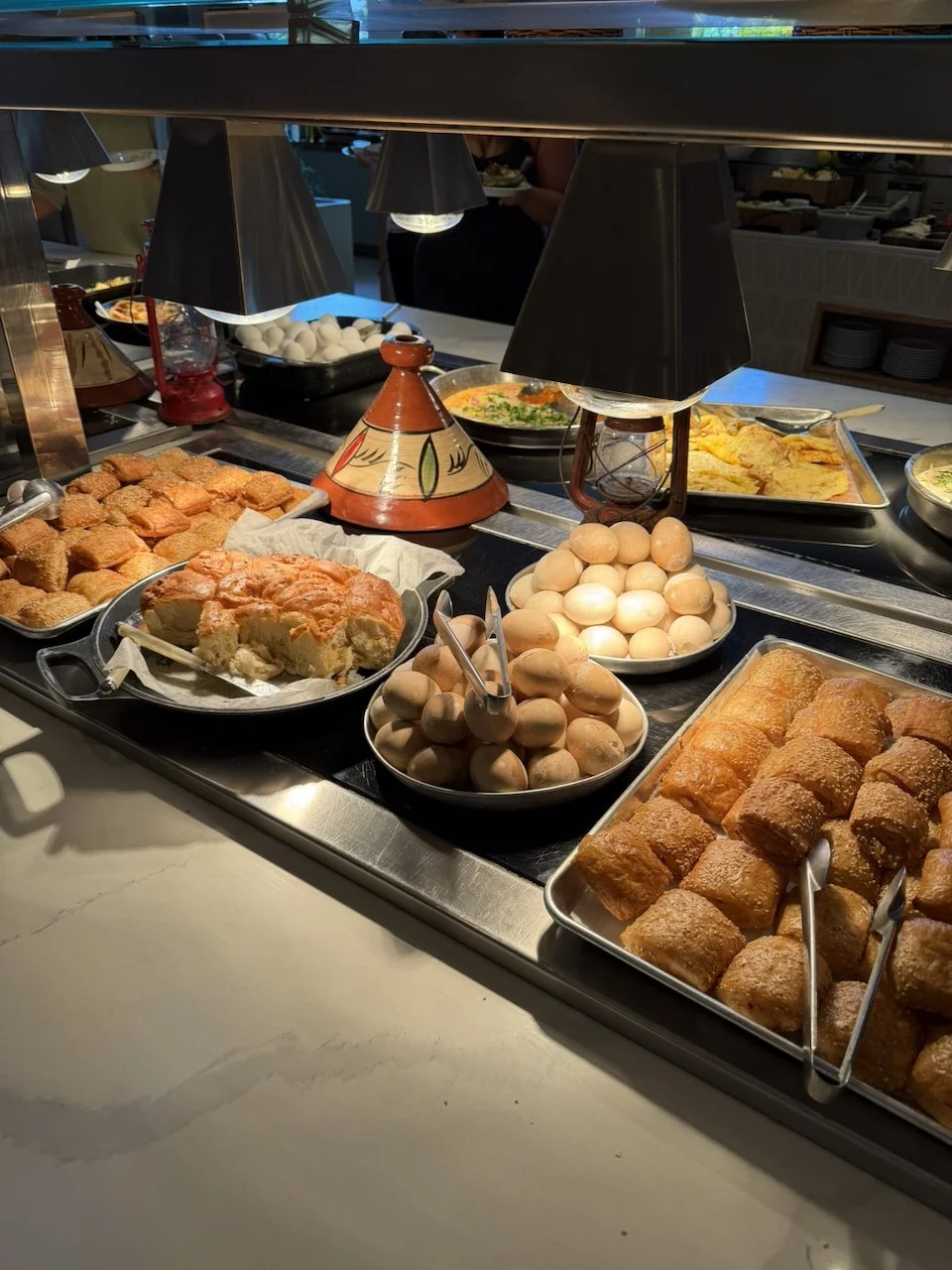
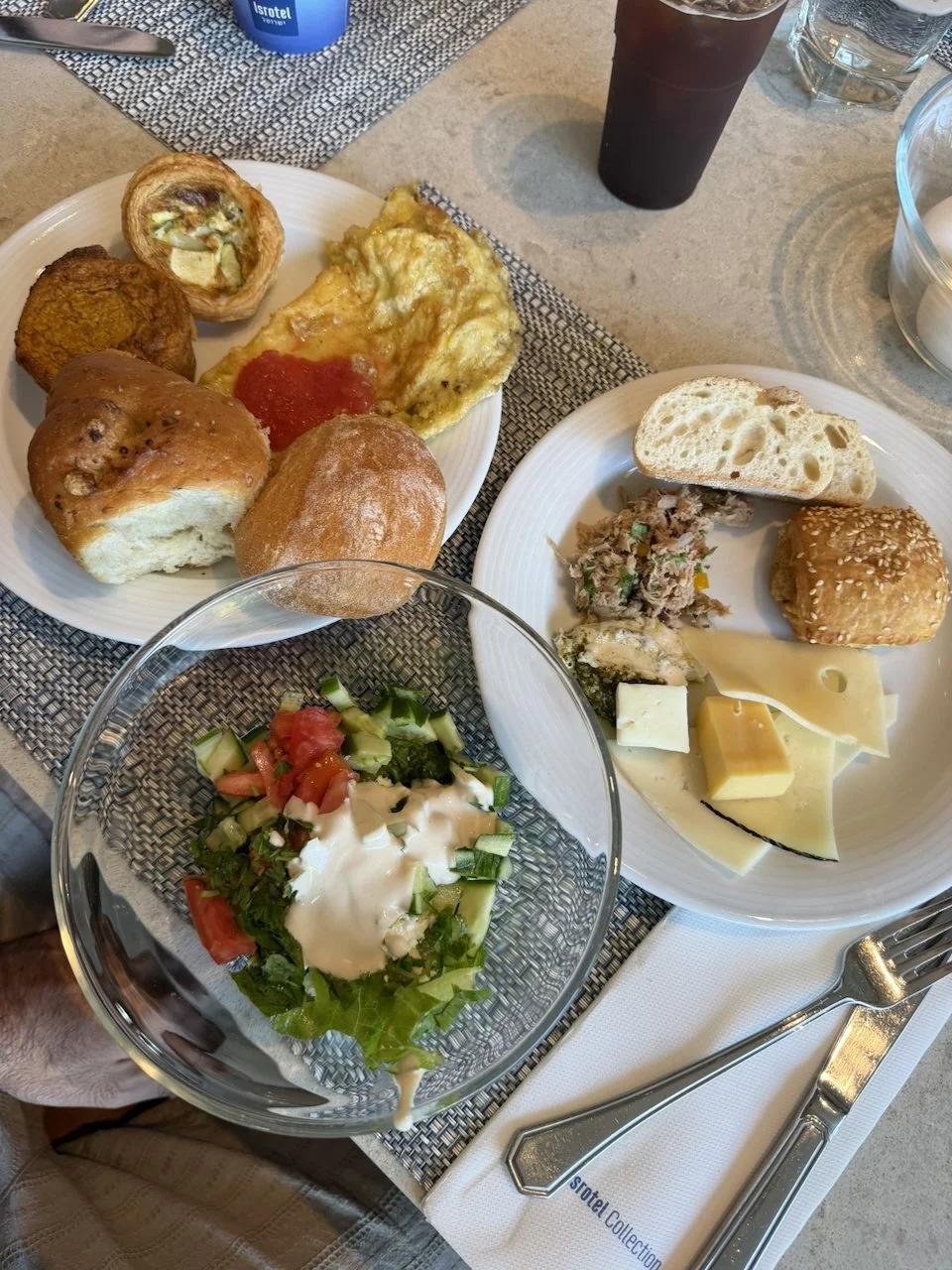
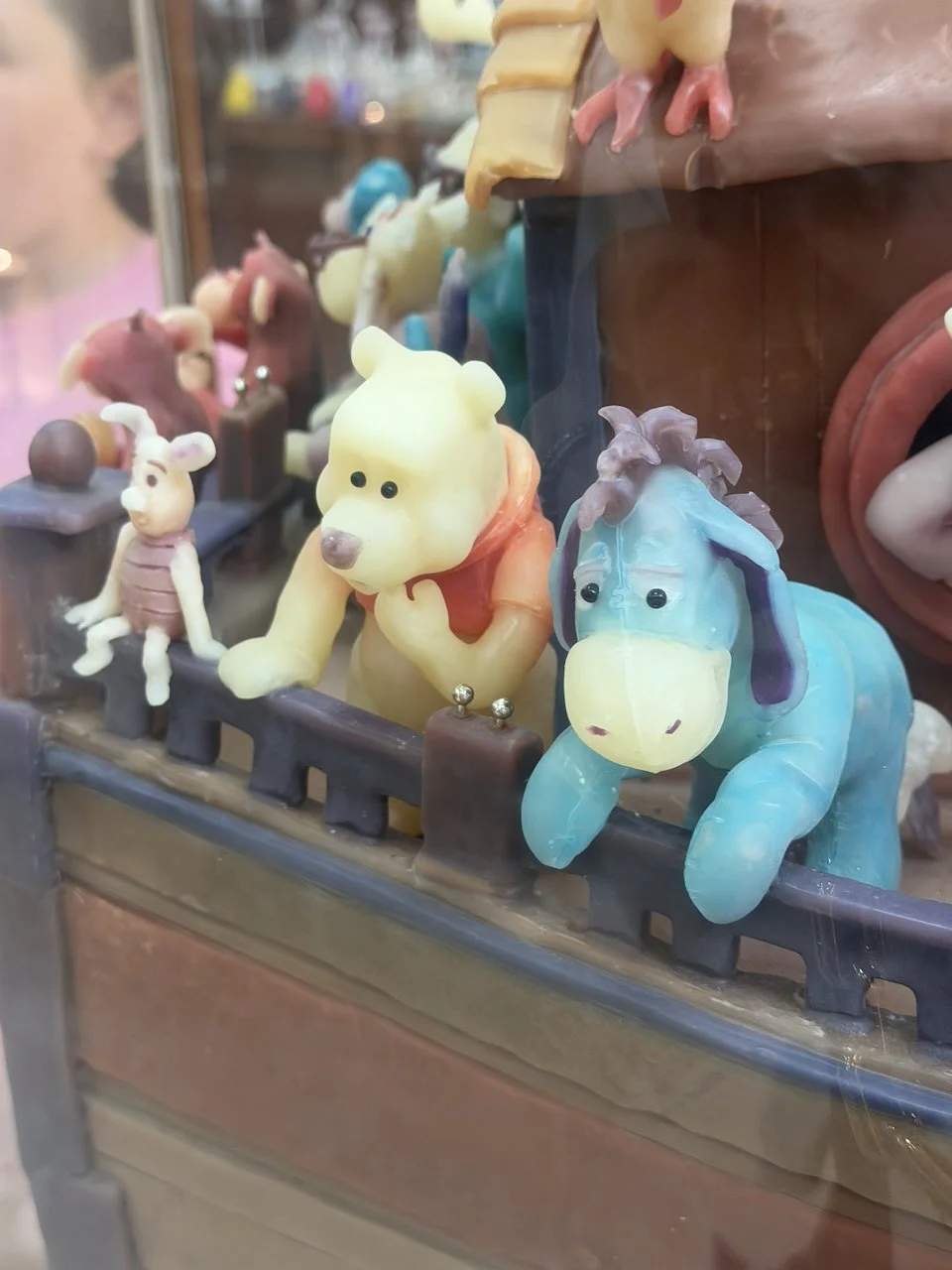
We were out to meet Muriel by around 9:30. Today was our big touring day, so we headed off to Tzfat. The drive was almost an hour, and the girls kept saying they were nauseous, which was very annoying. When we got there, we found a parking spot and walked over to the candle store, which was closed. Luckily, it opened about five minutes later. And while we were at the candle store, Hadar and Robin showed up. Previous readers may remember that Hadar and Robin are two of our former au pairs. We had Robin first, when Madeleine was around two. After Robin came Inbar (who is in London), then we had Hadar, and now we have Shir, who is not here. Anyway, Hadar and Robin came to spend the day with us, which was really exciting.
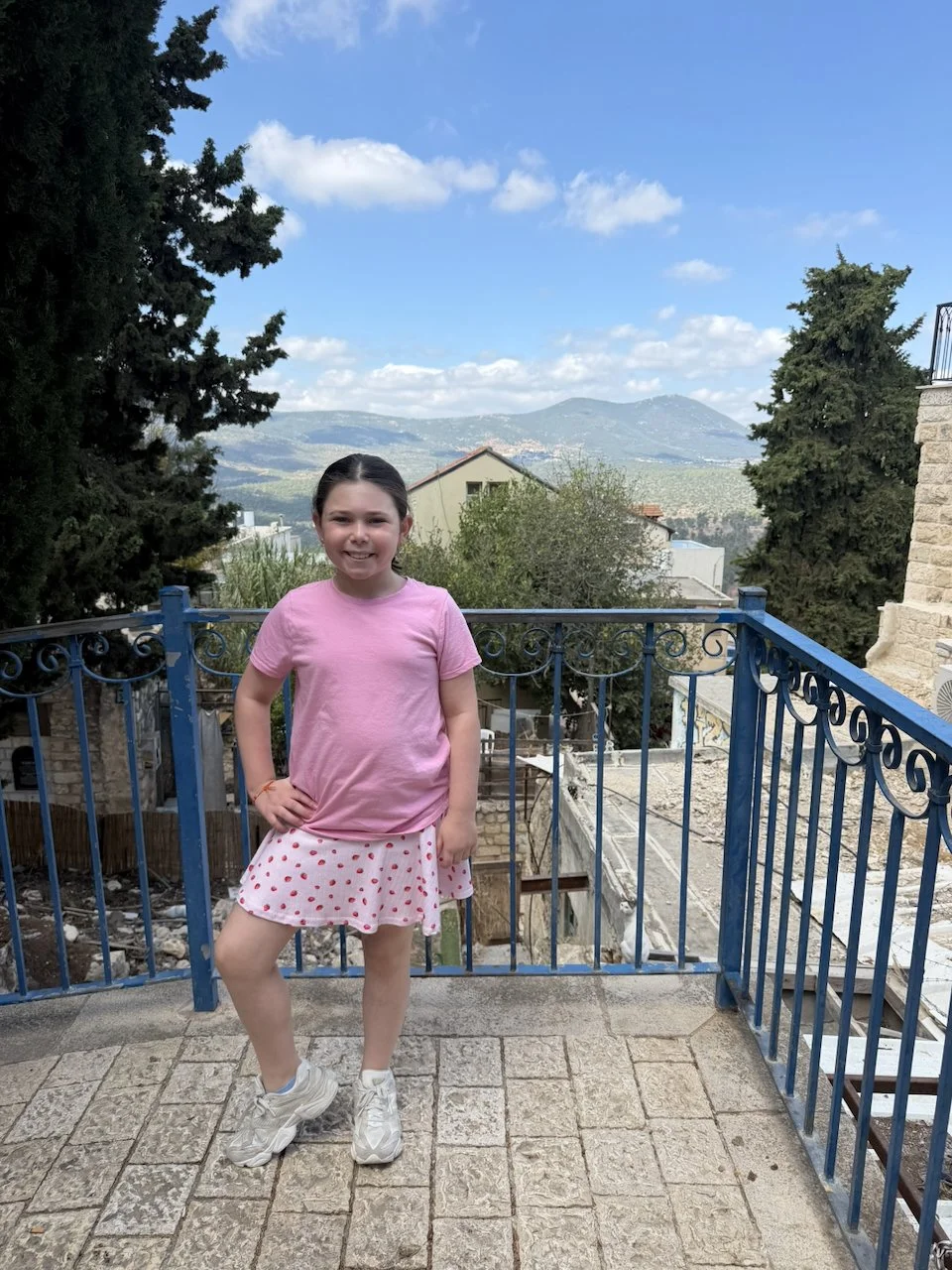
In Tzfat, we visited two of the famous synagogues and walked around for a while. Hallie was especially excited to be there because she had learned about Tzfat in school last year, and one of the shuls we visited was apparently the shul she had made a model of for school. So that was really nice for her, and I’m glad she got to actually see it. We also visited a store where they weave talaisim and other Judaica by hand and Tzvi bought a new tallis bag.
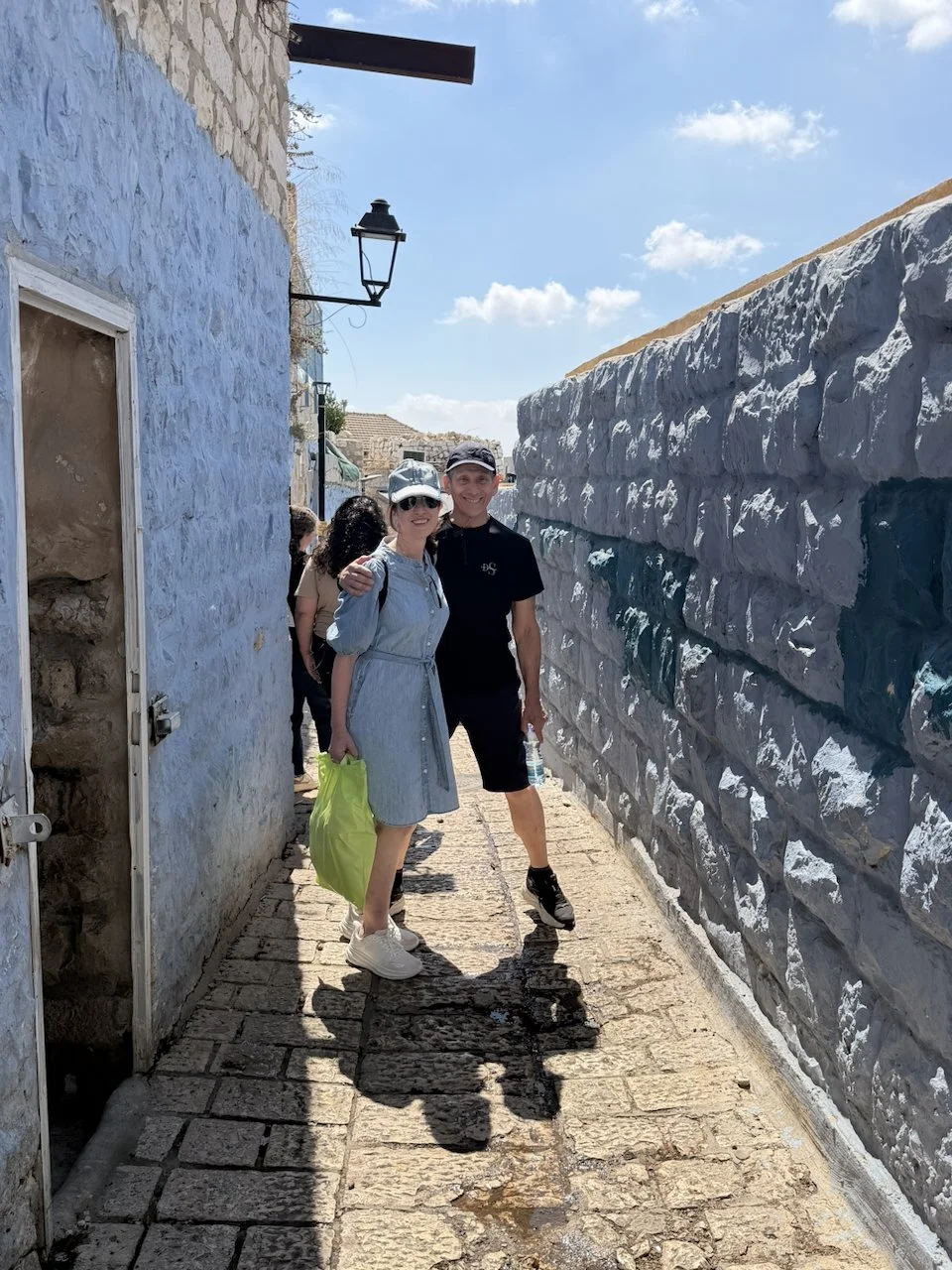
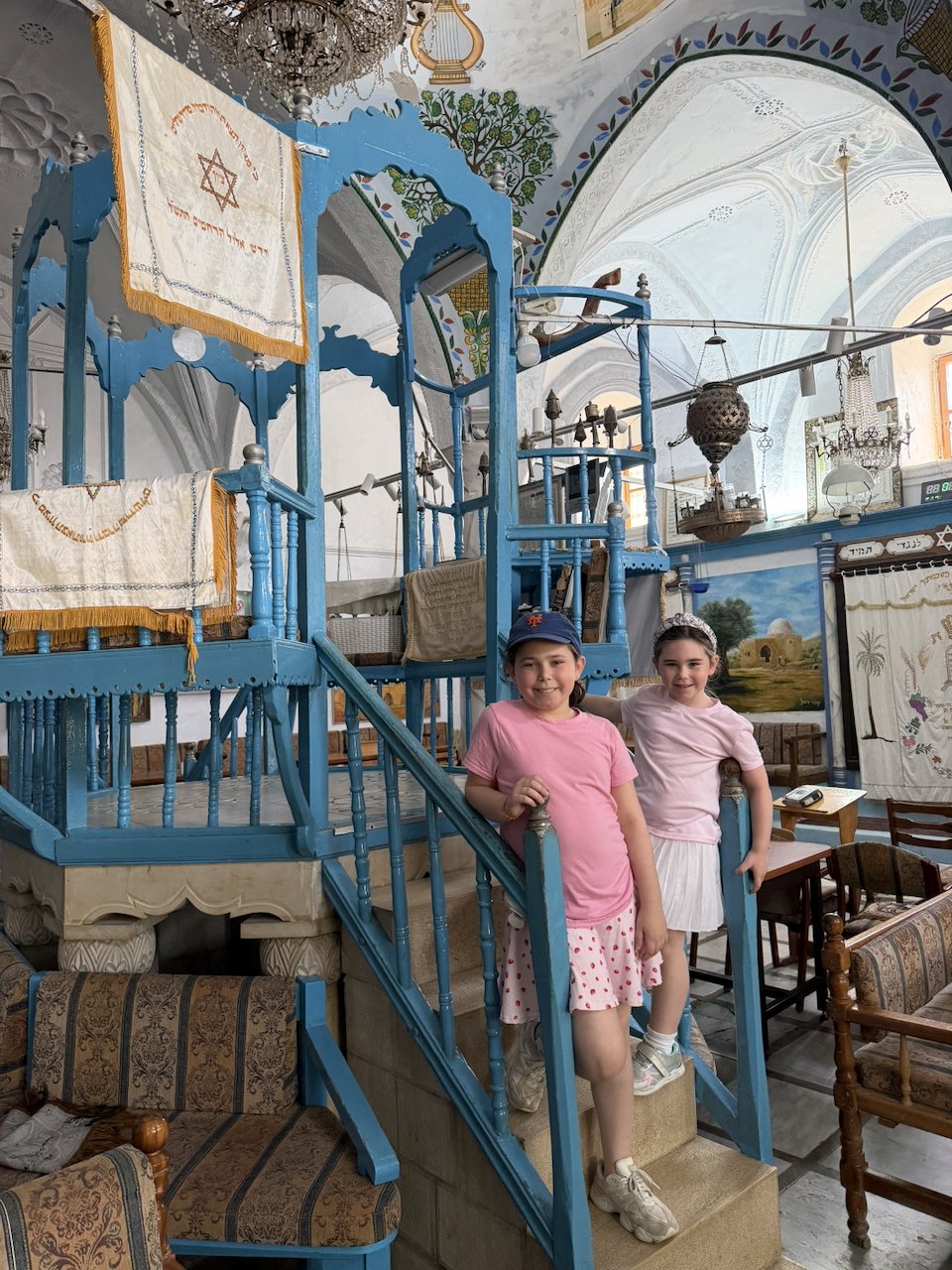
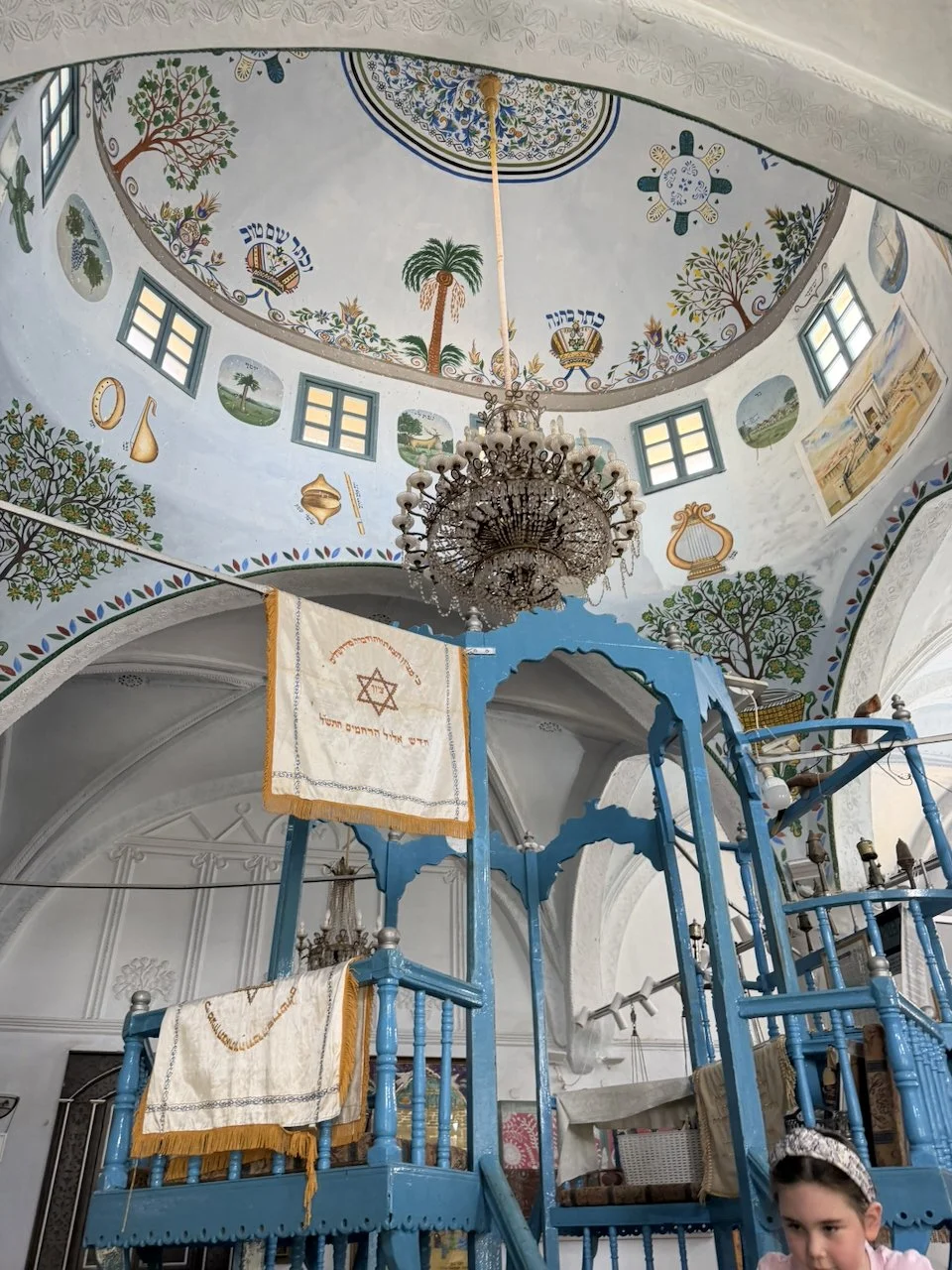
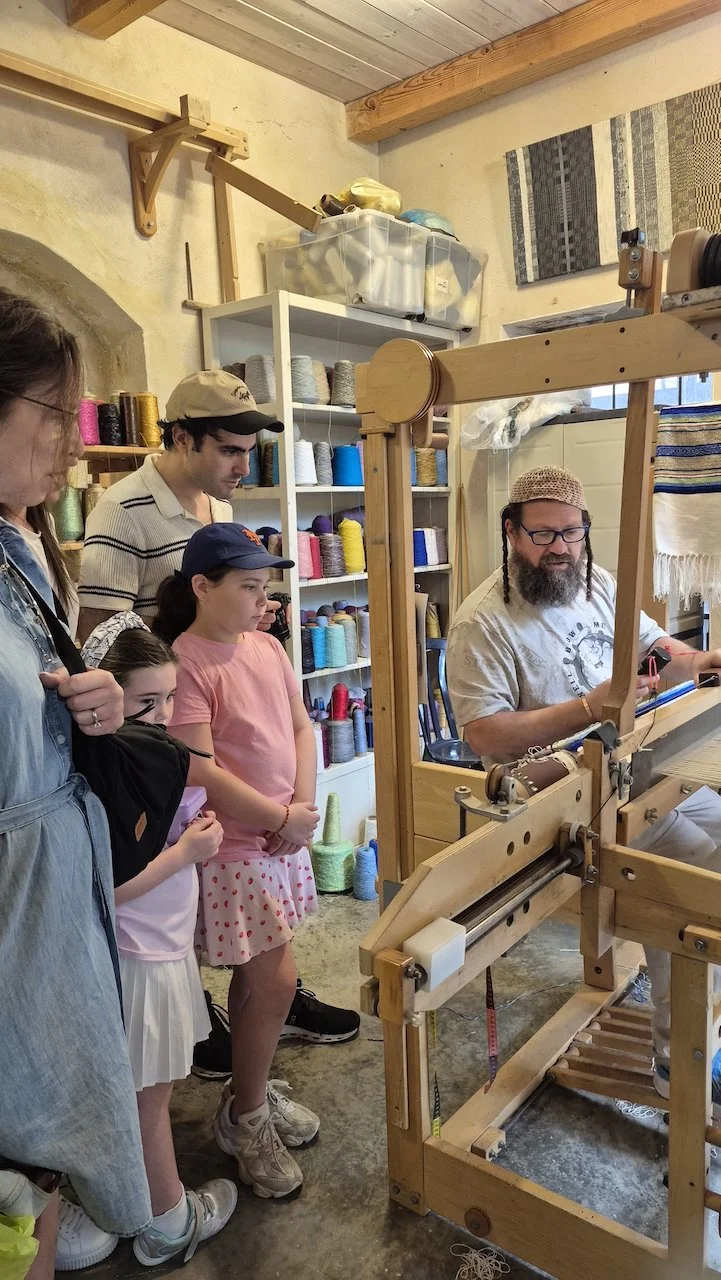
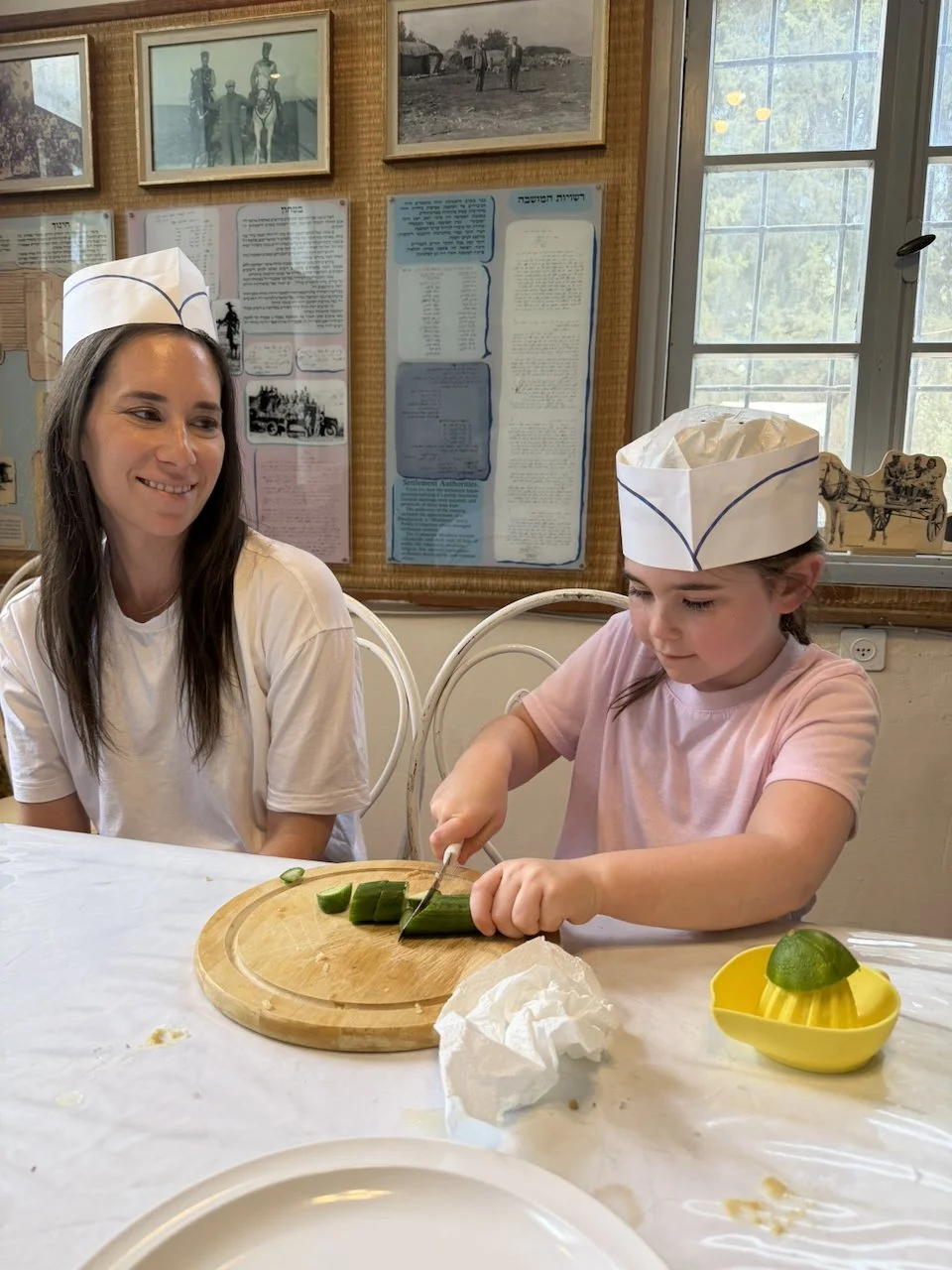
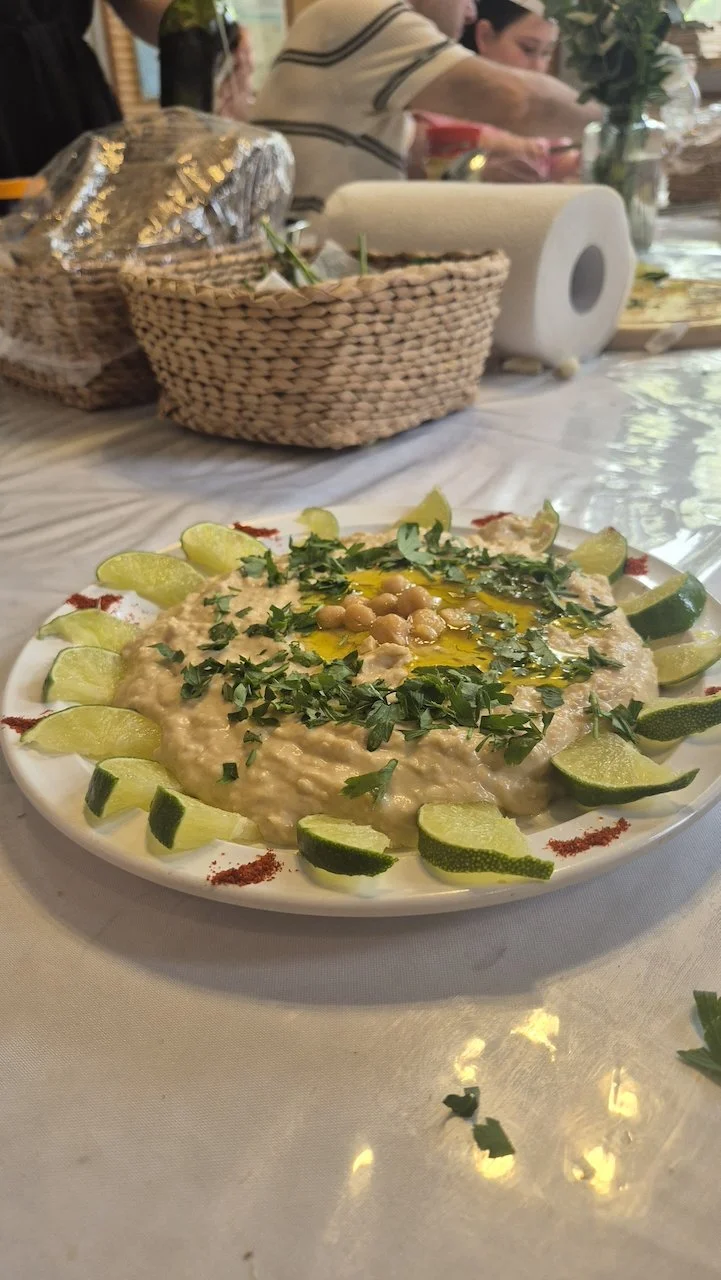
We spent about an hour and a half in Tzfat and then got back in the car and drove to Dubrovin Farm in Yesod HaMa’ala. The history there was actually very interesting. Yesod HaMa’ala was founded in the 1880s by Jewish families from Poland who came to work the land near the Hula Valley. They arrived to find a very difficult environment, including swamps and pretty brutal living conditions. For a while they were living in extremely primitive housing, and eventually Baron Rothschild helped them build more permanent homes. Not an easy life. Basically everyone died of malaria. After learning about all of that, we got to make hummus. They set up a table with chickpeas that had already been soaked and cooked, along with tahini, lemon, garlic, salt, and everything else we needed. There were eight of us, so we split into two groups of four. It was actually really fun. Madeleine was initially very hesitant because somebody made the mistake of saying it was going to be a competition. We assured her it was not a real competition, which made her feel better. My parents’ team won, based on the way they decorated their plate.
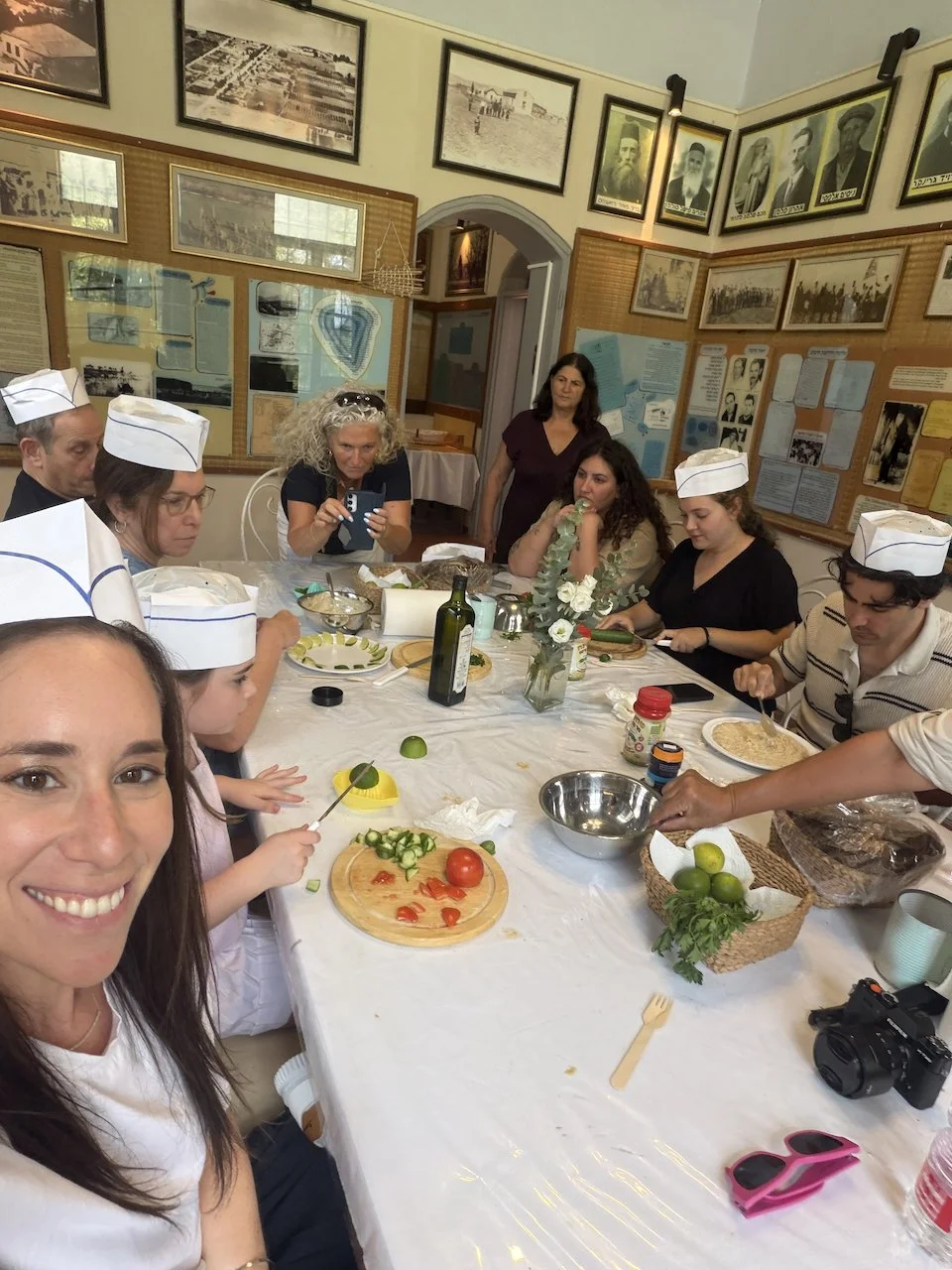
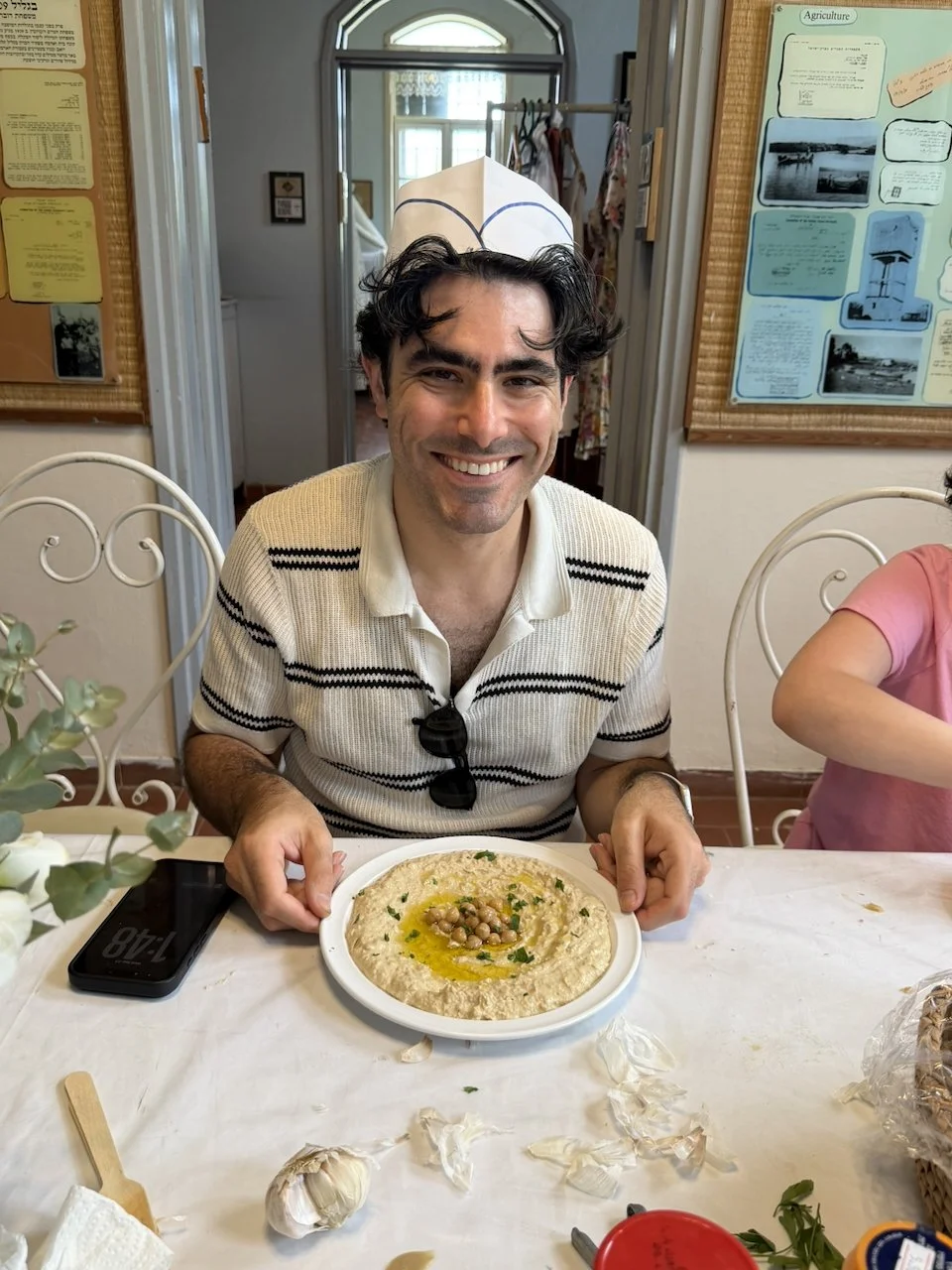
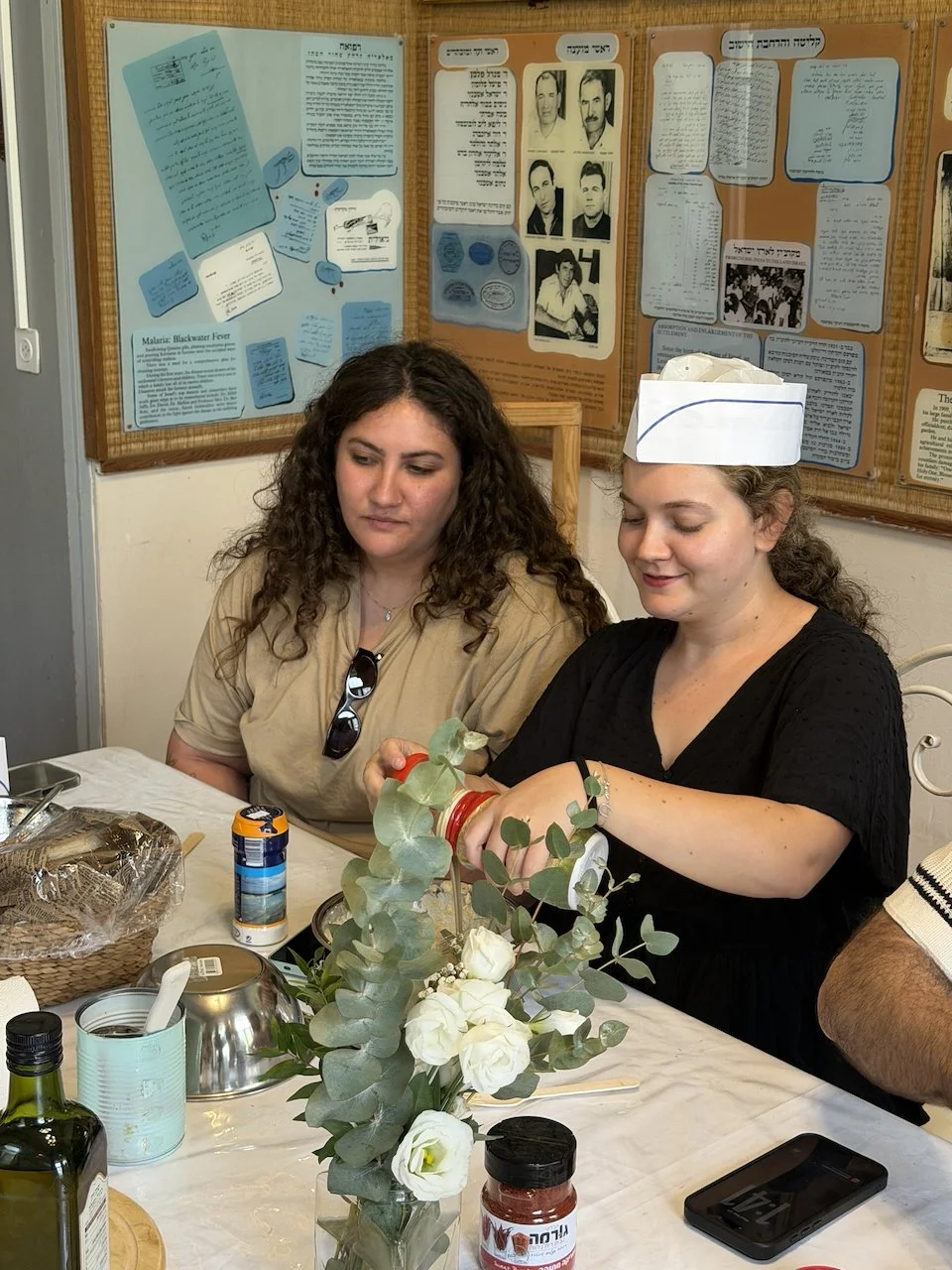
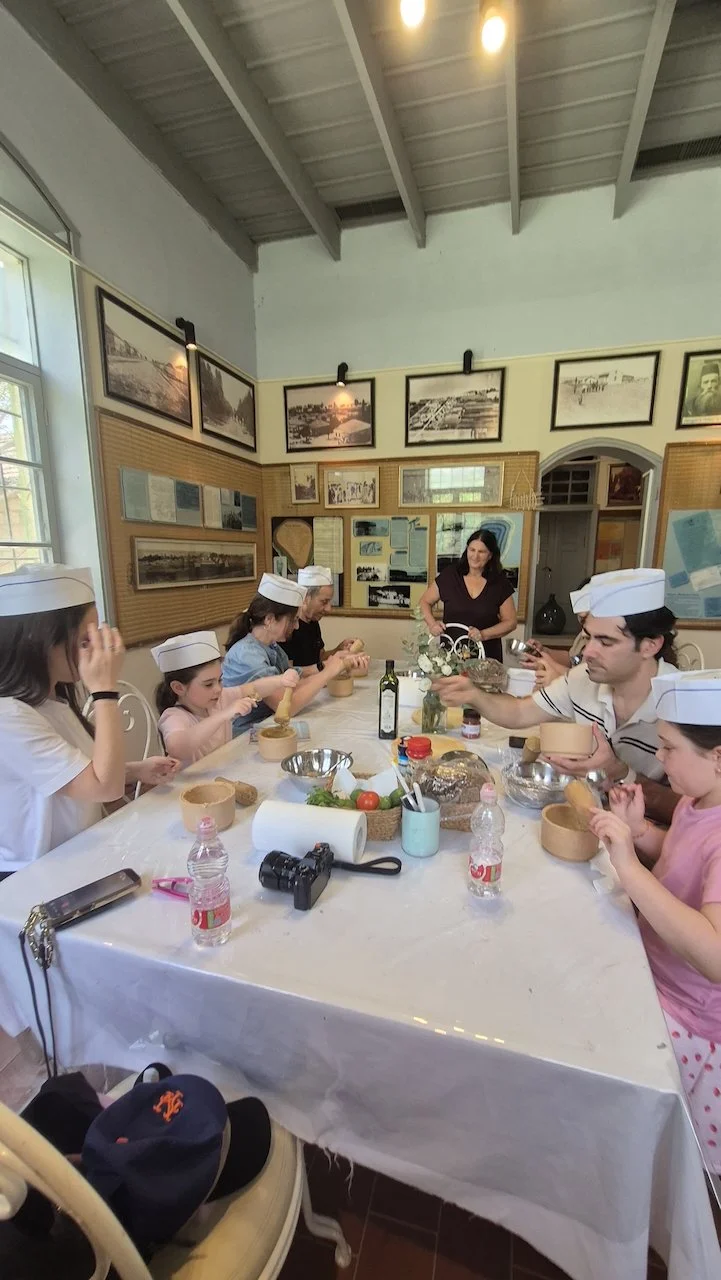
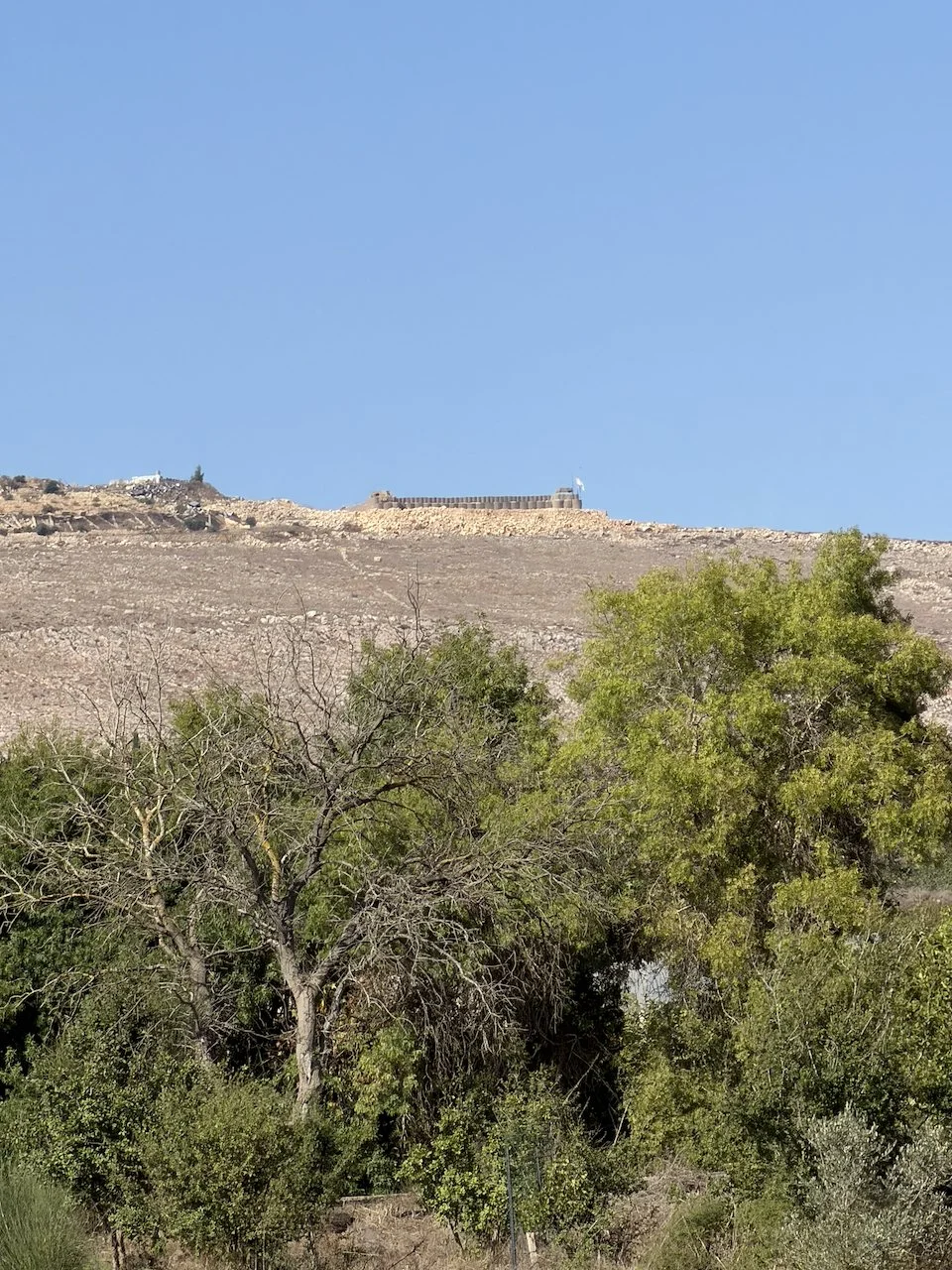
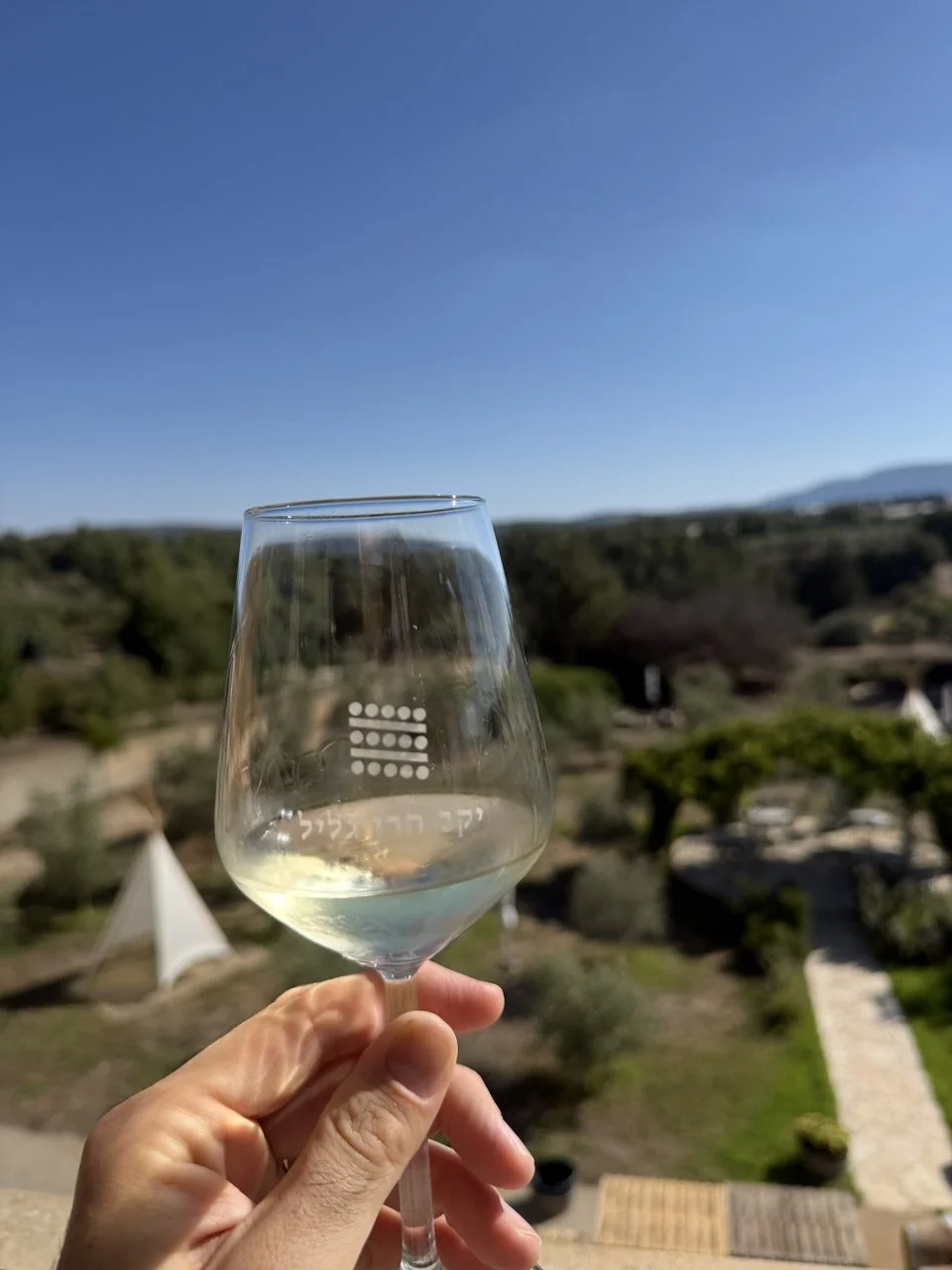
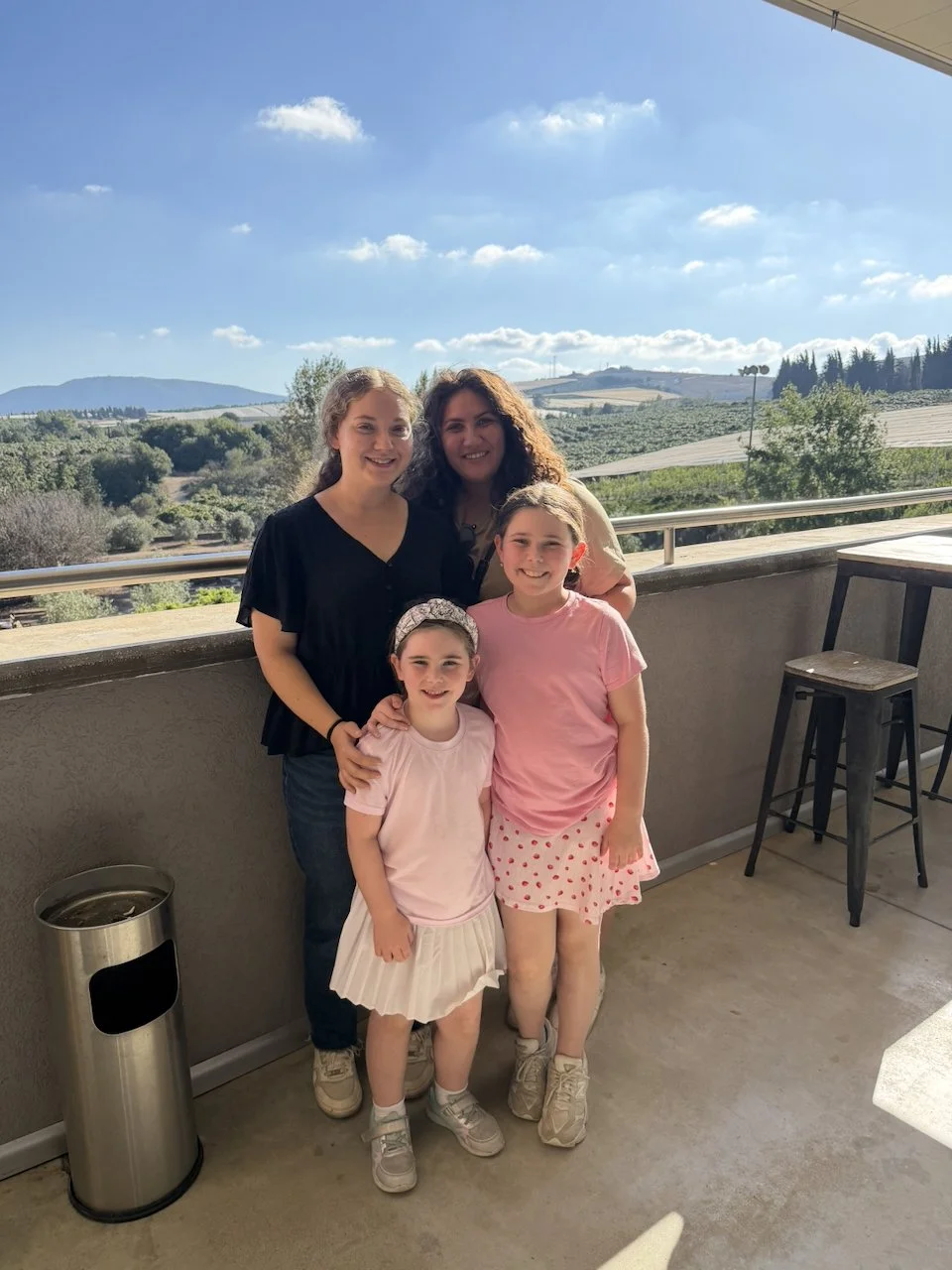
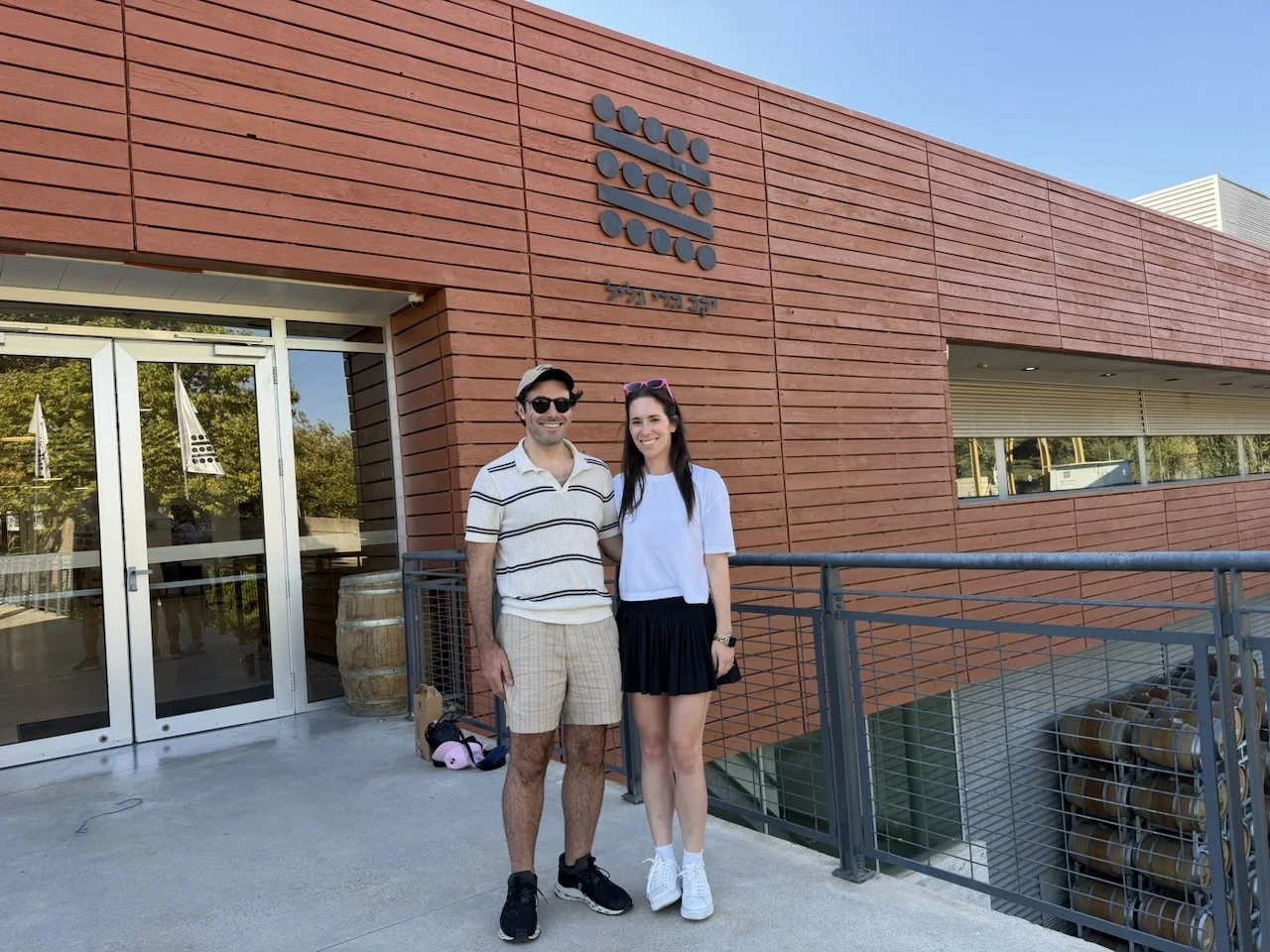
From there, we drove to Galil Mountain Winery. The winery is basically right on the Lebanese border. We were literally looking into Lebanon while we were standing there. After October 7 they had to build a wall around some of the winery so Hezbollah couldn’t shoot at them and they could continue making wine. They pointed out a building just over the border and told us there is now an Israeli flag on top of it because it is in Israeli control. They showed us around the winery—the barrels, the giant tanks, and all the usual winery things that I feel like you see on every winery tour.
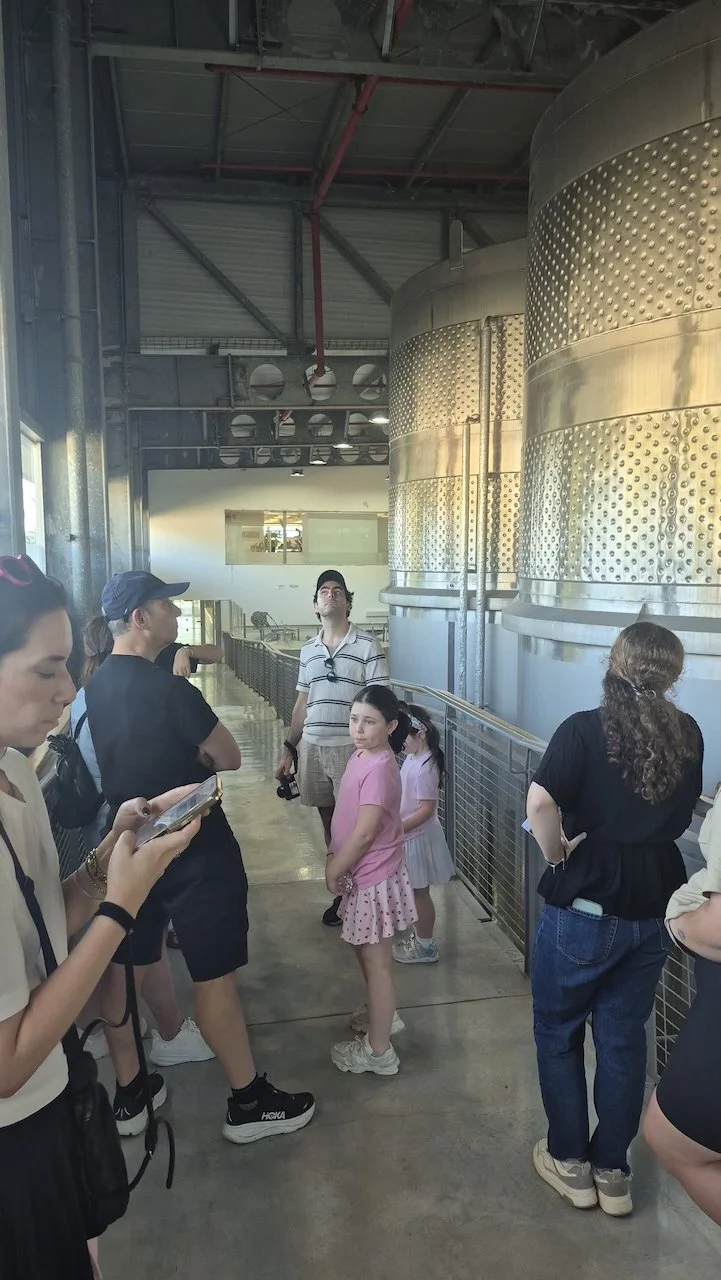
While standing looking at the giant vats, my father had a very serious question that he wanted answered. “What happens if someone falls in?”
We all thought this was the craziest question and couldn’t stop laughing, but then we actually Googled it and it turns out people actually have fallen into these tanks and died because the carbon dioxide concentration can become very high. People can get dizzy or lose consciousness and fall in. We would therefore like to formally apologize to my father for laughing at his very legitimate wine-tank safety concern.
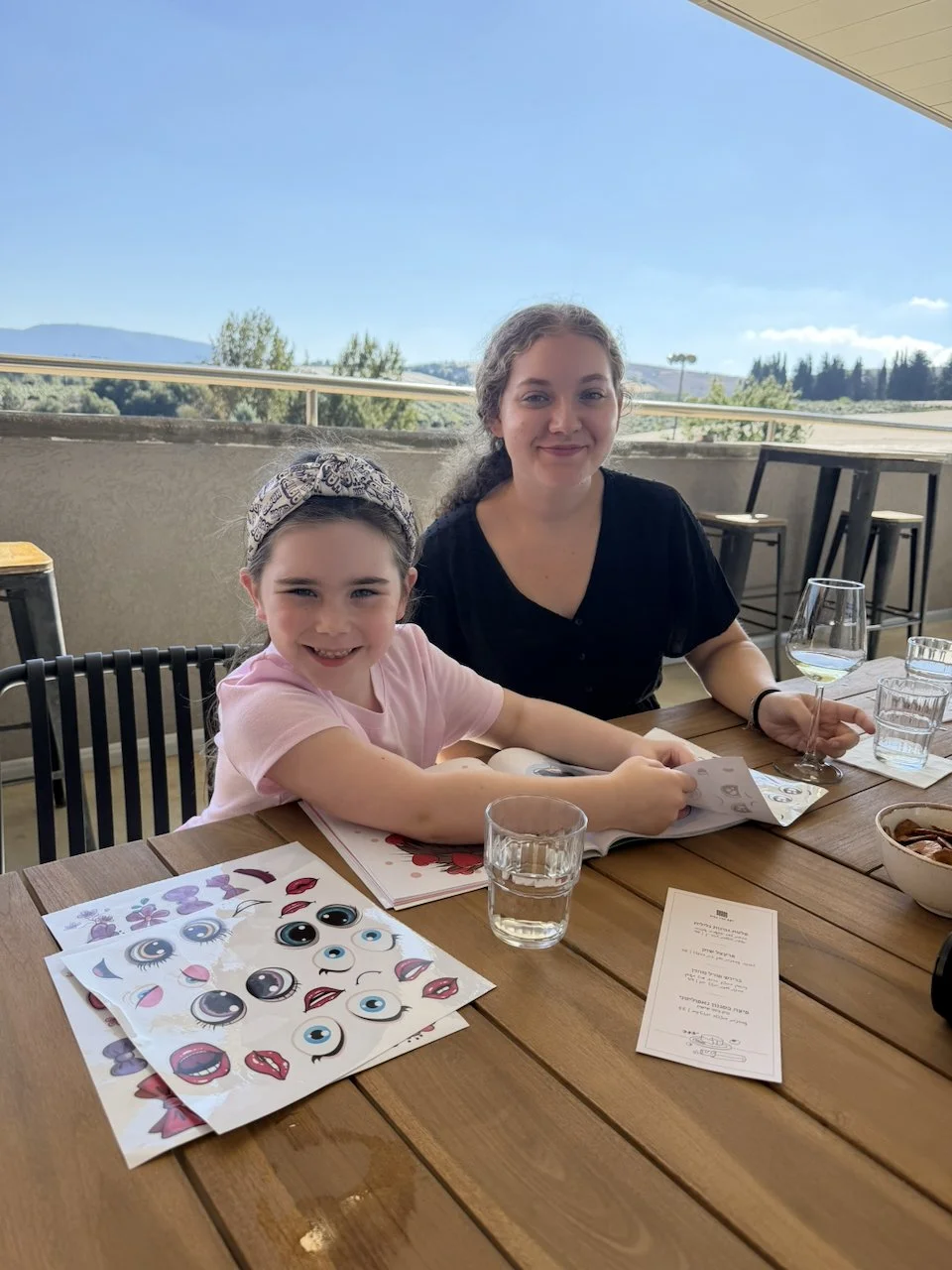
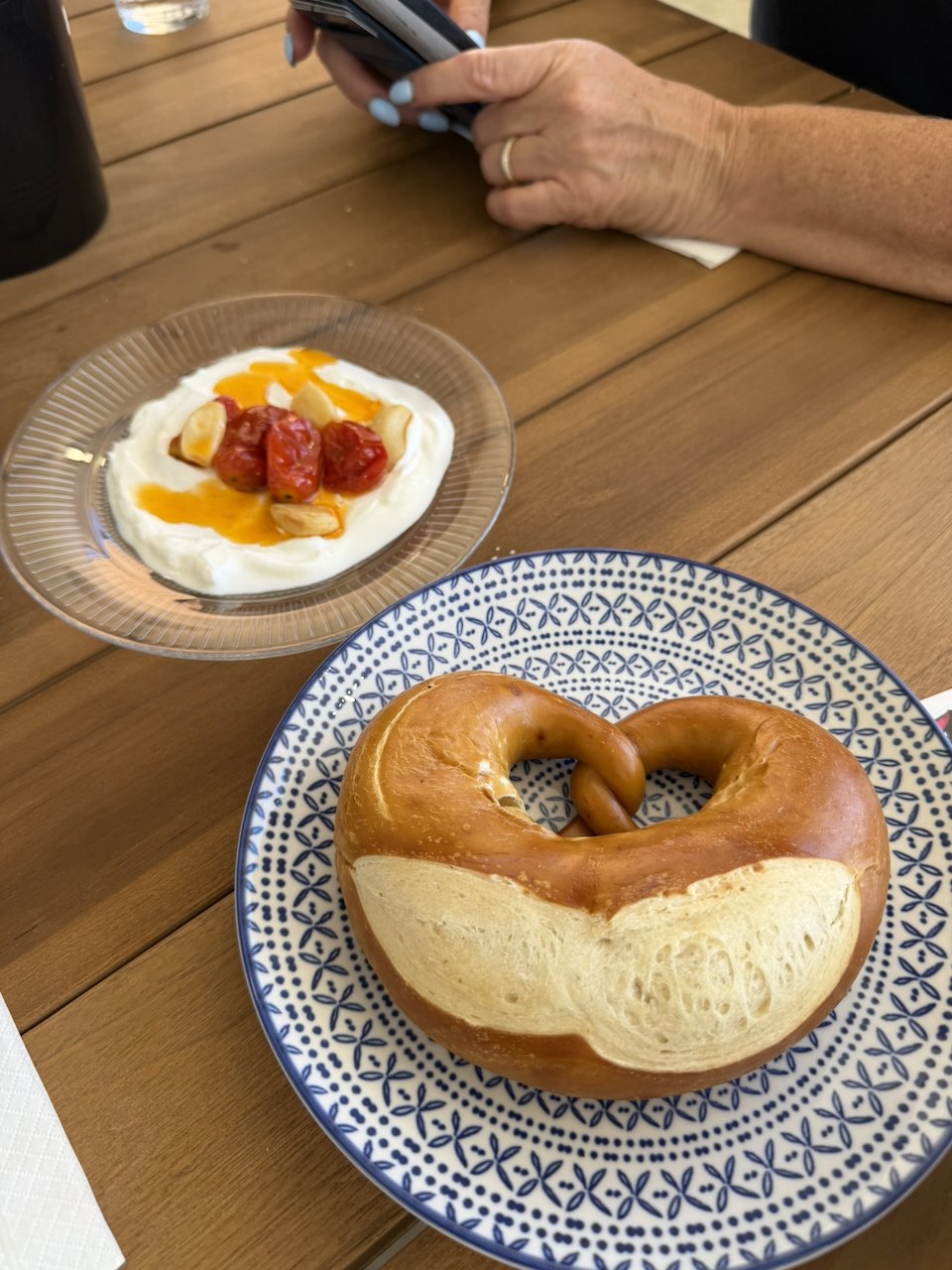
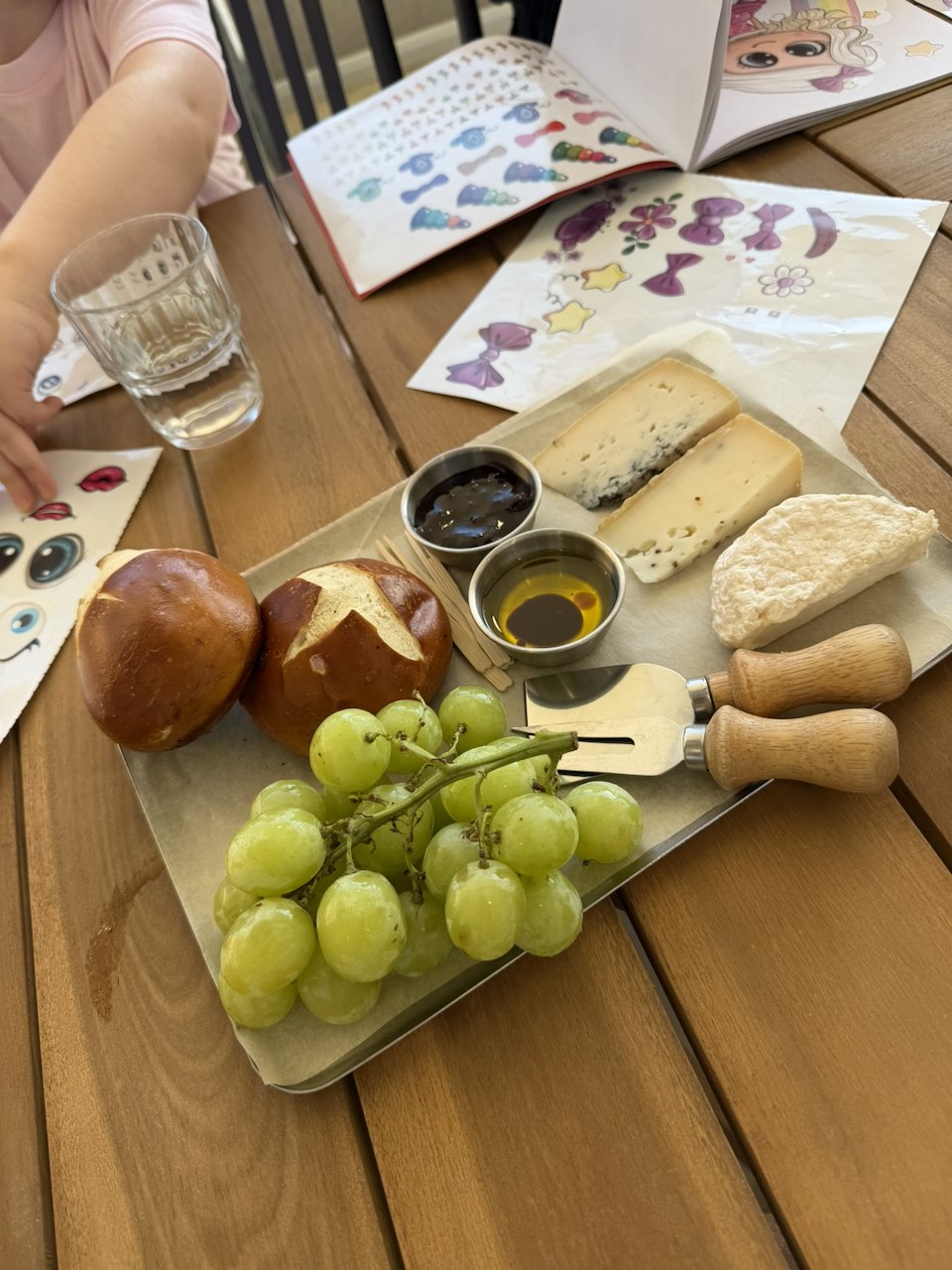
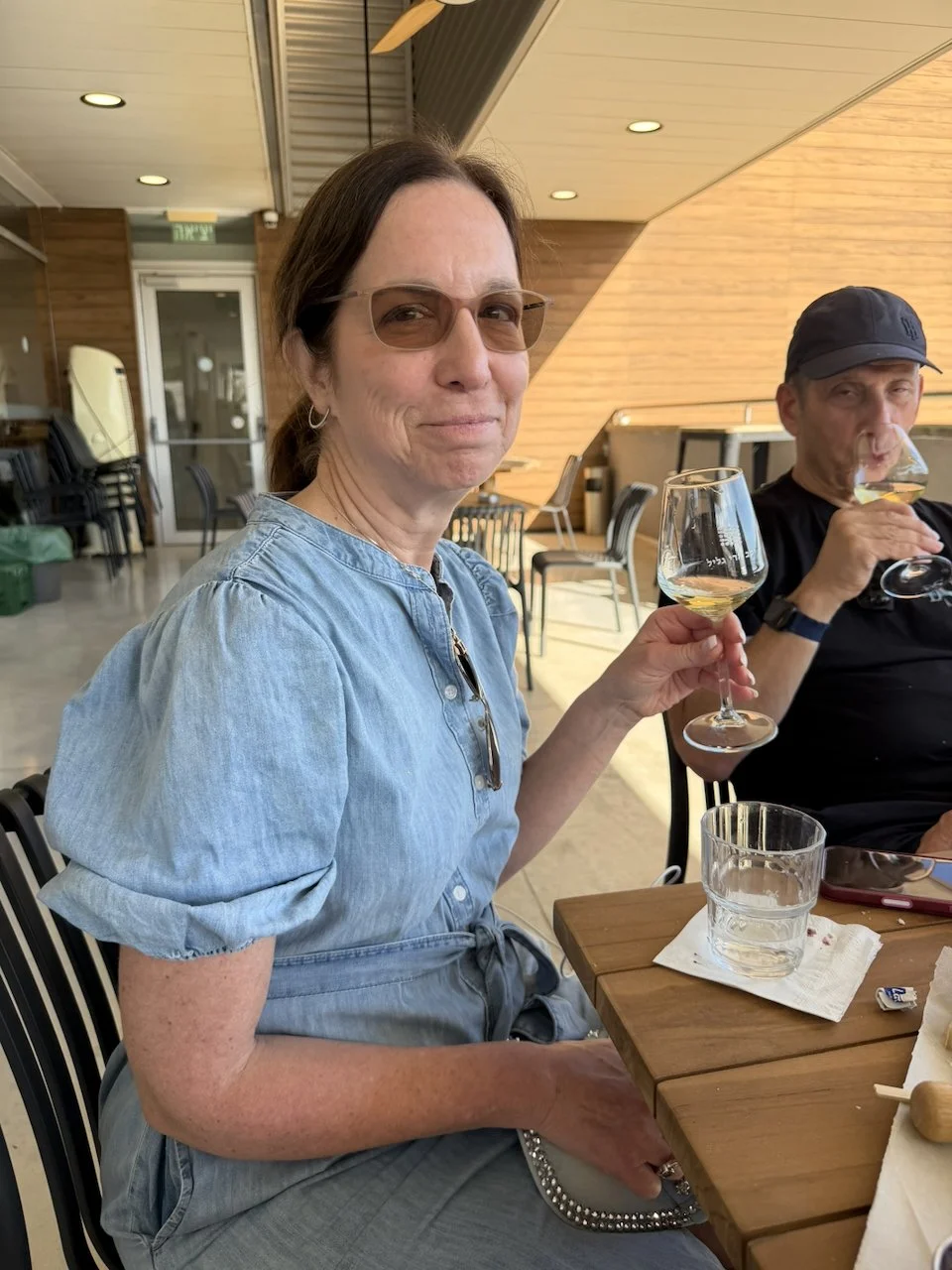
After that we sat down for a tasting on the patio outside with a nice view of Lebanon. They brought out cheese, grapes, jam, olive oil, bread, and some other snacks, and it was just really pleasant. We sat there for a while, tasted the wines, and then bought a few bottles and some honey.
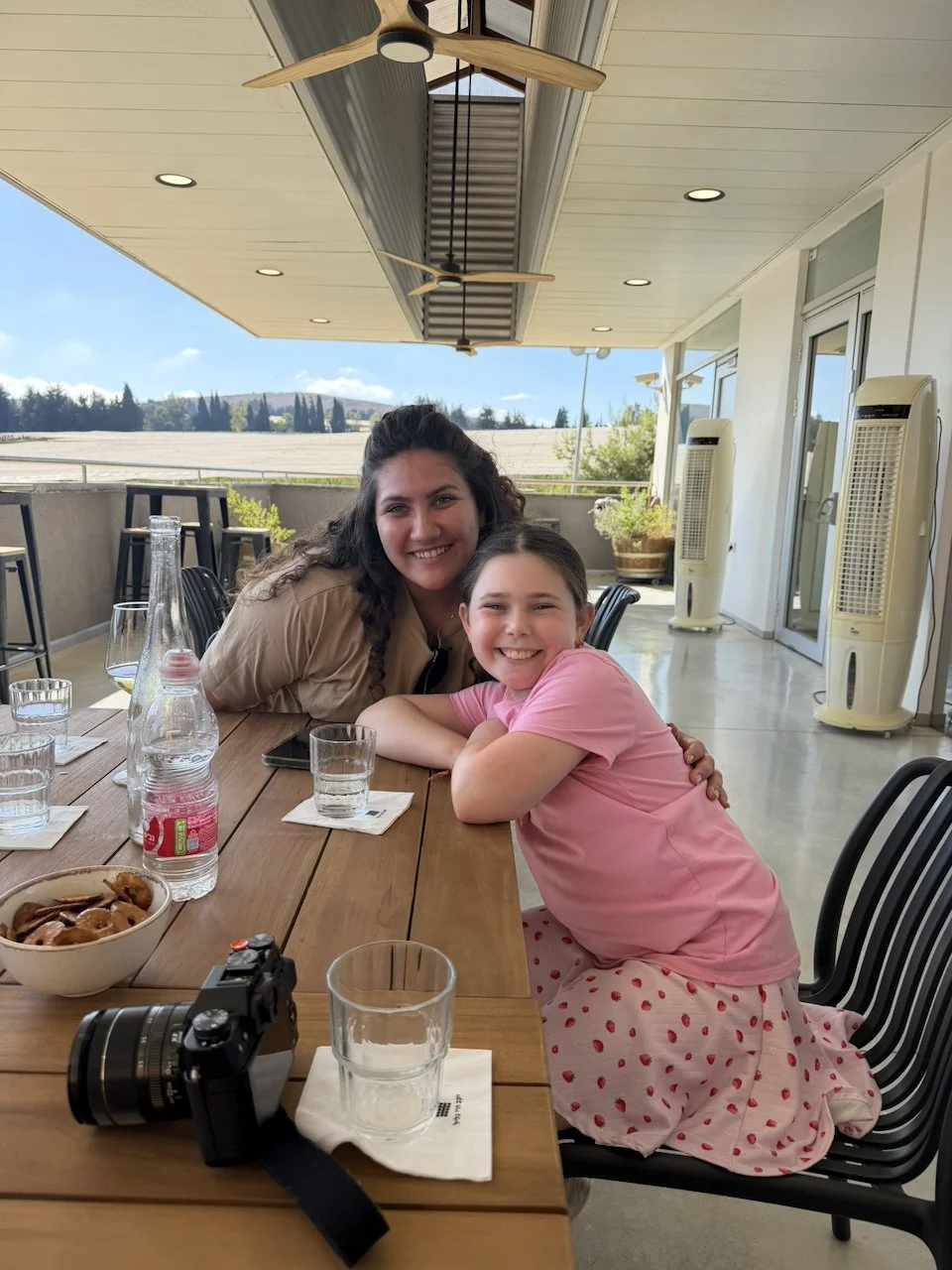
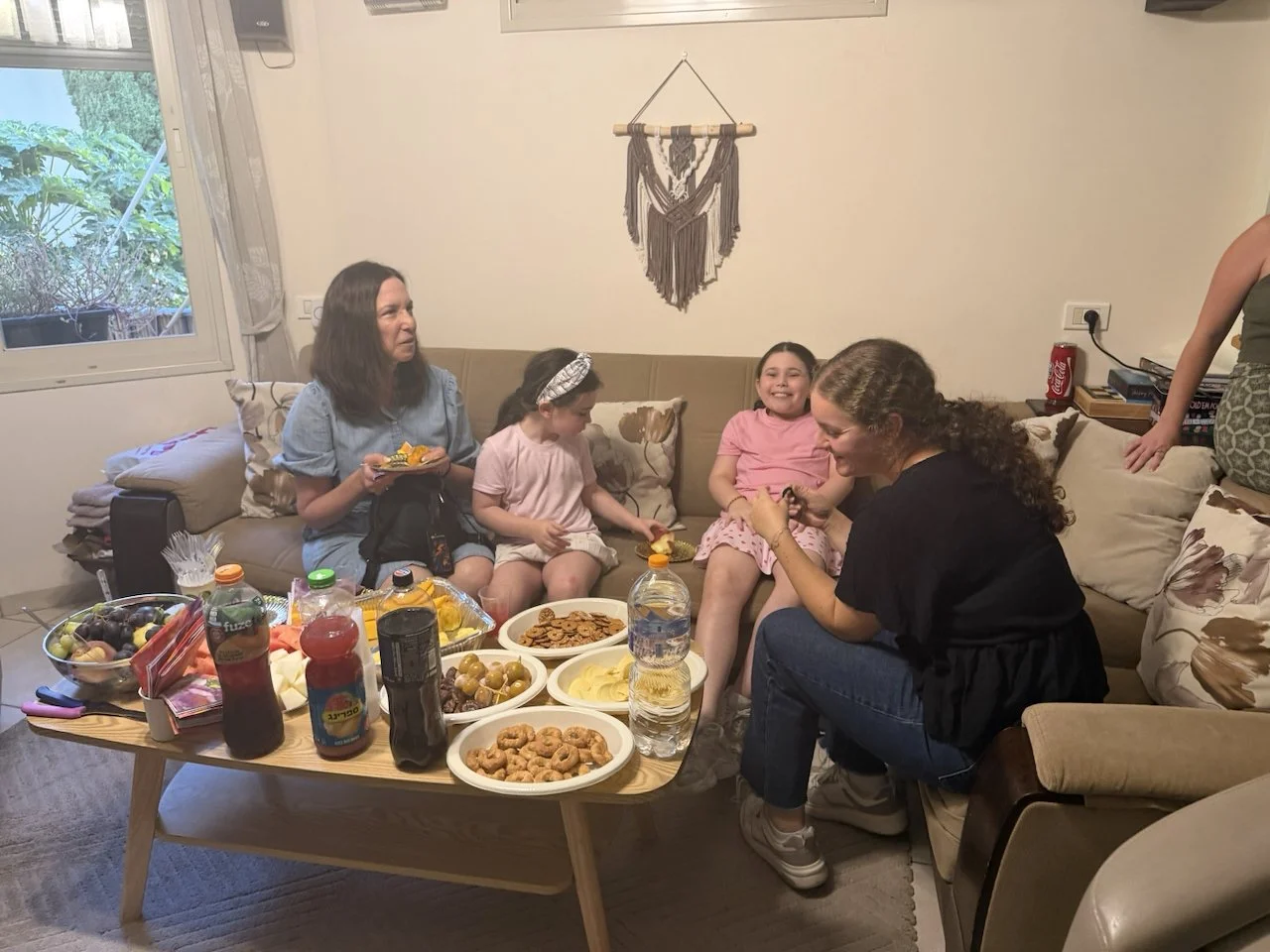
After the winery, we said goodbye to Robin, who had to head home, and the rest of us drove to Kiryat Ata, right near Haifa, to visit Hadar’s family. We had never met Hadar’s family, so this was really fun. The neighborhood where she lives has these really beautiful modern houses—very square and contemporary, with palm trees everywhere—and because it’s also up on a hill, the whole thing somehow reminded me of Los Angeles. We went into Hadar’s house, saw her room, and met her parents and her sister. Her parents had prepared an entire spread of food for us. Hadar had warned me this was going to happen, and I had told her that it was ridiculous because we were literally leaving their house and going directly to dinner. But she said, of course, her mother was going to go all out anyway. And she did. It was so nice. We sat there and ate even though none of us were particularly hungry, and then her parents gave us gifts. They gave Tzvi and me a Birkat HaBayit, and they gave the girls a whole bunch of gifts too. It was just really nice to finally meet them after knowing Hadar for so long.
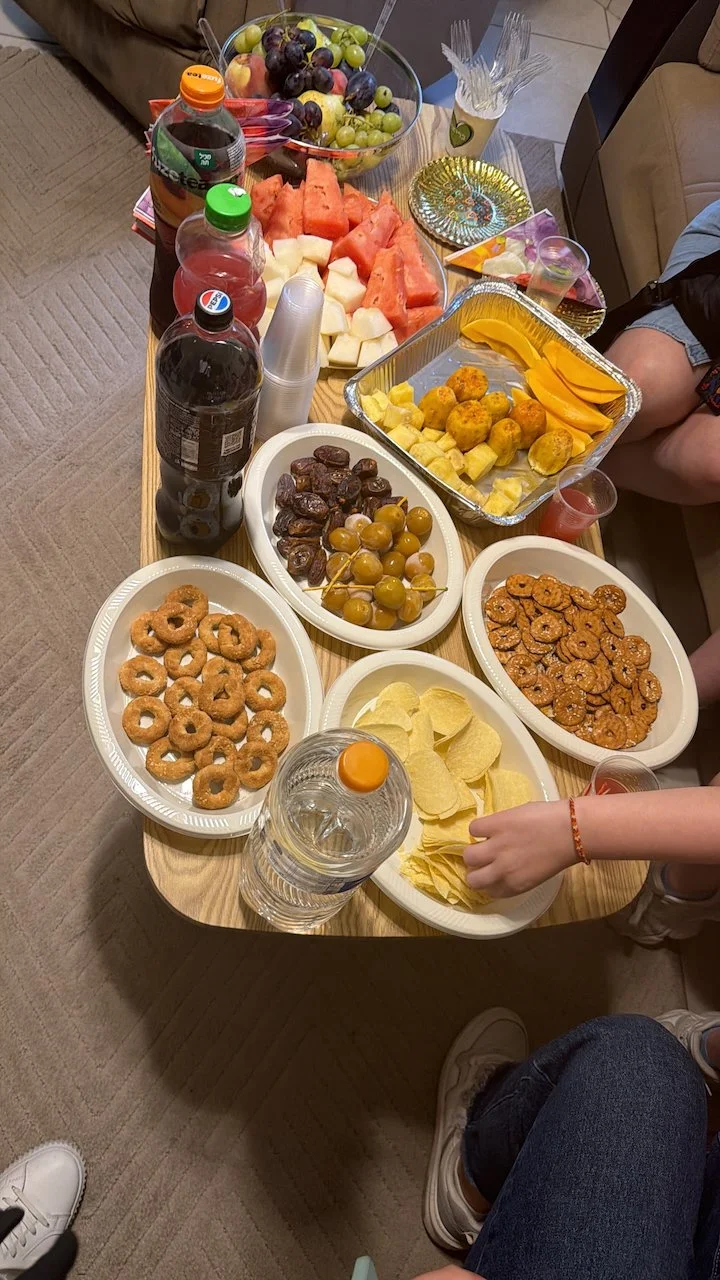
At around 6:15 we all left and headed to dinner in Haifa at BP Kosher Bistro. The menu was enormous. They had all sorts of different things—Asian food, skewers, steaks, hamburgers, pasta, chicken, salads, schnitzel. Basically everything. We got some skewers, and I got Asian bao buns. Everything was pretty good, and the food came out very quickly, which was nice. Hadar’s boyfriend also joined us for dinner. When Hadar was living with us as our au pair and planning her month of travel after finishing her year, she somehow found a random Israeli guy on Facebook who was also in the United States and wanted to travel. So they decided they were going to travel together. We were convinced that either he was going to murder her or they were going to get married. There was no middle option. They ended up traveling together, stayed friends afterward, and eventually started dating. Glad he didn’t murder her. He met us at the restaurant, and he’s great. I really liked him.
We had a really nice dinner with everyone, eventually said goodbye to Hadar and her family, and then drove about an hour back to the hotel.
Also, from roughly 4:30pm until the end of the night, Tzvi was on the phone almost continuously, other than approximately 6:45 to 8:00 when he was eating dinner. And when we got back to the hotel he went to the lobby to work until 2 in the morning. So there was that.
Thursday: Who Knew There Were Jews in Wales
We got up Thursday morning a little later than the day before and headed down for breakfast.
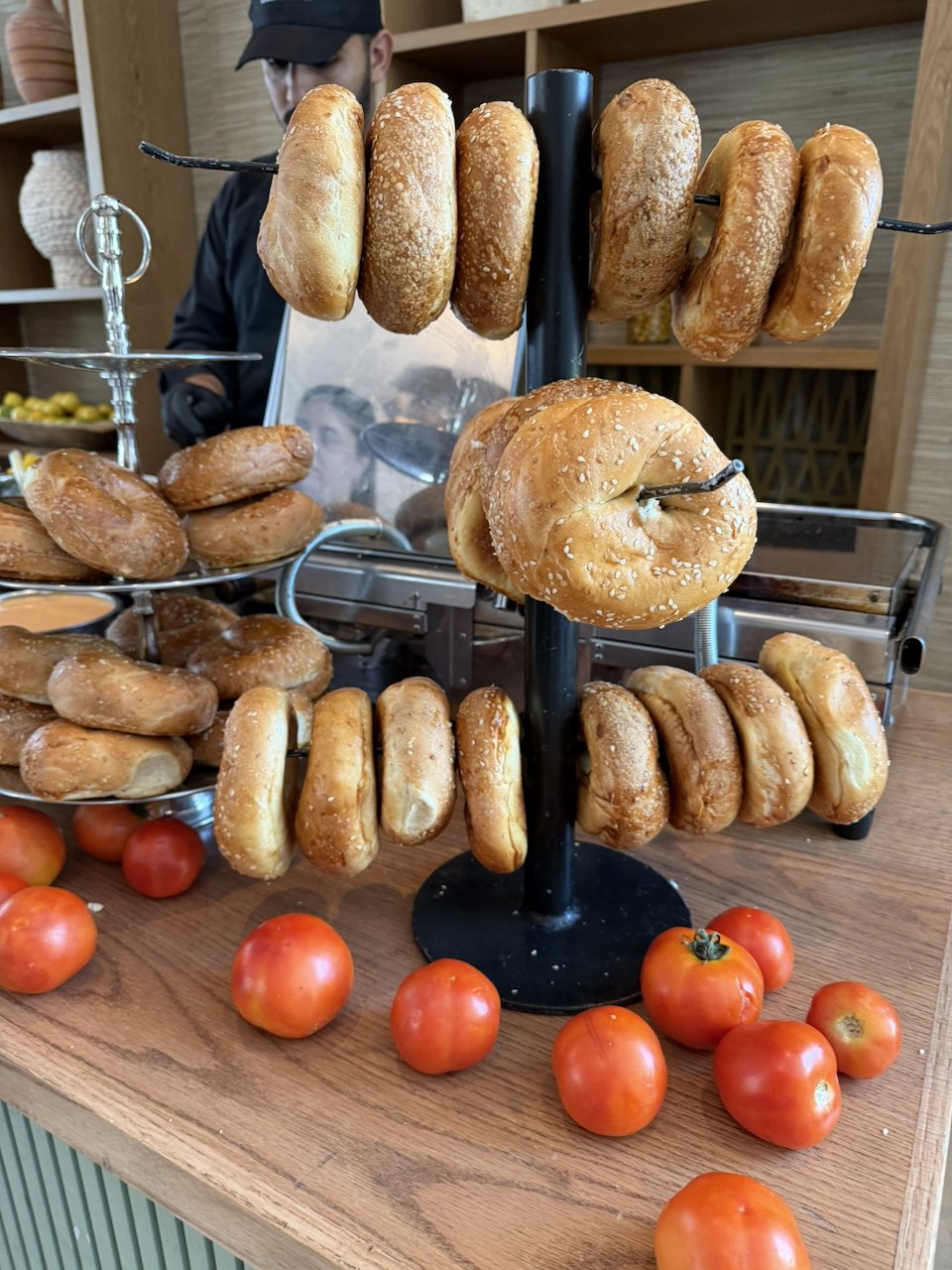
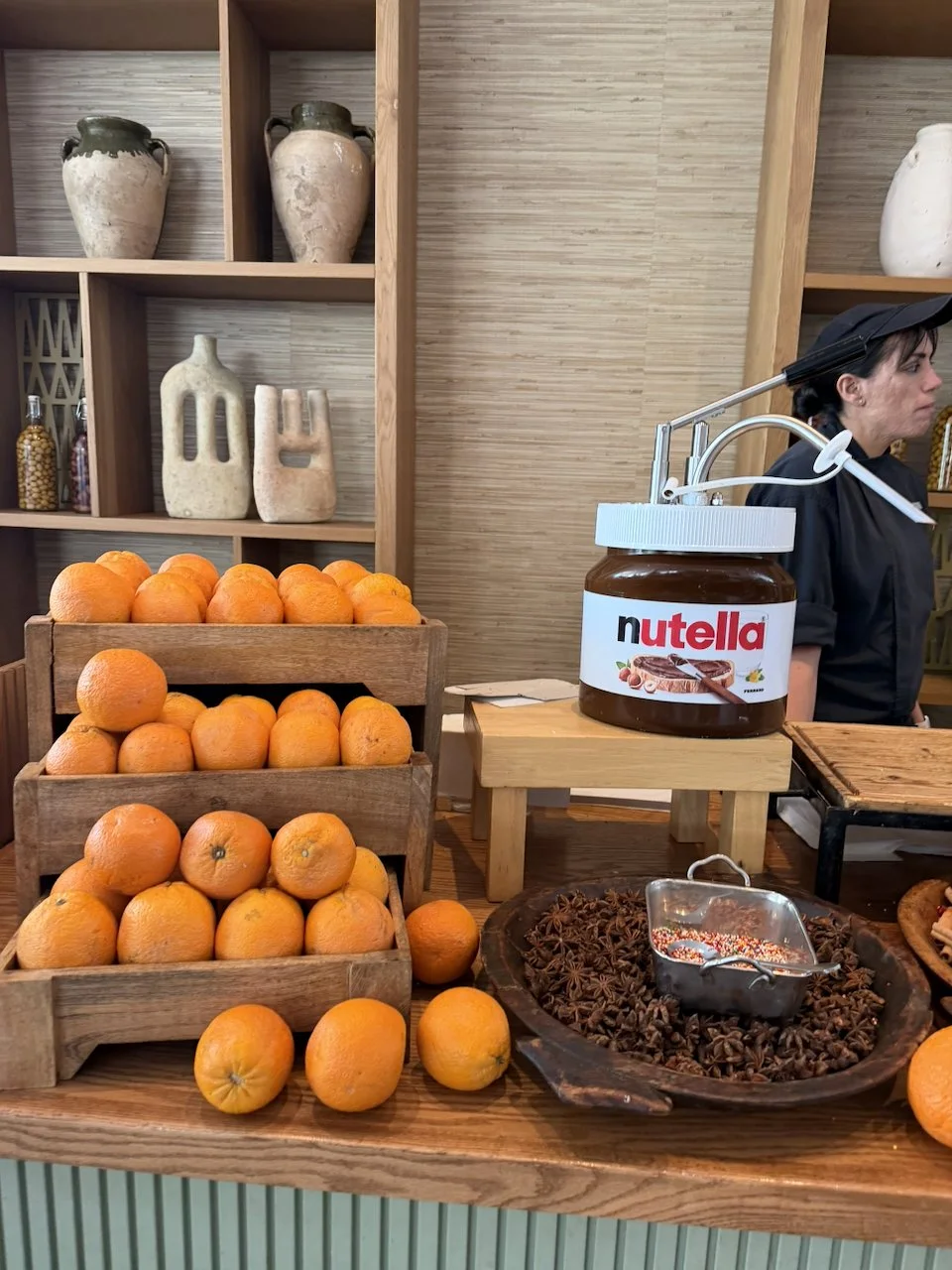
It was basically the same breakfast, except they had different stations. Instead of the pizza station, there was a bagel station, and they also had a waffle station with this enormous tub that looked like a Nutella bottle, but was actually just chocolate spread. I should say, I’m not sure the actual quality of everything was quite at the level of somewhere like the Orient, but the sheer quantity and variety were definitely impressive.
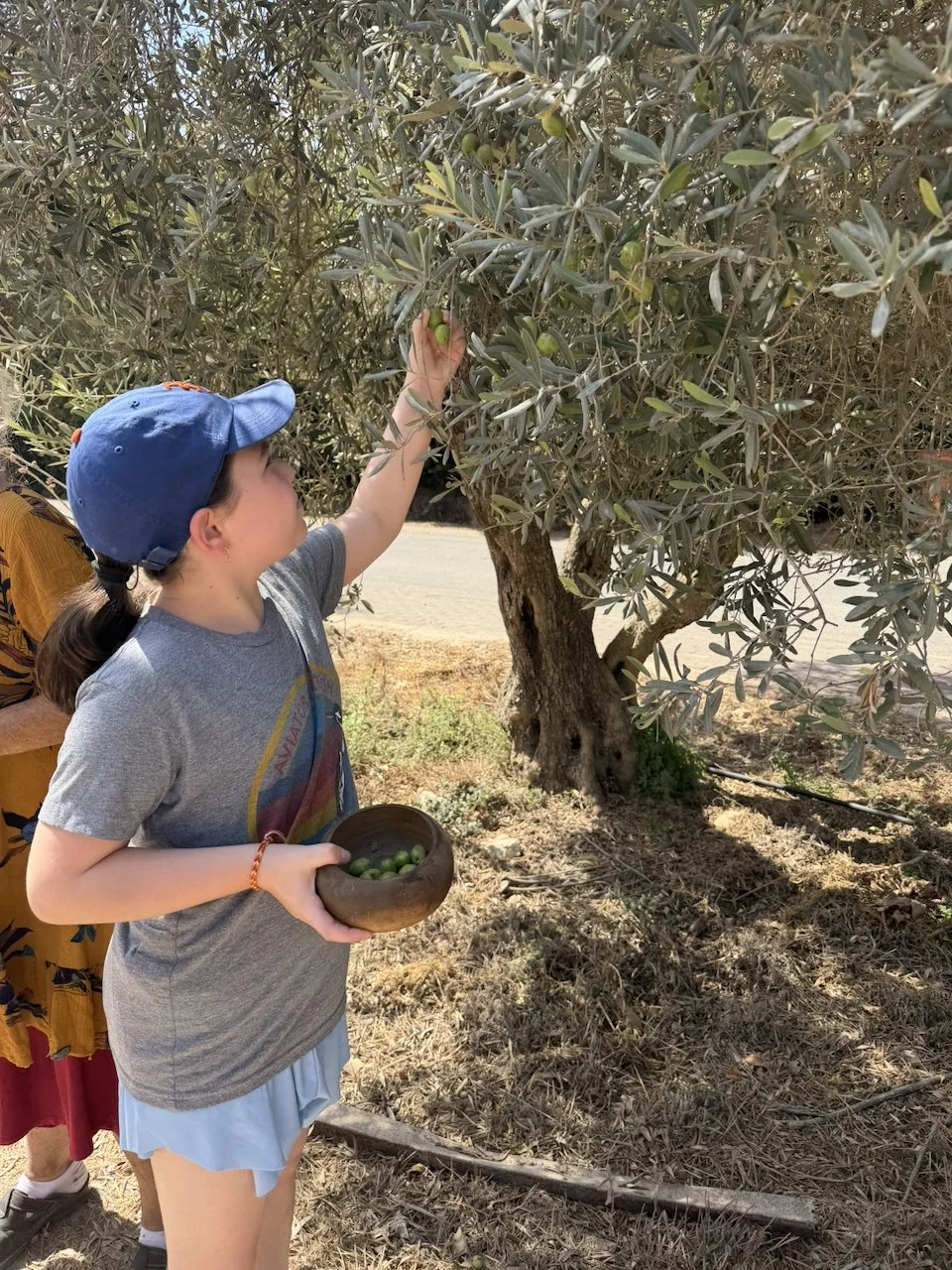
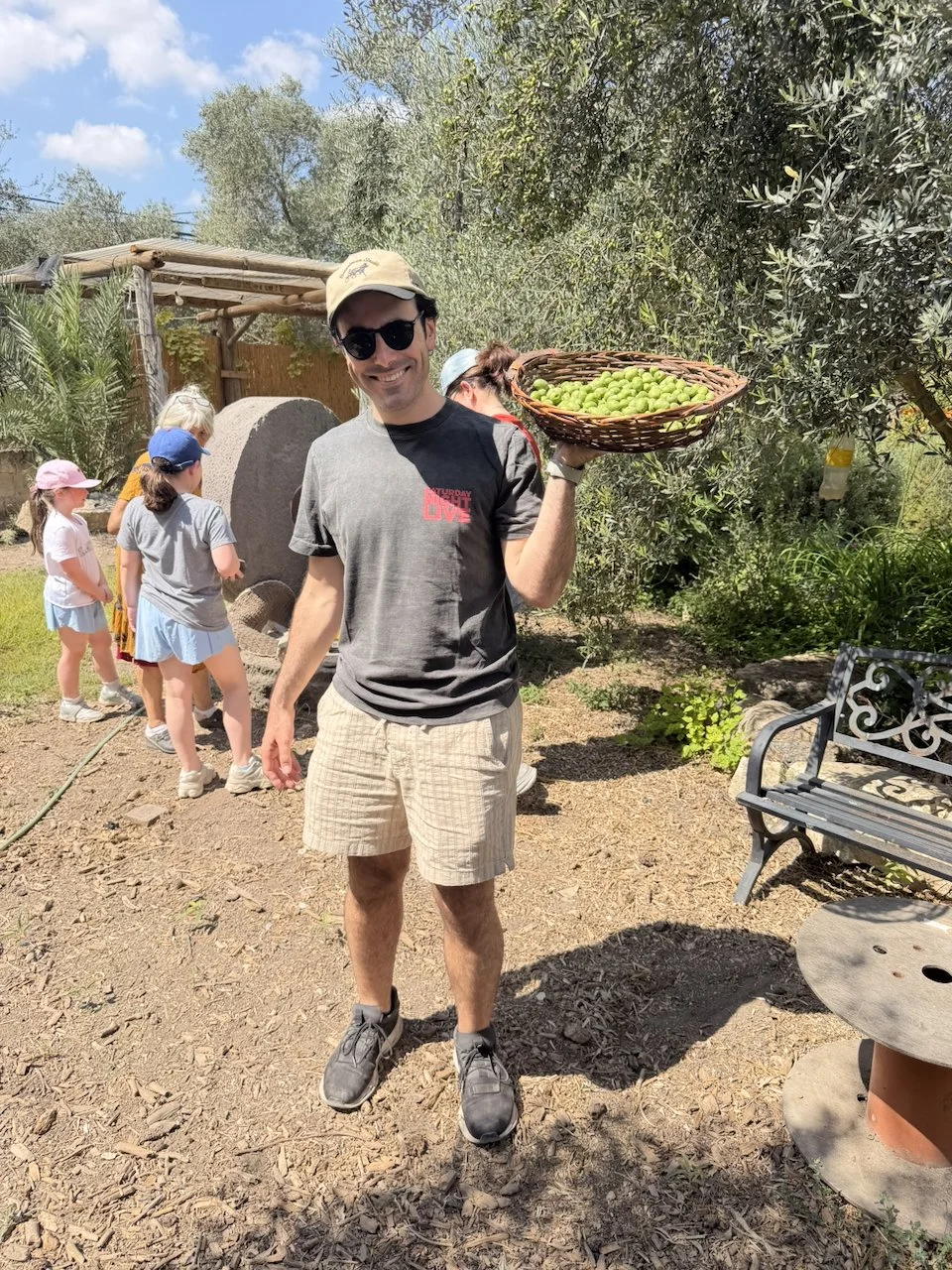
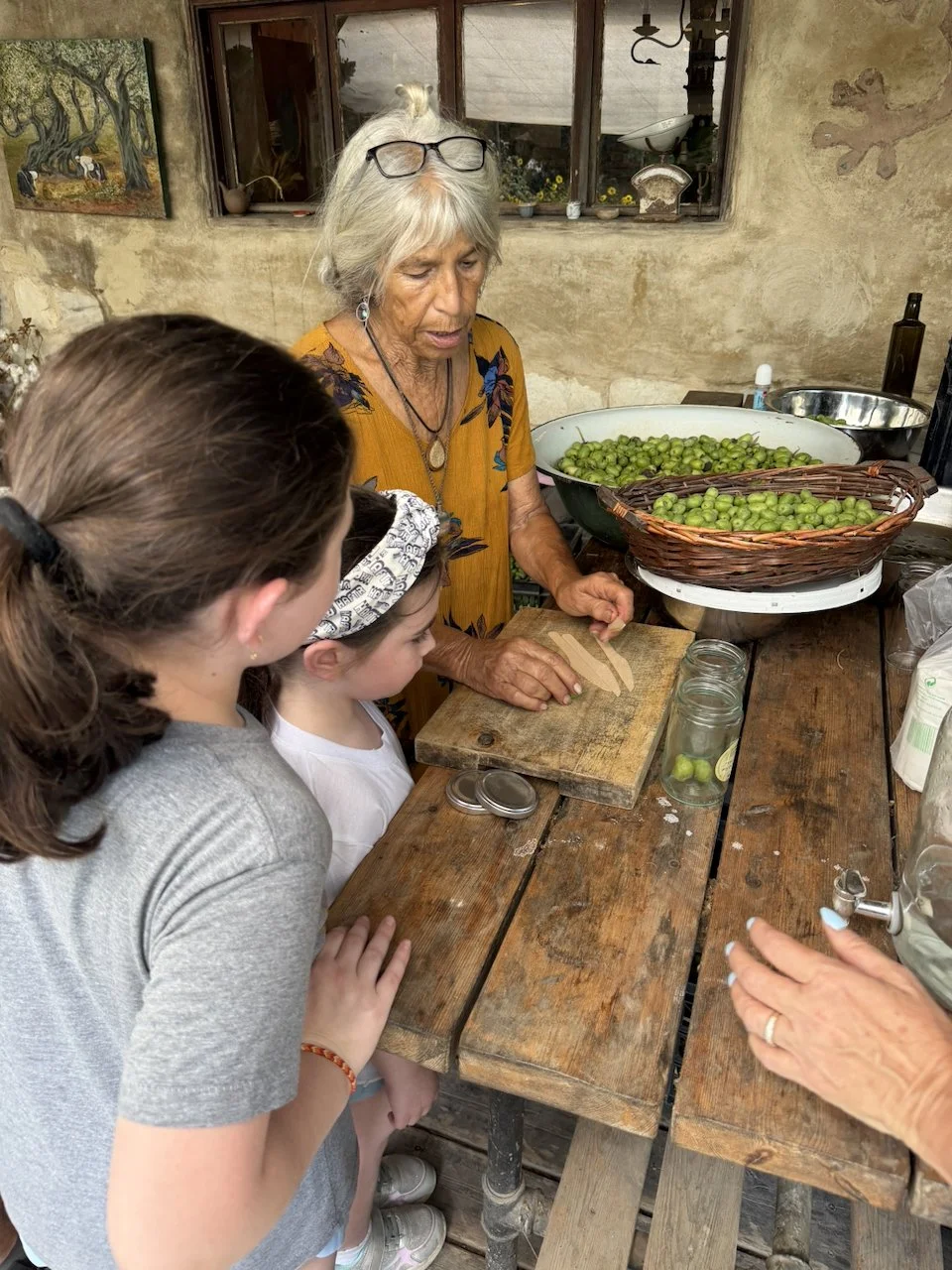
We met Muriel at around 10:00 and headed out. We drove about 40 minutes to Reish Lakish, an olive-oil farm in Tzippori. We spent a while there with a woman whose name I think was Rachel. She was around 80 years old and had immigrated from Wales, which immediately made me realize that I had never really thought about the fact that there are Jews in Wales. She met her husband in Israel, and they had six children in ten years. At one point, they spent two years in Venezuela earning money so they could come back and buy their farm on the moshav in Tzippori. Eventually, they bought the farm and built up the whole operation there.
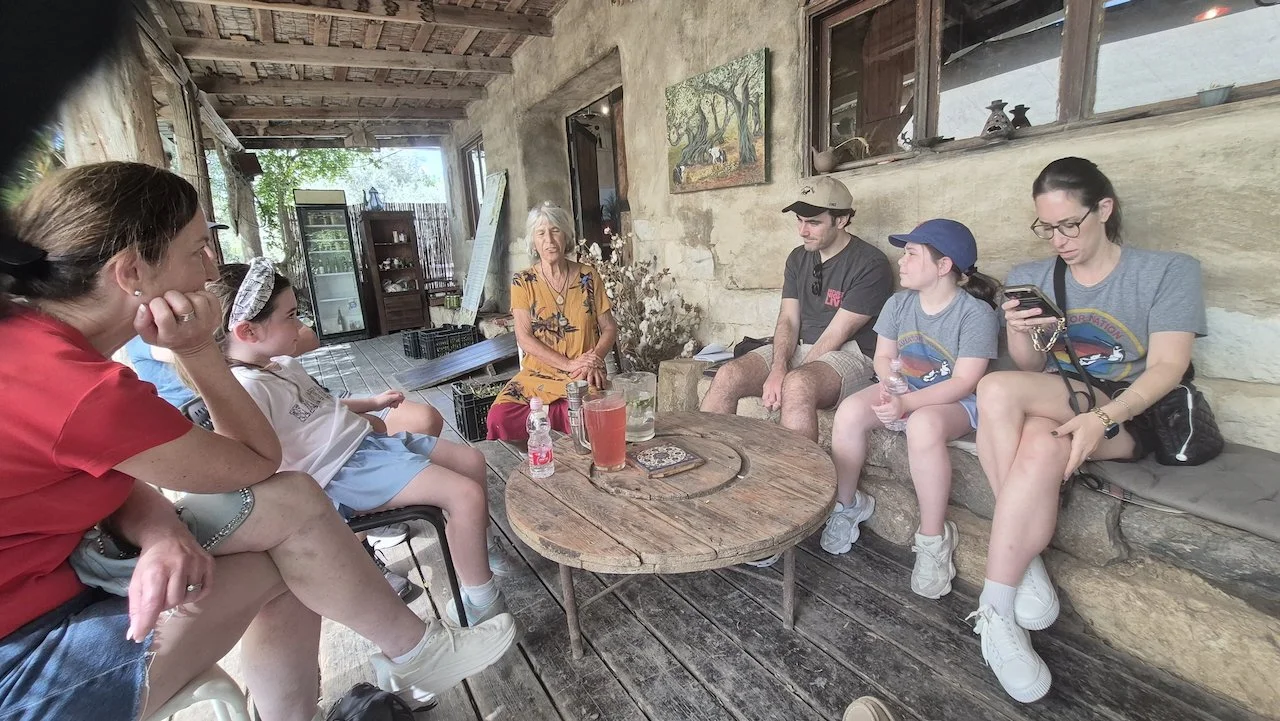
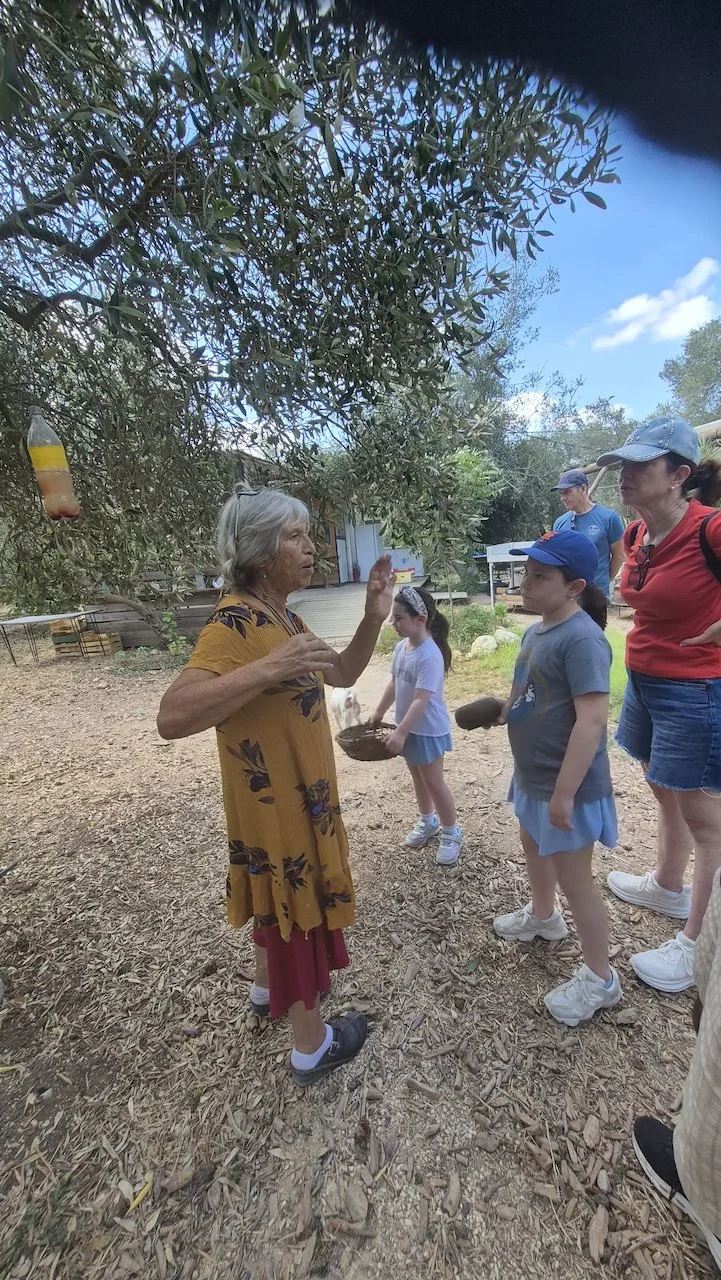
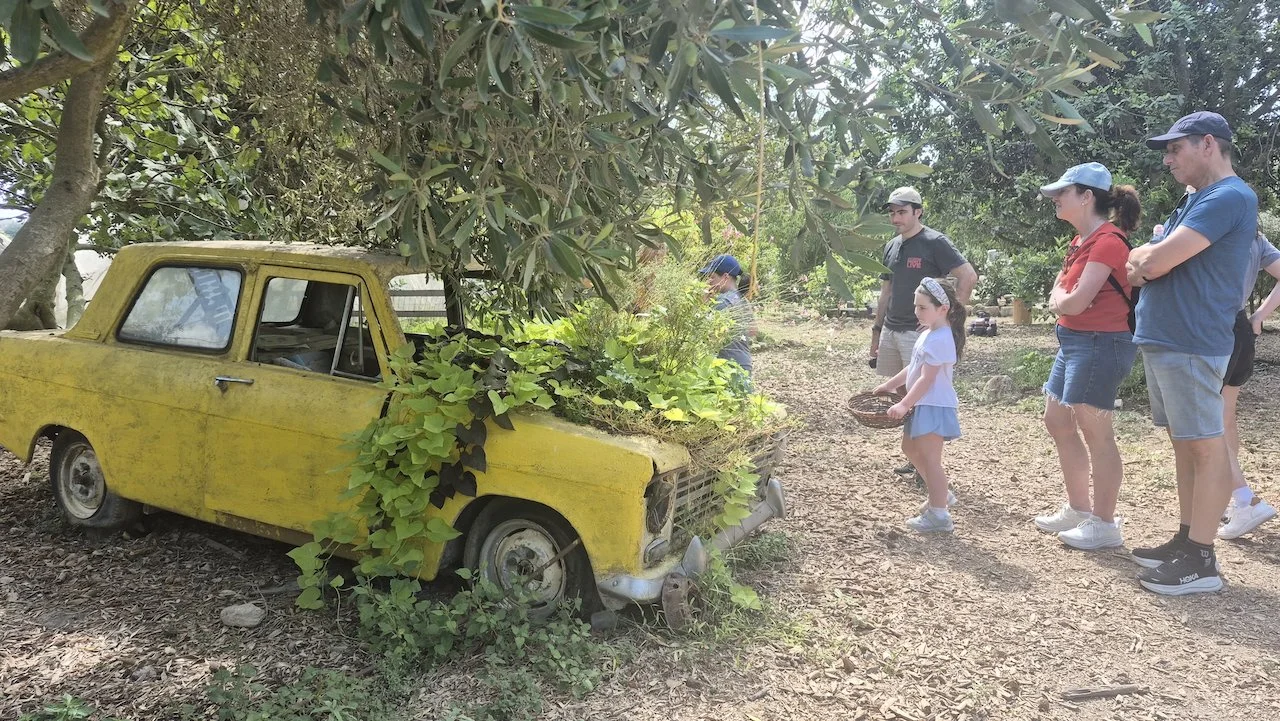
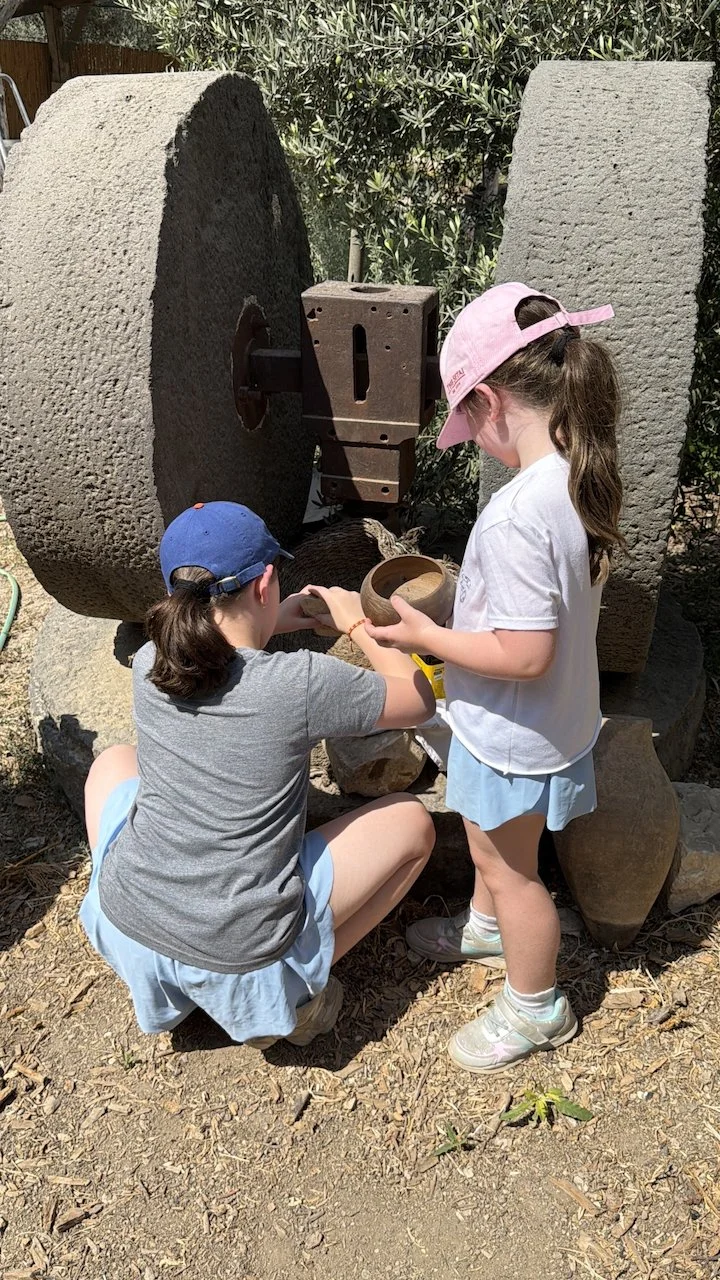
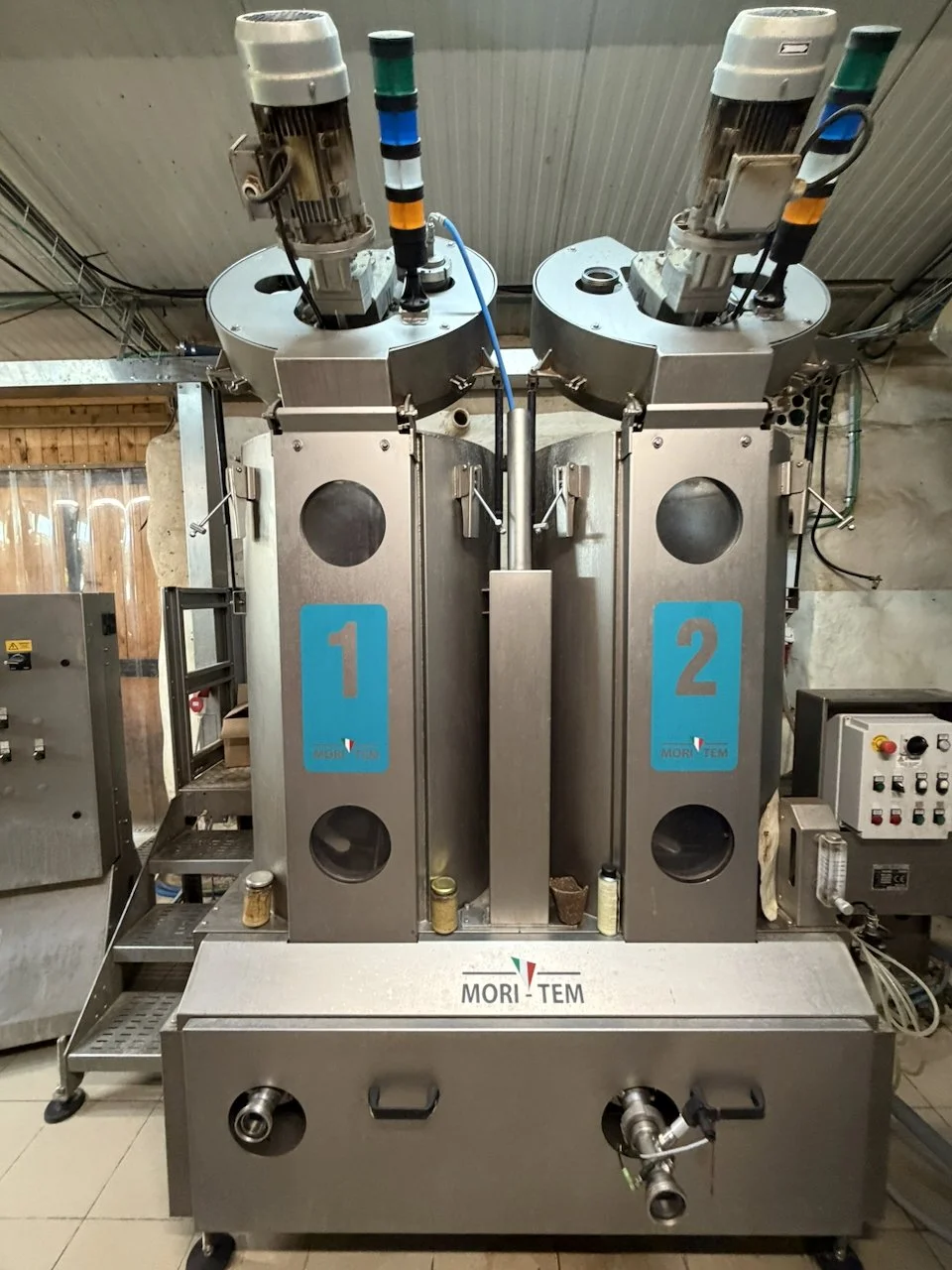
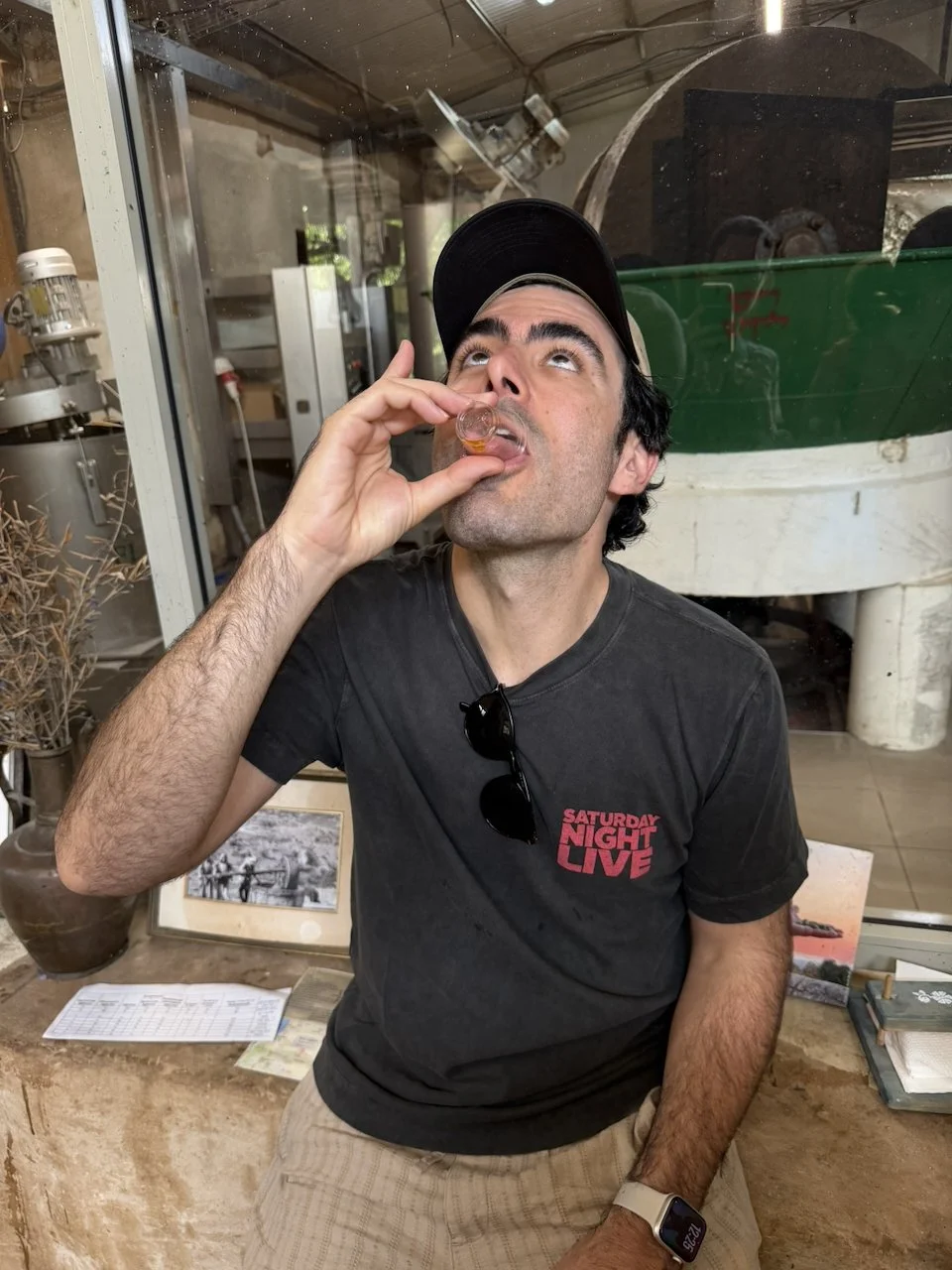
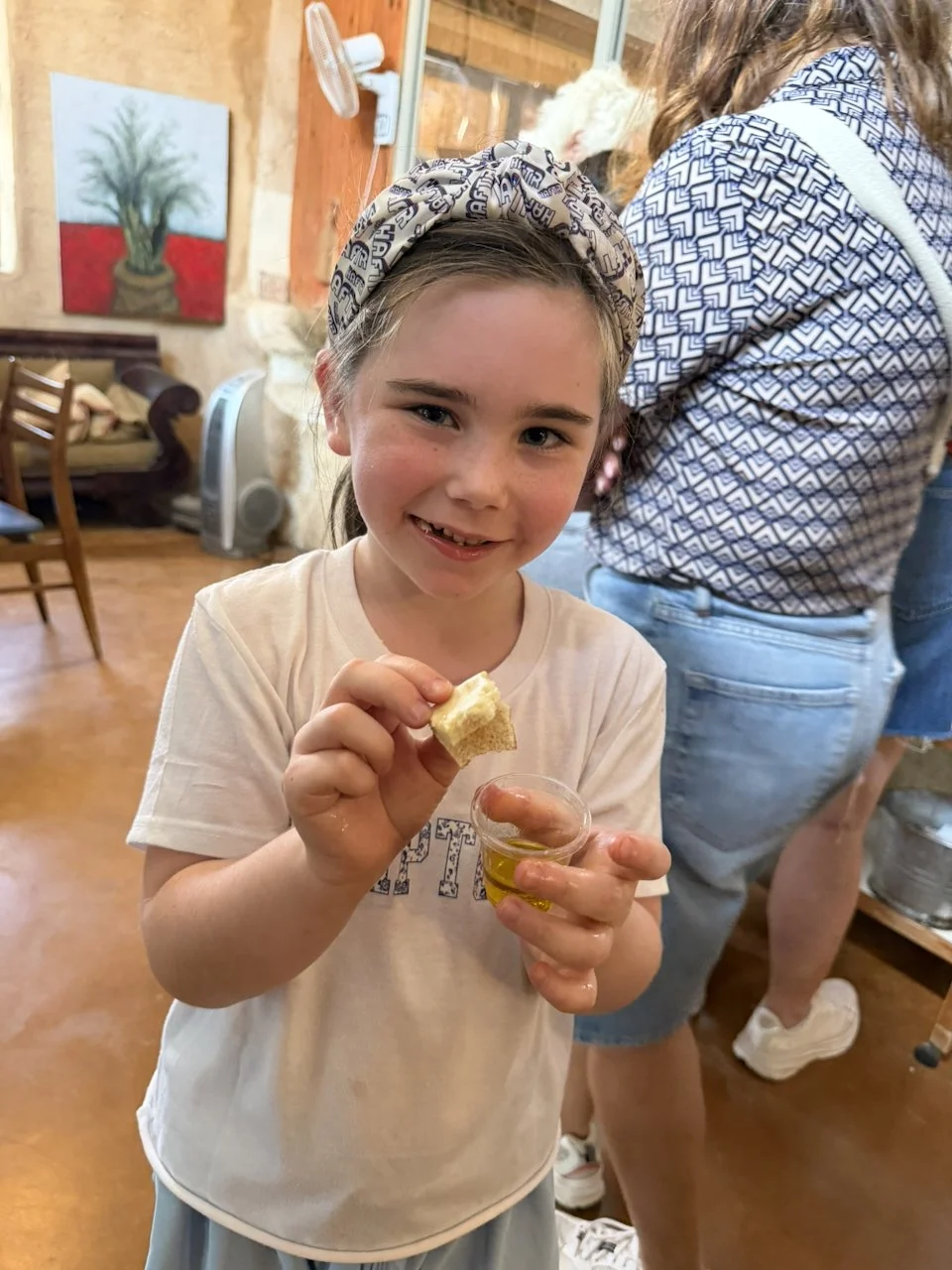
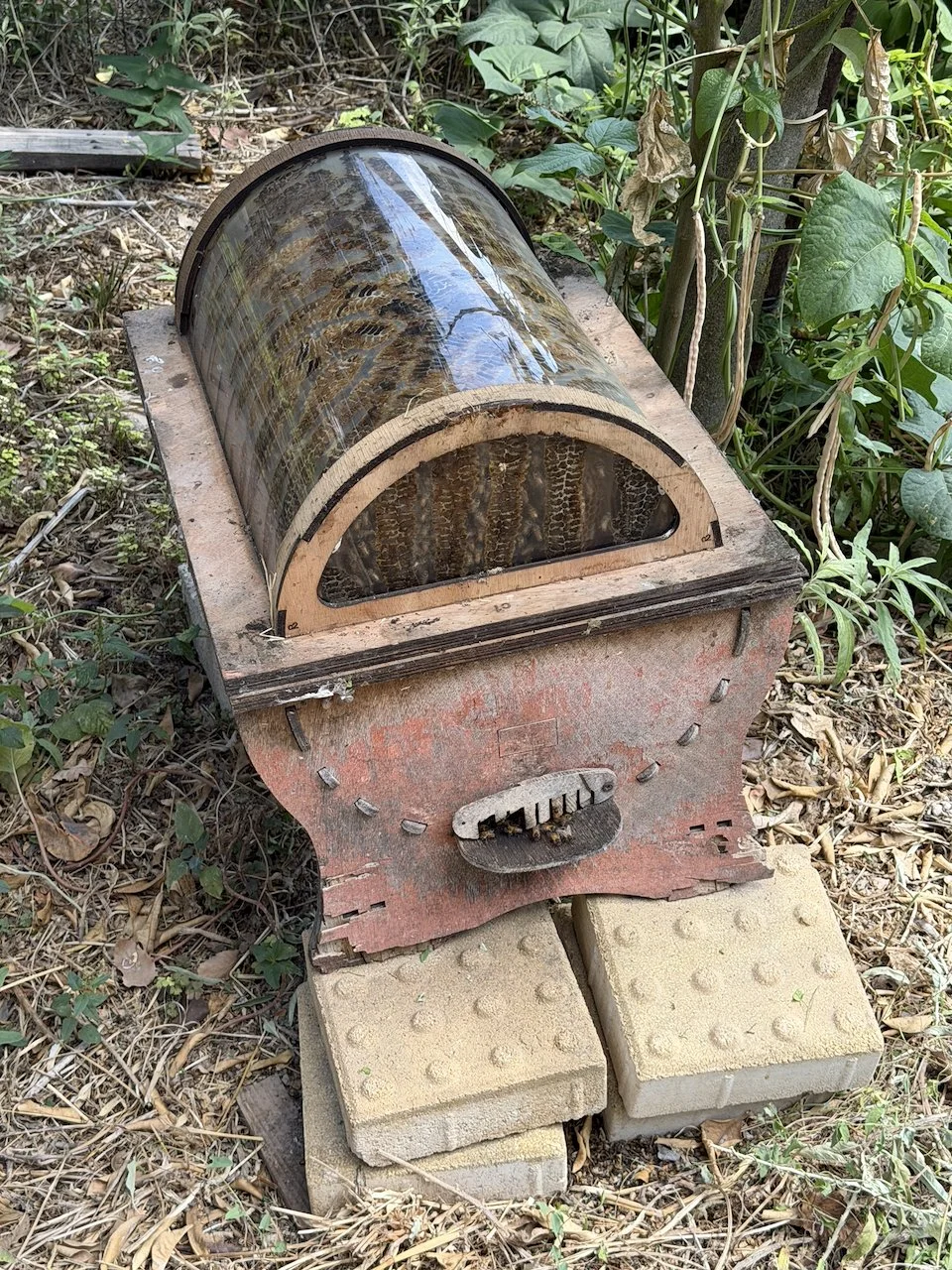
She took us around and showed us how everything works. We picked olives directly off the trees, and then she crushed some of them with the girls so they could actually see how the oil comes out. That was really cool. She also has one beehive. Apparently, she has a friend who makes honey and gave her a hive, so we got to see that too. At the end, she showed us where they make the real olive oil with industrial machinery. Tzvi asked if anyone has ever fallen into the olive oil vats. Then we tasted the different olive oils. It was a really interesting place and a very nice stop.
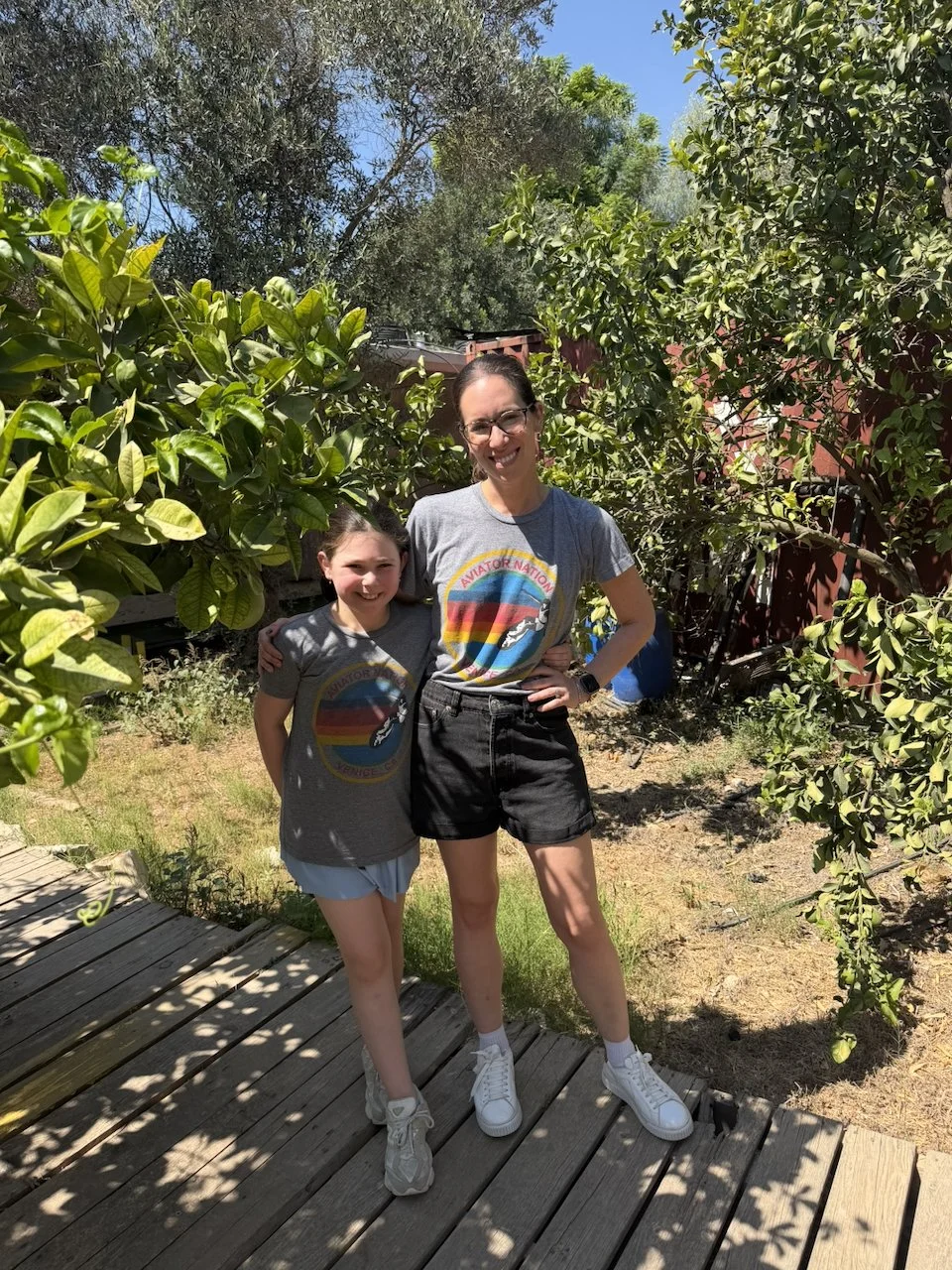
Right before we left, Madeleine desperately needed to pee. Unfortunately, the bathroom had cobwebs and a spider in it, so she had a complete meltdown. Then Tzvi took a picture of her crying. She was extremely angry about that. It was pretty funny.
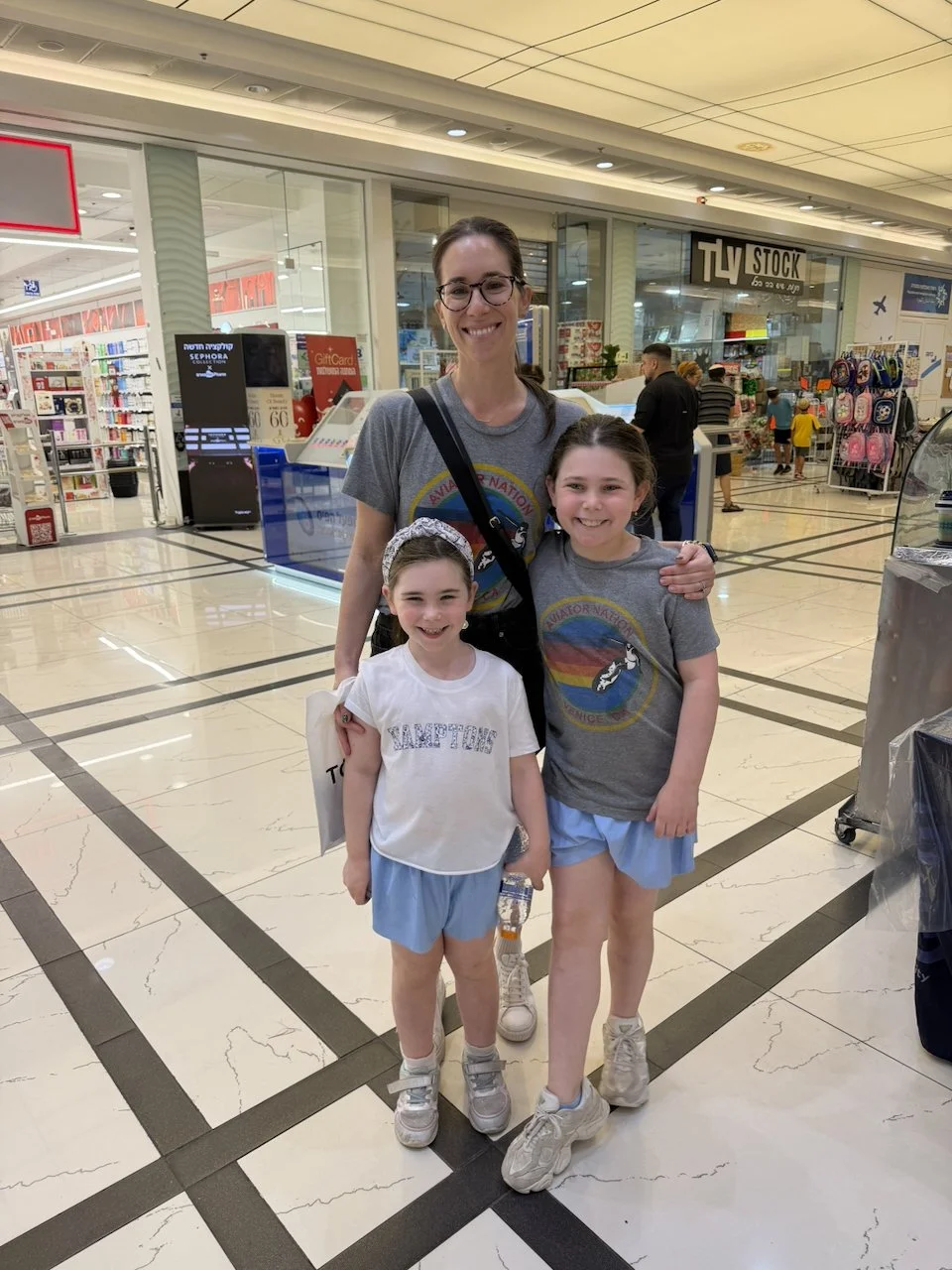
From there, we drove about 20 or 30 minutes and stopped for lunch at a mall. We got shawarma and falafel. While we were there, we saw a few soldiers ordering food so we sent Hallie to the counter with a credit card to pay for their meals. I think the soldiers were completely confused. They seemed to have no idea why these random people were paying for their lunch, or what exactly was happening.
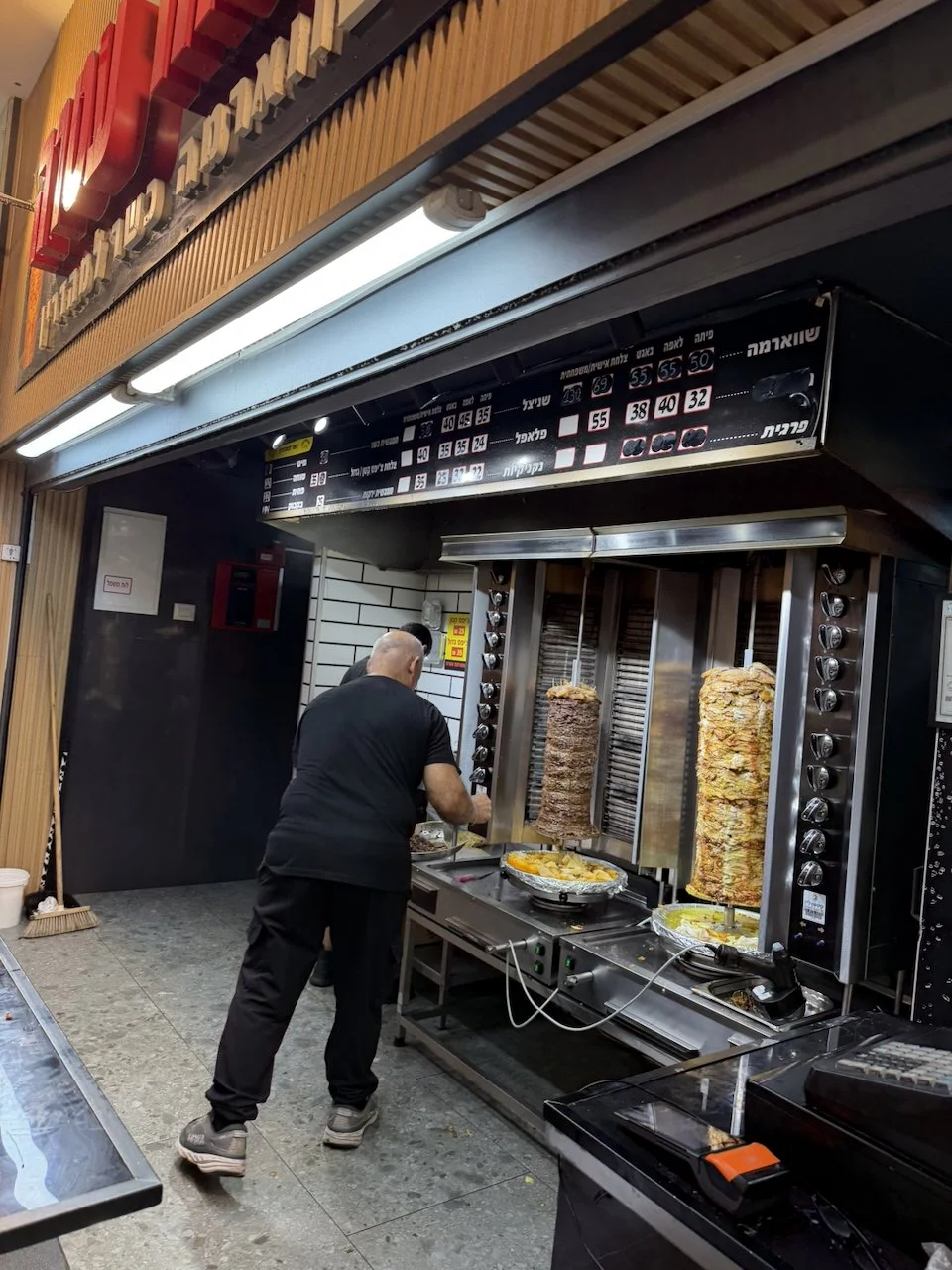
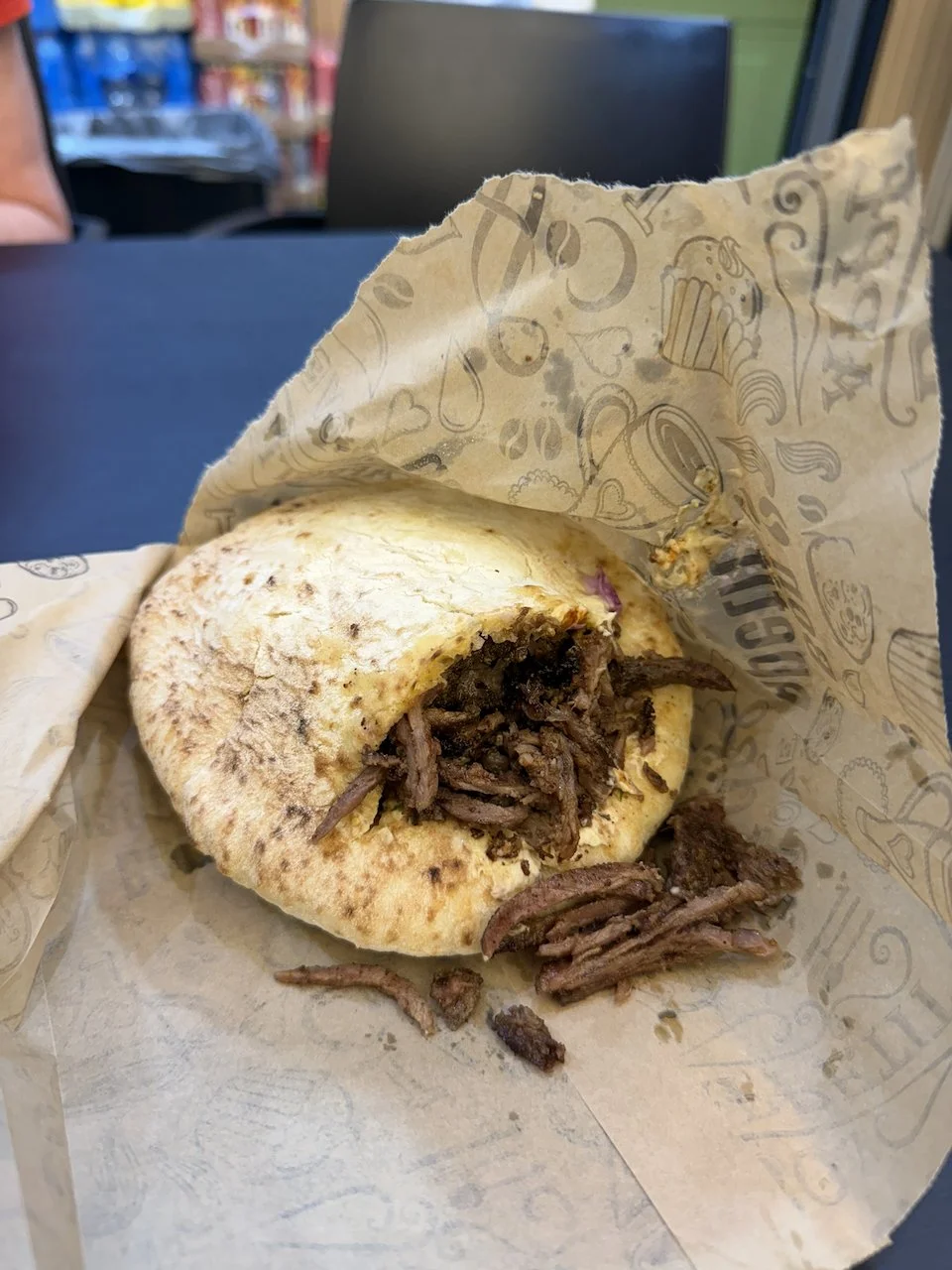
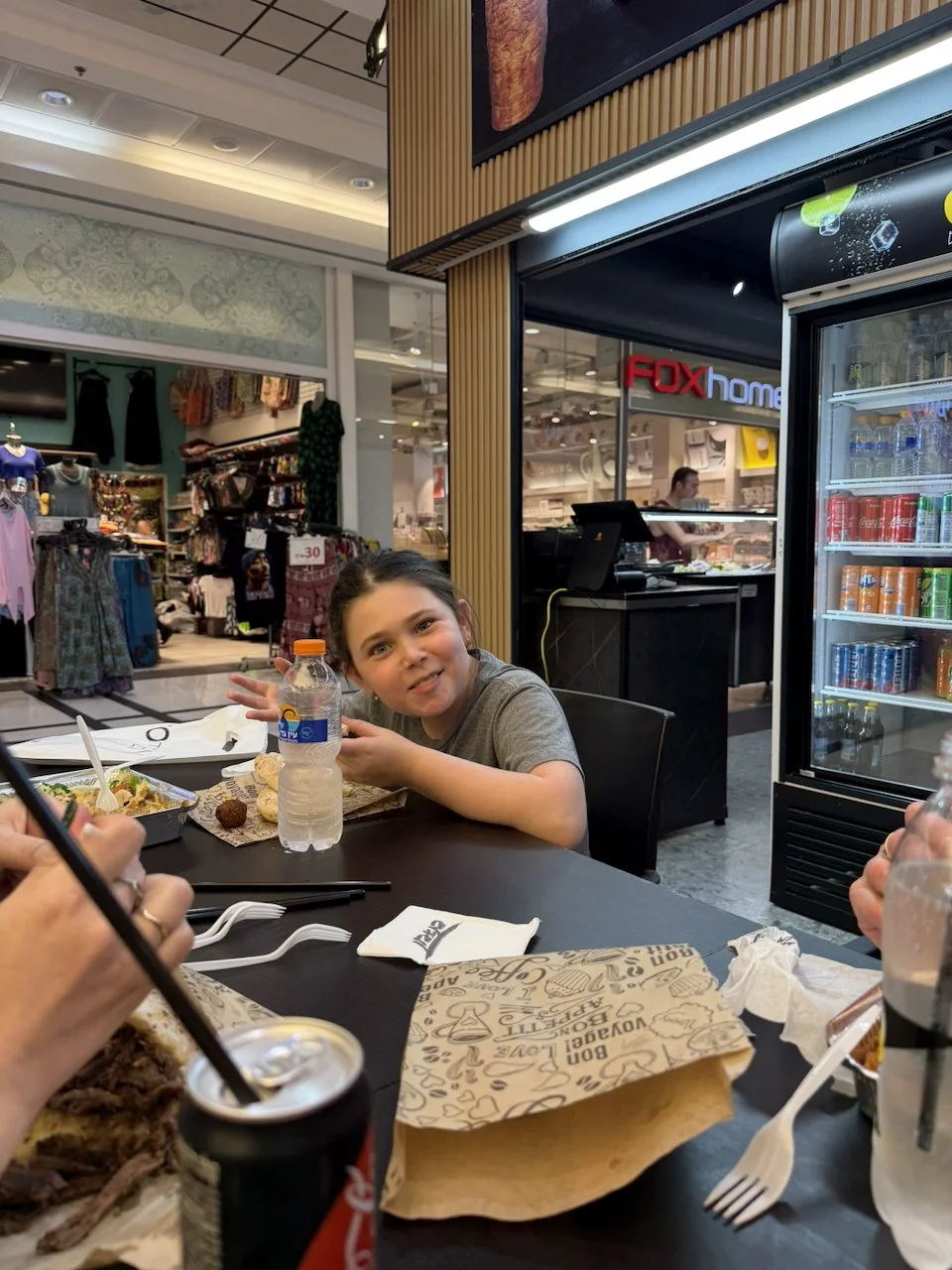
Then we left the mall and began the long drive back to Jerusalem. Eventually, we made it back to Jerusalem at around 5:30. We were exhausted, but there was laundry to be done and then we needed to go check in to the Orient, which Tzvi was not excited about, but more on that in the next installment.